 Back
BackStudy Guide: The Prokaryotes – Domains Bacteria and Archaea
Study Guide - Smart Notes
 Tailored notes based on your materials, expanded with key definitions, examples, and context.
The Prokaryotes: Domains Bacteria and Archaea
Overview of Prokaryotic Domains
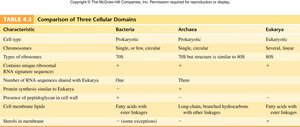
The prokaryotes are divided into two major domains: Bacteria and Archaea. These domains are distinguished by their genetic, structural, and biochemical characteristics. Archaea are more closely related to Eukarya than to Bacteria, and possess unique features in their ribosomal RNA, membrane lipids, and cell walls.
Characteristic | Bacteria | Archaea | Eukarya |
|---|---|---|---|
Cell type | Prokaryotic | Prokaryotic | Eukaryotic |
Chromosomes | Single, circular | Single, circular | Several, linear |
Type of ribosome | 70S | 70S but structure is similar to 80S | 80S |
Contains unique rRNA sequences | One | Three | --- |
Peptidoglycan in cell wall | Present | Absent | Absent |
Membrane lipids | Fatty acids with ester linkages | Long-chain, branched hydrocarbons with ether linkages | Fatty acids with ester linkages |
Streaks in membrane | None except some exceptions | Some exceptions | --- |
Archaea: The Other Prokaryotes
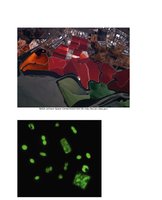
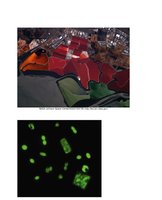
Archaea constitute a distinct domain of life, characterized by unique genetic sequences in their rRNA, specialized membrane lipids, and cell walls lacking peptidoglycan. They are extremophiles, thriving in environments with extreme heat, salinity, acidity, pressure, and atmospheric conditions.
Extremophiles: Includes methane producers, hyperthermophiles, extreme halophiles, and sulfur reducers.
Halophiles: Require salt concentrations >25%.
Thermophiles: Require growth temperatures >80°C.
Methanogens: Anaerobic and produce methane.
Diversity Within the Archaea
Archaea are a distinct taxonomic group, lacking peptidoglycan in their cell walls. Their ability to survive in extreme environments is due to unique adaptations in their cell structure and metabolism.
Halophiles: Require high salt concentrations.
Thermophiles: Thrive at high temperatures.
Methanogens: Produce methane in anaerobic conditions.
Photosynthetic Bacteria
Cyanobacteria (Blue-Green Algae)
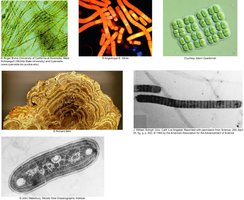
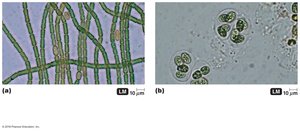
Cyanobacteria are Gram-negative bacteria with extensive thylakoid membranes containing photosynthetic pigments. They play a crucial role in oxygen production and nitrogen fixation in the biosphere.
Gram-negative cell walls
Thylakoids: Contain chlorophyll pigments
Gas inclusions: Aid in buoyancy
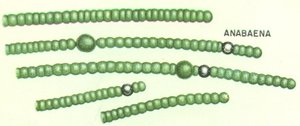
Heterocysts: Specialized cells for nitrogen fixation
Cyanobacteria Roles in Biosphere/Ecosphere
Primary converters of radiant energy
Oxygen production: Carry out oxygenic photosynthesis
Nitrogen fixation: Many contain heterocysts

Green and Purple Sulfur Bacteria
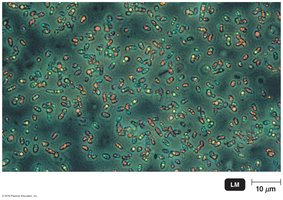
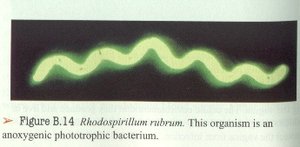
These bacteria are photosynthetic but do not produce oxygen as a byproduct. They contain bacteriochlorophyll and carry out anoxygenic photosynthesis.
Green sulfur bacteria: Phylum Chlorobi
Green nonsulfur bacteria: Phylum Chloroflexi
Purple sulfur and purple nonsulfur bacteria: Proteobacteria

Photosynthesis Equations
Oxygenic Photosynthesis (Cyanobacteria):
Anoxygenic Photosynthesis (Green and Purple Sulfur Bacteria):
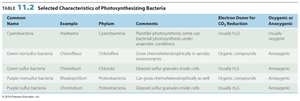
Selected Characteristics of Photosynthesizing Bacteria
Photosynthetic bacteria are classified based on their pigments, electron donors, and whether they produce oxygen.
Common Name | Example | Phylum | Comments | Electron Donor for CO2 Reduction | Oxygenic or Anoxygenic |
|---|---|---|---|---|---|
Cyanobacteria | Anabaena | Cyanobacteria | Perform photosynthesis, usually in freshwater/terrestrial under aerobic conditions | Water (H2O) | Oxygenic |
Green sulfur bacteria | Chlorobium | Chlorobi | Grow chemotrophically/anoxygenically in anaerobic environments | Hydrogen sulfide (H2S) | Anoxygenic |
Green nonsulfur bacteria | Chloroflexus | Chloroflexi | Can grow heterotrophically/anoxygenically inside cells | Organic compounds | Anoxygenic |
Purple sulfur bacteria | Chromatium | Proteobacteria | Deposit sulfur granules inside cells | Hydrogen sulfide (H2S) | Anoxygenic |
Purple nonsulfur bacteria | Rhodospirillum | Proteobacteria | Can grow heterotrophically/anoxygenically inside cells | Organic compounds | Anoxygenic |
Medically Important Bacteria
Firmicutes (Low G + C Gram-Positive Bacteria)
Bacillus
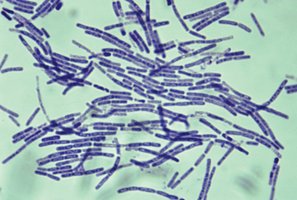
Bacillus species are endospore-producing rods. Bacillus anthracis causes anthrax, B. thuringiensis is an insect pathogen, and B. cereus causes food poisoning. Anthrax was the first disease proven to be caused by a bacterium.

Staphylococcus
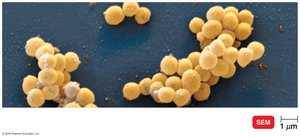
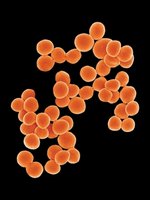
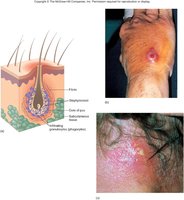
Staphylococcus forms grape-like clusters. S. aureus causes wound infections, is often antibiotic resistant, and produces enterotoxins.
Diseases: food poisoning, scalded skin syndrome, impetigo, folliculitis, furuncles, carbuncles, toxic shock syndrome, MRSA
Streptococcus
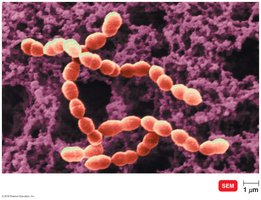
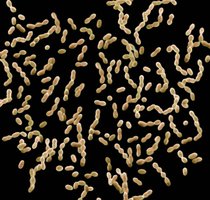
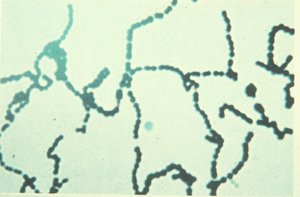
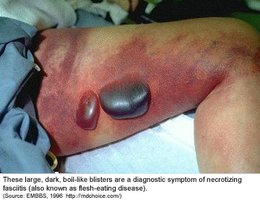
Streptococcus forms spherical chains and produces enzymes that destroy tissue. Beta-hemolytic streptococci hemolyze blood agar; includes S. pyogenes. Non-beta-hemolytic streptococci include S. pneumoniae and S. mutans, which causes dental caries.
Diseases: strep throat, necrotizing fasciitis, impetigo, erysipelas, scarlet fever, rheumatic fever, meningitis, endocarditis
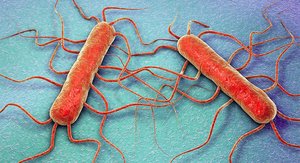
Enterococcus and Listeria
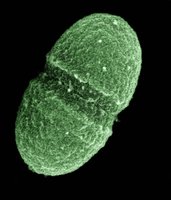
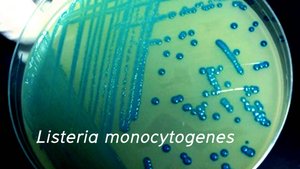
Enterococcus species are found in the intestinal tract and are common nosocomial (hospital-acquired) infections. Listeria monocytogenes contaminates food and can cause serious illness.
Mycoplasmatales
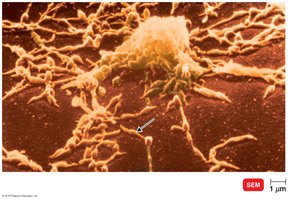
Mycoplasma lack a cell wall and are pleomorphic. M. pneumoniae causes mild pneumonia.
Actinobacteria (High G + C Gram-Positive Bacteria)
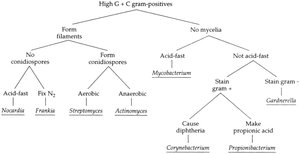
Actinobacteria are often pleomorphic and form branching filaments. They are common inhabitants of soil and include important genera such as Mycobacterium, Streptomyces, Actinomyces, and Nocardia.
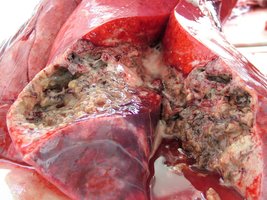
Mycobacterium: Outermost layer of mycolic acids, waxy and water-resistant; causes tuberculosis and leprosy.
Streptomyces: Produce most antibiotics.
Actinomyces: Form filaments in the mouth and throat; destroy tissue.
Nocardia: Form fragmenting filaments; acid-fast; cause pulmonary infections.
Unusual Forms of Medically Significant Bacteria
Chlamydias
Chlamydias are tiny, obligate intracellular parasites not transmitted by arthropods. Chlamydia trachomatis causes severe eye infections and sexually transmitted diseases. Chlamydia pneumoniae causes lung infections.
Life cycle involves elementary bodies (infectious form) and reticulate bodies (reproductive form).
Rickettsias
Rickettsias are very tiny, gram-negative bacteria that are obligate intracellular pathogens. Rickettsia rickettsii causes Rocky Mountain spotted fever.
Proteobacteria: Medically Significant Genera
Pseudomonadales
Pseudomonas are opportunistic pathogens, common in soil, and cause nosocomial infections. P. aeruginosa causes wound and urinary tract infections.
Vibrionales
Vibrio species are found in aquatic habitats. V. cholerae causes cholera, and V. parahaemolyticus causes gastroenteritis.
Enterobacteriales
Enterobacteriales, commonly called enterics, inhabit the intestinal tract and ferment carbohydrates. They are facultative anaerobes with peritrichous flagella.
Escherichia coli: Indicator of fecal contamination; causes foodborne disease and urinary tract infections.
Salmonella: Common form of foodborne illness; S. typhi causes typhoid fever.
Shigella dysenteriae: Causes bacillary dysentery.
Klebsiella pneumoniae: Causes pneumonia.
Serratia marcescens: Produces red pigment; nosocomial infections.
Proteus vulgaris: Swarming motility; concentric rings.
Yersinia pestis: Causes plague; transmitted via fleas.
Enterobacter: Causes urinary tract and nosocomial infections.
Epsilonproteobacteria
These bacteria are helical or curved and microaerophilic. Campylobacter causes foodborne intestinal disease, and Helicobacter pylori causes peptic ulcers and stomach cancer.
Spirochaetes
Spirochaetes are coiled bacteria that move via axial filaments. Treponema pallidum causes syphilis, and Borrelia burgdorferi causes Lyme disease.
Clostridium
Clostridium species are endospore-producing, obligate anaerobes. Includes disease-causing C. tetani, C. botulinum, C. perfringens, and C. difficile. Tetanus and botulism are the most important conditions.
Microbes and Infectious Diseases
Pathogens and Disease Statistics
Pathogens are microbes that cause harm. Nearly 2,000 different microbes cause diseases, resulting in billions of new infections and millions of deaths annually worldwide.

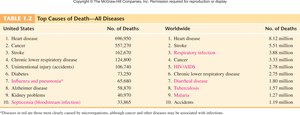
Top Causes of Death
Microbial diseases are among the top causes of death worldwide, including respiratory infections, HIV/AIDS, diarrheal diseases, tuberculosis, and malaria.
United States | No. of Deaths | Worldwide | No. of Deaths |
|---|---|---|---|
Heart disease | 696,947 | Heart disease | 8.12 million |
Cancer | 542,721 | Cancer | 6.72 million |
Stroke | 143,002 | Respiratory infection | 3.96 million |
Chronic lower respiratory disease | 124,041 | HIV/AIDS | 2.77 million |
Diabetes | 72,369 | Diarrheal disease | 2.75 million |
Influenza and pneumonia | 62,034 | Tuberculosis | 1.57 million |
Kidney problems | 43,939 | Malaria | 1.12 million |
Septicemia (bloodstream infection) | 31,614 | Accidents | 1.09 million |
Emerging Diseases and Nosocomial Infections
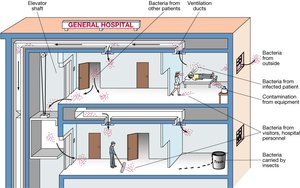
Emerging diseases are those that have increased in incidence over the past decades. Nosocomial infections are acquired in hospitals, often due to transmission from contaminated equipment, personnel, or other patients.
Conclusion
The prokaryotes, including Bacteria and Archaea, exhibit remarkable diversity in structure, metabolism, and ecological roles. Many are medically significant, causing a wide range of diseases. Understanding their classification, physiology, and pathogenic mechanisms is essential for microbiology students.
