 Back
BackStudy Guide: Viruses, Pathogenic DNA/RNA Viruses, and Parasitic Eukaryotes
Study Guide - Smart Notes
 Tailored notes based on your materials, expanded with key definitions, examples, and context.
Characteristics and Structure of Viruses
General Properties of Viruses
Viruses are obligate intracellular parasites that require a host cell for replication. They are too small to be seen with a light microscope and must be visualized using electron microscopy. Viral classification is based on the type of nucleic acid (DNA or RNA) they contain, and their host range is determined by specific interactions between viral surface proteins and host cell receptors.
Core: Contains either DNA or RNA as genetic material.
Capsid: Protein coat made of subunits called capsomeres.
Envelope: Some viruses possess a lipid envelope derived from the host cell membrane; others are naked.
Spikes: Glycoproteins on the envelope that facilitate host cell attachment.
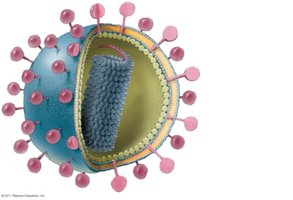
Host Range: Determined by the compatibility between viral proteins and host cell receptors.
Virion: The extracellular, infectious form of a virus.
Viral Replication Cycles
Bacteriophage Replication
Bacteriophages are viruses that infect bacteria. Their replication involves several distinct steps:
Attachment (Adsorption): Phage binds to specific receptors on the bacterial surface.
Entry (Penetration): Injection of viral nucleic acid into the host cell.
Synthesis (Replication): Host machinery is used to synthesize viral components.
Assembly & Maturation: New virions are assembled from synthesized components.
Release: Host cell lysis releases new phages.
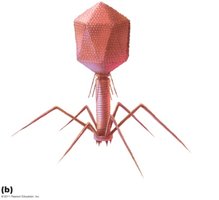
Lysogenic Cycle: Some phages integrate their DNA into the host genome (prophage), leading to lysogeny and possible lysogenic conversion (acquisition of new traits by the host).
Animal Virus Replication
Animal viruses follow a similar but more complex replication cycle, with variations in entry and uncoating mechanisms:
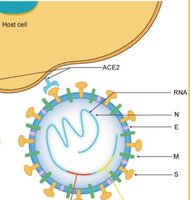
Attachment: Viral proteins bind to specific host cell receptors (e.g., HIV gp120 binds CD4 and CXCR4; SARS-CoV-2 spike binds ACE2).
Entry: Can occur via direct penetration (naked viruses), endocytosis (enveloped viruses), or membrane fusion.
Uncoating: Removal of the capsid to release viral nucleic acid inside the host cell.
Synthesis: Dependent on the type of viral genome (DNA, +ssRNA, -ssRNA, or retrovirus).
Maturation: Assembly of new virions.
Release: By budding (enveloped viruses) or cell lysis (naked viruses).
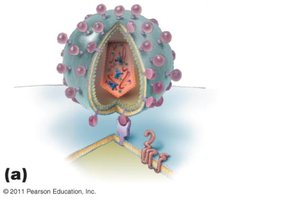
Persistent Infections: Virus remains in the host for extended periods, sometimes with intermittent symptoms.
Latency: Viral genome persists in host cells without active replication, reactivating under certain conditions (e.g., herpesviruses).
Diagnostic Virology
Laboratory Techniques
Tissue or Cell Culture: Growth of viruses in cell monolayers; cytopathic effects (CPE) are observed microscopically.
Chicken Eggs: Used for vaccine production (e.g., influenza).
ELISA: Detects viral antigens in patient samples using antibody-enzyme complexes.
PCR/DNA Probes: Amplifies and detects viral nucleic acids.
Serological Testing: Detects patient antibodies against viruses.
Prions
Characteristics and Diseases
Prions are infectious proteins that lack nucleic acids. They cause disease by inducing abnormal folding of normal cellular prion proteins, especially in neural tissue.
Human Disease: Variant Creutzfeldt-Jakob disease (vCJD)
Animal Diseases: Bovine Spongiform Encephalopathy (BSE), Chronic Wasting Disease (CWD)
Prion PrP: The abnormal, disease-causing form of the prion protein.
Pathogenic DNA Viruses
Poxviridae (Smallpox)
Smallpox was eradicated in 1980 due to effective vaccination and lack of animal reservoirs. Remaining stocks are held in secure labs due to bioterrorism concerns.
Herpesviridae Family
dsDNA, enveloped, latent infections
HHV-1 (HSV-1): Oral herpes (cold sores); remains dormant in trigeminal ganglia.
HHV-2 (HSV-2): Genital herpes; remains dormant in sacral ganglia.
HHV-3 (Varicella Zoster Virus): Chickenpox and shingles; dormant in dorsal root ganglia.
HHV-4 (Epstein-Barr Virus): Infectious mononucleosis; linked to certain cancers (e.g., Burkitt lymphoma).
HHV-5 (Cytomegalovirus): Asymptomatic in healthy individuals; severe in immunocompromised and congenital infections.
Human Papillomavirus (HPV)
ssDNA, naked
Oncogenic strains (16, 18) cause cervical and other cancers.
Diagnosis: Pap test, HPV DNA/mRNA testing.
Prevention: Gardasil-9 vaccine.
Hepatitis B Virus (HBV)
Partly dsDNA, enveloped, infects liver cells.
Transmission: Blood, sexual contact, perinatal.
Linked to hepatic cancer.
Prevention: Vaccination.
Pathogenic RNA Viruses
Picornaviridae Family
Rhinovirus: Common cold, upper respiratory tract infection.
Enteroviruses: Polio, Coxsackie viruses, Echovirus.
Hepatitis A Virus (HAV): Fecal-oral transmission, vaccine-preventable.
Arboviruses
West Nile Virus: Mosquito vector, birds as reservoir.
Dengue Fever: Mosquito vector, "breakbone fever."
Zika Virus: Mosquito vector, congenital infections can cause birth defects.

Coronaviruses
+ssRNA, enveloped
Includes SARS, MERS, SARS-CoV-2 (COVID-19)
Transmitted via respiratory droplets
Symptoms: Range from mild to severe respiratory and systemic disease
Retroviridae Family (HIV)
2 copies of +ssRNA, enveloped, reverse transcriptase, integrase, protease
Targets CD4+ T cells
Stages: Acute infection, clinical latency, AIDS
Diagnosis: Viral load, CD4 count, antibody testing
Treatment: Antiretroviral therapy (ART)
Parasitic Protozoa, Helminths, and Arthropod Vectors
Protozoan Life Stages
Cyst: Dormant, infective stage, survives in the environment.
Trophozoite: Active, feeding, and reproductive stage in the host.
Flagellates
Trypanosoma cruzi: Chagas' disease, vector-borne.
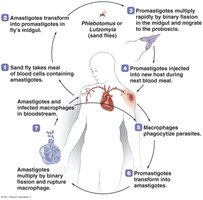
Leishmania: Leishmaniasis, transmitted by sand flies, has cutaneous, mucocutaneous, and visceral forms.
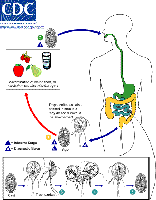
Giardia intestinalis (Giardiasis)
Transmission: Fecal-oral, contaminated water/food.
Symptoms: Diarrhea, abdominal cramps.
Diagnosis: Microscopy or ELISA for cysts/trophs in stool.
Apicomplexans
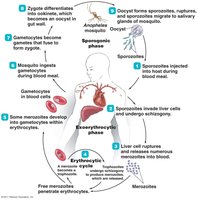
Plasmodium (Malaria): Transmitted by Anopheles mosquitoes, infects red blood cells.
Diagnosis: Blood smear microscopy.
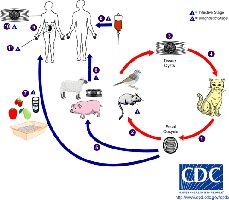
Toxoplasma gondii (Toxoplasmosis): Zoonotic, transmitted via undercooked meat or cat feces, can cause congenital infection.
Diagnosis: Serology for antibodies.
Cryptosporidium parvum: Causes diarrhea, transmitted via contaminated water, diagnosed by acid-fast stain or ELISA.
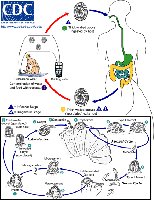
Nematodes
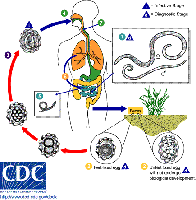
Ascaris lumbricoides (Ascariasis): Largest human nematode, transmitted via ingestion of eggs, diagnosed by eggs in stool.
Enterobius vermicularis (Pinworm): Diagnosed by perianal tape test for eggs.
Summary Table: Key Viruses and Their Features
Virus | Genome | Envelope | Transmission | Key Diseases |
|---|---|---|---|---|
Herpesviridae | dsDNA | Yes | Contact, droplets | Herpes, chickenpox, mononucleosis, CMV |
HPV | ssDNA | No | Contact | Warts, cervical cancer |
HBV | Partly dsDNA | Yes | Blood, sexual | Hepatitis, liver cancer |
HIV | +ssRNA (2 copies) | Yes | Blood, sexual | AIDS |
Influenza | -ssRNA (segmented) | Yes | Droplets | Flu |
Rotavirus | dsRNA | No | Fecal-oral | Diarrhea |
Poliovirus | +ssRNA | No | Fecal-oral | Polio |
SARS-CoV-2 | +ssRNA | Yes | Droplets | COVID-19 |
