Ch. 1 - A Brief History of Microbiology
Bauman - Microbiology with Diseases by Taxonomy 6th Edition
Bauman6th EditionMicrobiology with Diseases by TaxonomyISBN: 9780134832302Not the one you use?Change textbook
Chapter 1, Problem 9

Fill in the blanks with the name(s) of the scientist(s) whose investigations led to the following fields of study in microbiology.
Food microbiology ____________.

Verified step by step guidance
1
Understand that the question asks for the name(s) of the scientist(s) whose work contributed to the foundation of food microbiology.
Recall that food microbiology is the study of microorganisms that inhabit, create, or contaminate food, including their roles in food spoilage, fermentation, and foodborne illnesses.
Identify key historical figures who made significant contributions to food microbiology, such as Louis Pasteur, who demonstrated the role of microbes in fermentation and pasteurization.
Consider other scientists like Robert Koch, who developed methods to isolate and identify microbes, which also impacted food safety studies.
Conclude by selecting the most relevant scientist(s) associated with the development of food microbiology, primarily Louis Pasteur, and prepare to fill in the blank accordingly.

Verified video answer for a similar problem:

This video solution was recommended by our tutors as helpful for the problem above.
Video duration:
2m
Was this helpful?

Key Concepts

Here are the essential concepts you must grasp in order to answer the question correctly.

Food Microbiology

Food microbiology is the study of microorganisms that inhabit, create, or contaminate food. It focuses on understanding how microbes affect food safety, spoilage, and fermentation processes. This field helps in developing methods to preserve food and prevent foodborne illnesses.
Recommended video:
Guided course
07:27
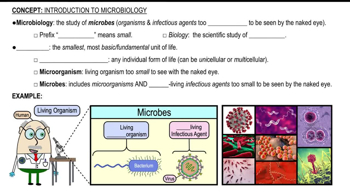
Introduction to Microbiology

Pioneering Scientists in Food Microbiology

Key scientists like Louis Pasteur and Robert Koch contributed significantly to food microbiology. Pasteur's work on fermentation and pasteurization laid the foundation for controlling microbial growth in food, while Koch's postulates helped identify pathogens responsible for foodborne diseases.
Recommended video:
Guided course
07:27
Introduction to Microbiology

Microbial Fermentation

Microbial fermentation is a metabolic process where microbes convert sugars into acids, gases, or alcohol, crucial in food production like yogurt, cheese, and bread. Understanding fermentation helps in harnessing beneficial microbes and preventing spoilage or harmful microbial growth.
Recommended video:
Guided course
02:02
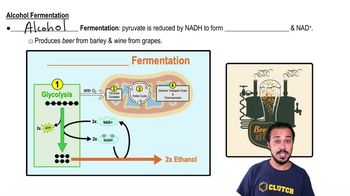
Alcohol Fermentation