Ch. 1 - A Brief History of Microbiology
Bauman - Microbiology with Diseases by Taxonomy 6th Edition
Bauman6th EditionMicrobiology with Diseases by TaxonomyISBN: 9780134832302Not the one you use?Change textbook
Chapter 1, Problem 1

Match each of the following descriptions with the person it best describes more than once or not at all. An answer may be used more than once.
1. Developed smallpox immunization
2. First photomicrograph of bacteria
3. Used mathematical data to improve nursing
4. Germs cause disease
5. Sought a “magic bullet” to destroy pathogens
6. Early epidemiologist
7. Father of Microbiology
8. Classification system
9. Discoverer of bacteria
10. Discoverer of protozoa
11. Founder of antiseptic surgery
12. Developed the most widely used bacterial staining technique


A. John Snow
B. Paul Ehrlich
C. Louis Pasteur
D. Antoni van Leeuwenhoek
E. Carolus Linnaeus
F. John Needham
G. Eduard Buchner
H. Robert Koch
I. Joseph Lister
J. Edward Jenner
K. Girolamo Fracastoro
L. Hans Christian Gram
M. Florence Nightingale

Verified step by step guidance
1
Step 1: Identify the key contributions or discoveries associated with each person listed. For example, Edward Jenner is known for developing smallpox immunization, so match description 1 with J.
Step 2: For each description, recall the historical figure most famously linked to that achievement. For instance, the first photomicrograph of bacteria is attributed to Robert Koch, so match description 2 with H.
Step 3: Use elimination and cross-reference to assign each description to the correct person, noting that some answers may be used more than once or not at all. For example, John Snow is known as an early epidemiologist and for using data to improve nursing, so match descriptions 3 and 6 with A and M respectively.
Step 4: For descriptions related to foundational microbiology concepts, such as 'Germs cause disease' and 'Father of Microbiology,' associate them with Louis Pasteur (C) and Antoni van Leeuwenhoek (D) respectively, based on their historical roles.
Step 5: Continue this process for all descriptions, ensuring to match 'Classification system' with Carolus Linnaeus (E), 'Magic bullet' with Paul Ehrlich (B), 'Founder of antiseptic surgery' with Joseph Lister (I), and 'Bacterial staining technique' with Hans Christian Gram (L).

Verified video answer for a similar problem:

This video solution was recommended by our tutors as helpful for the problem above.
Video duration:
4m
Was this helpful?

Key Concepts

Here are the essential concepts you must grasp in order to answer the question correctly.

Historical Contributions to Microbiology

Understanding the key figures and their discoveries is essential in microbiology. This includes pioneers like Edward Jenner who developed smallpox immunization, Louis Pasteur who demonstrated germ theory, and Robert Koch who identified specific pathogens. Recognizing these contributions helps link scientific advances to their discoverers.
Recommended video:
Guided course
07:27
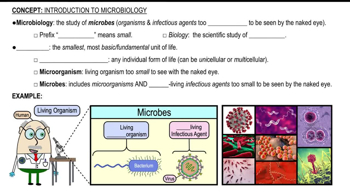
Introduction to Microbiology

Germ Theory of Disease

The germ theory states that microorganisms are the cause of many diseases. This concept, established by scientists such as Louis Pasteur and Robert Koch, revolutionized medicine by shifting the focus to identifying and controlling pathogens, leading to improved hygiene, vaccination, and treatment methods.
Recommended video:
Guided course
06:58
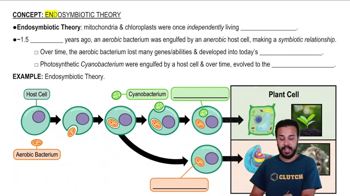
Endosymbiotic Theory

Microbiological Techniques and Tools

Techniques like bacterial staining (Gram stain by Hans Christian Gram), photomicrography, and classification systems (developed by Carolus Linnaeus) are fundamental for studying microbes. These tools allow scientists to visualize, identify, and categorize microorganisms, facilitating diagnosis and research.
Recommended video:
Guided course
07:27
Introduction to Microbiology