Ch. 25 - Pathogenic RNA Viruses
Bauman - Microbiology with Diseases by Taxonomy 6th Edition
Bauman6th EditionMicrobiology with Diseases by TaxonomyISBN: 9780134832302Not the one you use?Change textbook
Chapter 25, Problem 4

Why is AIDS more accurately termed a “syndrome” instead of a “disease”?

Verified step by step guidance
1
Understand the definition of a "disease" as a specific pathological condition with a consistent set of symptoms and signs caused by a particular agent or process.
Recognize that a "syndrome" refers to a collection of signs and symptoms that occur together and characterize a particular abnormality or condition, but may not have a single identifiable cause.
Identify that AIDS (Acquired Immunodeficiency Syndrome) is characterized by a range of symptoms and opportunistic infections resulting from the progressive failure of the immune system.
Note that AIDS is caused by the Human Immunodeficiency Virus (HIV), but the term "AIDS" itself describes the complex of symptoms and conditions that arise due to immune deficiency, rather than a single disease entity.
Conclude that AIDS is termed a "syndrome" because it encompasses multiple clinical manifestations and opportunistic infections linked by the underlying immune system failure, rather than being a single disease with one set of symptoms.

Verified video answer for a similar problem:

This video solution was recommended by our tutors as helpful for the problem above.
Video duration:
1m
Was this helpful?

Key Concepts

Here are the essential concepts you must grasp in order to answer the question correctly.

Definition of Syndrome vs. Disease

A disease is a specific pathological condition with a known cause and consistent symptoms, while a syndrome is a collection of signs and symptoms that occur together but may have multiple causes. AIDS is termed a syndrome because it encompasses various symptoms and opportunistic infections resulting from immune system failure.
Recommended video:
Guided course
04:57
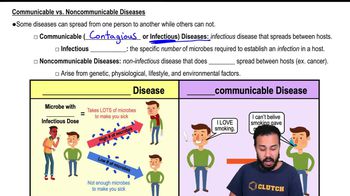
Communicable vs. Noncommunicable Diseases

Pathophysiology of AIDS

AIDS results from the progressive destruction of the immune system by the HIV virus, leading to a weakened defense against infections. This immune deficiency causes a range of illnesses rather than a single disease, which is why AIDS is characterized by multiple clinical manifestations.
Recommended video:
Guided course
03:26
Microbiome Makes Nutrients & Aids in Host Digestion

Role of Opportunistic Infections in AIDS

Opportunistic infections are illnesses that occur more frequently and severely in individuals with weakened immune systems. In AIDS patients, these infections vary widely, contributing to the syndrome’s diverse symptoms and making it a collection of conditions rather than a single disease.
Recommended video:
Guided course
04:16
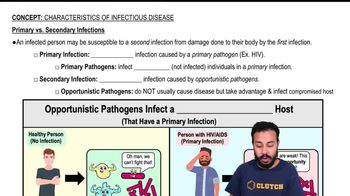
Primary vs. Secondary Infections