Ch. 10 - Host Microbe Interactions and Pathogenesis
Norman-McKay- Microbiology: Basic and Clinical Principles 2nd Edition
Norman-McKay2nd EditionMicrobiology: Basic and Clinical PrinciplesISBN: 9780137661619Not the one you use?Change textbook
Chapter 10, Problem 18

Which of the following is/are features of endotoxic shock? Select all that apply.
a. Fever
b. Confusion
c. Hypertension
d. Bradycardia
e. Decreased respiratory rate
f. Achiness

Verified step by step guidance
1
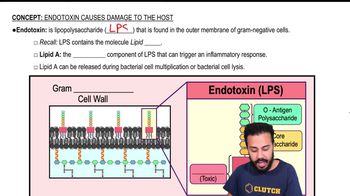
Understand that endotoxic shock is caused by the release of endotoxins (lipopolysaccharides) from the outer membrane of Gram-negative bacteria, which triggers a systemic inflammatory response.
Recall the common clinical features of endotoxic shock, which typically include fever due to the pyrogenic effect of endotoxins, confusion from impaired cerebral perfusion, and achiness as part of the systemic inflammatory response.
Recognize that endotoxic shock usually causes hypotension (low blood pressure) rather than hypertension, due to widespread vasodilation and increased vascular permeability.
Note that bradycardia (slow heart rate) and decreased respiratory rate are not typical features; instead, tachycardia (fast heart rate) and increased respiratory rate are more common as compensatory mechanisms.
Based on these points, identify the correct features of endotoxic shock from the options: fever, confusion, and achiness.

Verified video answer for a similar problem:

This video solution was recommended by our tutors as helpful for the problem above.
Video duration:
3m
Was this helpful?

Key Concepts

Here are the essential concepts you must grasp in order to answer the question correctly.

Endotoxic Shock

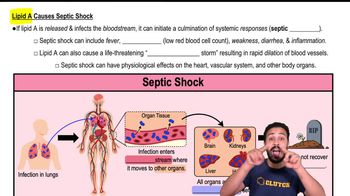
Endotoxic shock is a severe systemic response to endotoxins, typically from Gram-negative bacterial infections. It triggers widespread inflammation, leading to symptoms like fever, hypotension, and organ dysfunction. Understanding this condition is crucial for recognizing its clinical features and managing septic patients.
Recommended video:
Guided course
03:24
Lipid A Causes Septic Shock

Clinical Features of Endotoxic Shock

Key symptoms of endotoxic shock include fever, confusion, hypotension (low blood pressure), tachycardia (rapid heart rate), and increased respiratory rate. These signs result from the body's inflammatory response and impaired tissue perfusion. Recognizing these features helps differentiate endotoxic shock from other shock types.
Recommended video:
Guided course
03:24
Lipid A Causes Septic Shock

Physiological Effects of Endotoxins

Endotoxins stimulate immune cells to release cytokines, causing vasodilation, increased vascular permeability, and decreased blood pressure. This leads to compensatory tachycardia and increased respiratory rate to maintain oxygen delivery. Understanding these effects explains why symptoms like hypertension, bradycardia, or decreased respiratory rate are not typical.
Recommended video: