Ch. 11 - Innate Immunity
Norman-McKay- Microbiology: Basic and Clinical Principles 2nd Edition
Norman-McKay2nd EditionMicrobiology: Basic and Clinical PrinciplesISBN: 9780137661619Not the one you use?Change textbook
Chapter 11, Problem 5

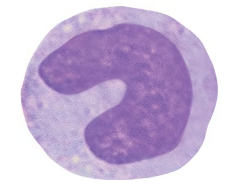
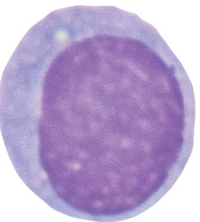
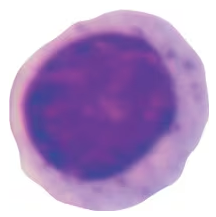
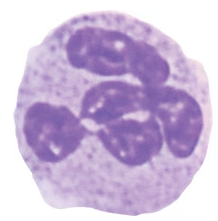
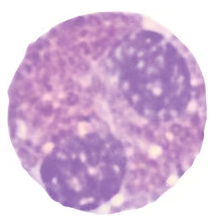
Which of the following would you expect to see increased in circulation in a patient suffering from allergies? Select all that apply.
a. Microscopic image of a neutrophil showing a multi-lobed nucleus and granular cytoplasm.
b. Microscopic image of a large immune cell with a dense, purple-stained nucleus and pale cytoplasm.


c. Microscopic image of a granulocyte cell with a multi-lobed nucleus stained purple and pink.
d. Microscopic image of a granulocyte with a multi-lobed nucleus stained purple.
e. Microscopic image of a granulocyte showing multi-lobed nucleus and granular cytoplasm.

Verified step by step guidance
1
Step 1: Understand the context of allergies in the immune system. Allergic reactions typically involve an immune response where certain cells and molecules increase in number or activity to combat what the body mistakenly perceives as harmful.
Step 2: Identify the key immune components involved in allergic reactions. These usually include mast cells, basophils, and eosinophils, as well as immunoglobulin E (IgE) antibodies, which play a central role in mediating allergic responses.
Step 3: Recall that during an allergic reaction, histamine and other inflammatory mediators are released from mast cells and basophils, leading to symptoms such as swelling, redness, and itching. Eosinophils also increase to help modulate the allergic inflammation.
Step 4: Analyze the options (images) provided, focusing on which immune cells or molecules are shown. Look for representations of basophils, eosinophils, mast cells, or IgE antibodies, as these are typically elevated in allergic conditions.
Step 5: Select all options that correspond to these allergy-associated immune components, as these would be expected to increase in circulation during an allergic reaction.

Verified video answer for a similar problem:

This video solution was recommended by our tutors as helpful for the problem above.
Video duration:
1m
Was this helpful?

Key Concepts

Here are the essential concepts you must grasp in order to answer the question correctly.

Allergic Reaction and Immune Response

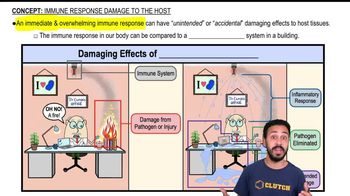
Allergic reactions occur when the immune system overreacts to harmless substances called allergens. This triggers the release of chemicals like histamine and activates specific immune cells, leading to symptoms such as inflammation, swelling, and increased mucus production.
Recommended video:
Guided course
02:57
Intro to Immune Response Damage

Role of Eosinophils in Allergies

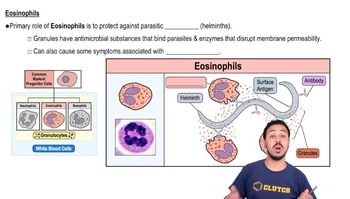
Eosinophils are a type of white blood cell that increase in number during allergic reactions and parasitic infections. They help mediate inflammation by releasing toxic proteins and signaling molecules, making their elevated presence a key indicator of allergic responses.
Recommended video:

Types of White Blood Cells and Their Functions

Different white blood cells have distinct roles: neutrophils fight bacterial infections, lymphocytes manage adaptive immunity, basophils release histamine during allergies, and eosinophils combat parasites and modulate allergic inflammation. Understanding their functions helps identify which cells increase during allergies.
Recommended video:
Guided course
05:42
Cell Junctions
Related Practice
Textbook Question

Pick which statements are true, then correct all false statements, so they are also true.

a. Redness, pain, fever, and swelling characterize inflammation.

b. Granulocytes include monocytes and lymphocytes.

c. Pyrogens induce fever.

d. Adaptive and innate immune responses are completely independent from one another.

e. The innate immune responses occur faster than adaptive responses.

f. Monocytes are highly phagocytic cells.

g. Complement cascades share the same outcomes: opsonization, cytolysis, and fever.

1360
views
Textbook Question

Which of the following would you not expect to see in the first stage of inflammation?

a. Histamine

b. Kinins

c. Macrophages

d. Increased blood vessel permeability

e. Eicosanoids

1257
views
Textbook Question

Which of the following would most directly reduce fever? Select all that apply.

a. Limiting the number of circulating white blood cells

b. Reducing eicosanoid production

c. Inhibiting pyrogenic cytokines

d. Stimulating the action of prostaglandins

e. Administering antihistamines

1454
views
Textbook Question

Which of the following would you expect to see in acute infection by a Gram-negative bacterium? Select all that apply.

a. Pyrexia

b. Decreased lymphocytes

c. Neutrophilic lymphocytosis

d. Decreased monocytes

e. Increased release of pro-inflammatory cytokines

1396
views
Textbook Question

Label the following as granulocytes or agranulocytes and classify them as innate or adaptive cellular responders.

Basophil

Monocyte

Macrophage

Lymphocyte

Neutrophil

Eosinophil

Mast cell

NK cell

T cell

1468
views
Textbook Question

The ____________ cascade of complement activation is initiated by antibodies. In contrast, the ____________ cascade is activated by a direct interaction with complement proteins, and the ____________ cascade is activated by MBL associating with a pathogen.

1317
views