Ch. 16 - Respiratory System Infections
Norman-McKay- Microbiology: Basic and Clinical Principles 2nd Edition
Norman-McKay2nd EditionMicrobiology: Basic and Clinical PrinciplesISBN: 9780137661619Not the one you use?Change textbook
Chapter 16, Problem 15

From the following list, select all of the diseases that antibiotics do not directly cure.
a. Hanta pulmonary syndrome
b. Streptococcus pneumoniae
c. Colds
d. Influenza
e. Haemophilus influenzae
f. COVID-19
g. Legionellosis
h. Tularemia

Verified step by step guidance
1
Step 1: Understand that antibiotics are drugs designed to kill or inhibit the growth of bacteria, so they are effective against bacterial infections but not viral infections.
Step 2: Identify which diseases in the list are caused by bacteria. For example, Streptococcus pneumoniae, Haemophilus influenzae, Legionellosis, and Tularemia are bacterial infections.
Step 3: Identify which diseases in the list are caused by viruses. For example, Hanta pulmonary syndrome, colds, influenza, and COVID-19 are viral infections.
Step 4: Recognize that antibiotics do not directly cure viral diseases because viruses have different structures and replication mechanisms that antibiotics do not target.
Step 5: Conclude that antibiotics do not directly cure the viral diseases from the list, which include Hanta pulmonary syndrome, colds, influenza, and COVID-19.

Verified video answer for a similar problem:

This video solution was recommended by our tutors as helpful for the problem above.
Video duration:
2m
Was this helpful?

Key Concepts

Here are the essential concepts you must grasp in order to answer the question correctly.

Difference Between Bacterial and Viral Infections

Bacterial infections are caused by bacteria and can often be treated with antibiotics, which target bacterial structures or functions. Viral infections, caused by viruses, do not respond to antibiotics because viruses replicate inside host cells and require antiviral drugs or immune responses for treatment.
Recommended video:
Guided course
05:12
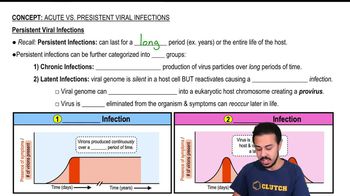
Persistent Viral Infections

Mechanism of Action of Antibiotics

Antibiotics work by targeting specific bacterial processes such as cell wall synthesis, protein production, or DNA replication. They are ineffective against viruses because viruses lack these bacterial structures and rely on host cell machinery, making antibiotics unsuitable for viral diseases.
Recommended video:
Guided course
01:59
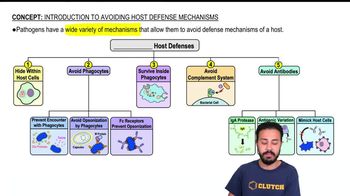
Introduction to Avoiding Host Defense Mechanisms

Identification of Diseases Caused by Bacteria vs. Viruses

Understanding which diseases are bacterial or viral is essential for treatment decisions. For example, Streptococcus pneumoniae, Haemophilus influenzae, Legionellosis, and Tularemia are bacterial infections treatable with antibiotics, while Hanta pulmonary syndrome, colds, influenza, and COVID-19 are viral and not cured by antibiotics.
Recommended video:
Guided course
04:57
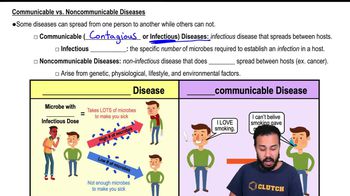
Communicable vs. Noncommunicable Diseases
Related Practice
Textbook Question

Indicate the true statements, and then correct the false statements so that they are true.

a. The most common viruses that cause human respiratory system infections are cold viruses.

b. Viruses can be treated with antibiotics.

c. People who have been exposed to cold and/or wet conditions are statistically more likely to develop a cold.

d. Many respiratory illnesses that are not caused by influenza viruses have flu-like symptoms.

e. The flu vaccine is not recommended for children under 2 years of age.

f. Pneumonia is a rare healthcare-acquired infection.

823
views
Textbook Question

Match the following:

885
views
Textbook Question

Select the true statements about SARS-CoV-2. (Select all that apply.)

a. It causes COVID-19.

b. It is vaccine preventable.

c. The FDA has approved hydroxychloroquine to treat infections with this virus.

d. It is considered a zoonotic infection.

e. It causes a form of viral pneumonia.

1213
views
Textbook Question

Which of the following would you expect for a SARS-CoV-2 variant that is classified as a variant of interest? (Select all that apply.)

a. The isolated virus is genetically unique as compared to earlier circulating versions of SARS-CoV-2.

b. There is evidence that the variant completely evades vaccine-induced immunity.

c. The variant is broadly detectable with current diagnostic tools.

d. The variant can cause viral pneumonia.

e. Infections caused by the variant are not treatable with existing approved drug therapies.

1275
views
Textbook Question

Choose the general agent of the disease (select ONE choice of agent from the options after each illness):

a. Pneumococcal pneumonia is caused by a (virus, bacterium, fungus).

b. Pneumocystis pneumonia is caused by a (virus, bacterium, fungus).

c. Tuberculosis is caused by a (virus, bacterium, fungus).

d. Histoplasmosis is caused by a (virus, bacterium, fungus).

e. Influenza is caused by a (virus, bacterium, fungus).

f. Colds are caused by (viruses, bacteria, fungi).

g. Coccidioidomycosis is caused by a (virus, bacterium, fungus).

h. Diphtheria is caused by a (virus, bacterium, fungus).

i. Pertussis is caused by a (virus, bacterium, fungus).

j. Scarlet fever is caused by a (virus, bacterium, fungus).

k. Legionellosis is caused by a (virus, bacterium, fungus).

l. Q fever is caused by a (virus, bacterium, fungus).

m. Hanta pulmonary syndrome is caused by a (virus, bacterium, fungus).

n. Streptococcal pharyngitis is caused by a (virus, bacterium, fungus).

26
views