Ch. 21 - Cardiovascular and Lymphatic Infections
Norman-McKay- Microbiology: Basic and Clinical Principles 2nd Edition
Norman-McKay2nd EditionMicrobiology: Basic and Clinical PrinciplesISBN: 9780137661619Not the one you use?Change textbook
Chapter 21, Problem 15

How does Rickettsia rickettsii damage blood vessels?
a. It blocks blood vessels and causes vessel inflammation.
b. It releases a toxin that destroys blood vessels.
c. It causes sepsis and septic shock, which damages blood vessels.
d. It avoids antibodies by binding to blood vessel surfaces.
e. It infects the epithelial cells of the vessels.

Verified step by step guidance
1
Step 1: Understand the nature of Rickettsia rickettsii. It is an obligate intracellular bacterium known to infect cells lining the blood vessels.
Step 2: Recall that Rickettsia rickettsii primarily targets endothelial cells, which are the epithelial cells lining the interior surface of blood vessels.
Step 3: Recognize that infection of endothelial cells leads to cell damage and increased vascular permeability, which can cause inflammation and leakage.
Step 4: Evaluate each answer choice by comparing it to the known mechanism: it does not primarily block vessels, release toxins, cause sepsis directly, or evade antibodies by binding to vessel surfaces.
Step 5: Conclude that the correct mechanism involves infection of the endothelial (epithelial) cells of blood vessels, leading to damage and inflammation.

Verified video answer for a similar problem:

This video solution was recommended by our tutors as helpful for the problem above.
Video duration:
2m
Was this helpful?

Key Concepts

Here are the essential concepts you must grasp in order to answer the question correctly.

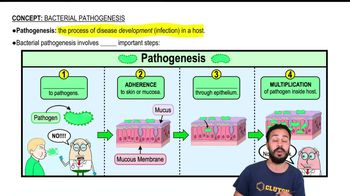
Pathogenesis of Rickettsia rickettsii

Rickettsia rickettsii is an obligate intracellular bacterium that primarily infects endothelial cells lining small blood vessels. Its replication inside these cells leads to cell damage and inflammation, causing increased vascular permeability and vasculitis, which underlies the clinical symptoms of Rocky Mountain spotted fever.
Recommended video:
Guided course
02:35
Intro to Bacterial Pathogenesis

Role of Endothelial Cell Infection in Vascular Damage

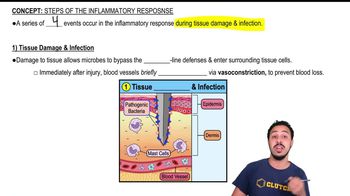
Infection of endothelial cells by Rickettsia rickettsii disrupts the integrity of blood vessel walls. This damage results in leakage of plasma and red blood cells into surrounding tissues, leading to characteristic rash and edema. The direct infection, rather than toxin release, is key to vascular injury.
Recommended video:
Guided course
02:38
1) Tissue Damage & Infection

Immune Response and Inflammation in Rickettsial Infections

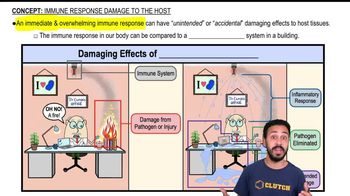
The host immune response to Rickettsia infection involves inflammation that contributes to vessel damage. Activated immune cells release cytokines and mediators that exacerbate endothelial injury and promote vasculitis, which can lead to complications like thrombosis and shock if untreated.
Recommended video:
Guided course
02:57
Intro to Immune Response Damage