Ch. 7 - Fundamentals of Microbial Growth
Norman-McKay- Microbiology: Basic and Clinical Principles 2nd Edition
Norman-McKay2nd EditionMicrobiology: Basic and Clinical PrinciplesISBN: 9780137661619Not the one you use?Change textbook
Chapter 7, Problem 4

Which of the following pathogens would hyperbaric oxygen therapy, a treatment that increases the level of dissolved oxygen in tissues, most likely ward off? Select all that apply.
a. Anaerobic thermophile
b. Anaerobic mesophile
c. Facultative anaerobic thermophile
d. Facultative anaerobic mesophile
e. Microaerophilic mesophile

Verified step by step guidance
1
Understand the principle behind hyperbaric oxygen therapy: it increases the amount of dissolved oxygen in tissues, which can be harmful to organisms that cannot tolerate high oxygen levels.
Recall the oxygen requirements of different types of microorganisms: anaerobes cannot survive in the presence of oxygen, facultative anaerobes can survive with or without oxygen, and microaerophiles require low oxygen levels.
Identify which pathogens are obligate anaerobes (cannot tolerate oxygen) versus facultative anaerobes or microaerophiles, since hyperbaric oxygen therapy would be most effective against obligate anaerobes.
Analyze the options: anaerobic thermophiles and anaerobic mesophiles are obligate anaerobes and would be harmed by increased oxygen; facultative anaerobes and microaerophiles can tolerate oxygen to some extent and are less likely to be affected.
Conclude that hyperbaric oxygen therapy would most likely ward off pathogens classified as anaerobic thermophiles and anaerobic mesophiles.

Verified video answer for a similar problem:

This video solution was recommended by our tutors as helpful for the problem above.
Video duration:
2m
Was this helpful?

Key Concepts

Here are the essential concepts you must grasp in order to answer the question correctly.

Oxygen Requirements of Microorganisms

Microorganisms are classified based on their oxygen needs: obligate anaerobes cannot survive in oxygen; facultative anaerobes can grow with or without oxygen; microaerophiles require low oxygen levels; and aerobes need oxygen. Understanding these categories helps predict how oxygen-rich treatments affect them.
Recommended video:
Guided course
03:52
Oxygen Requirements for Microbial Growth

Hyperbaric Oxygen Therapy (HBOT)

HBOT involves breathing pure oxygen at higher-than-atmospheric pressures, increasing oxygen dissolved in tissues. This therapy is effective against anaerobic infections because high oxygen levels are toxic to obligate anaerobes, inhibiting their growth and survival.
Recommended video:
Guided course
04:43
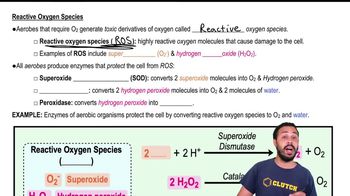
Reactive Oxygen Species

Temperature Preferences of Microorganisms

Microbes are also classified by temperature preference: thermophiles thrive at high temperatures, mesophiles at moderate temperatures. While temperature affects growth, it is less relevant than oxygen tolerance when considering HBOT's effectiveness against pathogens.
Recommended video:
Guided course
01:25
Importance of Microorganisms