Ch. 1 - The Microbial World and You
Tortora - Microbiology: An Introduction 14th Edition
Tortora14th EditionMicrobiology: An IntroductionISBN: 9780138200398Not the one you use?Change textbook
Chapter 1, Problem 7

It has been said that bacteria are essential for the existence of life on Earth. Which of the following is the essential function performed by bacteria?
a. Control insect populations
b. Directly provide food for humans
c. Decompose organic material and recycle elements
d. Cause disease
e. Produce human hormones such as insulin

Verified step by step guidance
1
Read the question carefully to understand what is being asked: identify the essential function performed by bacteria that supports life on Earth.
Review each option and consider the role of bacteria in the environment and human life:
a. Control insect populations – While some bacteria may affect insects, this is not their primary or essential ecological role.
b. Directly provide food for humans – Bacteria are not a direct food source for humans, although they contribute indirectly through fermentation and nutrient cycling.
c. Decompose organic material and recycle elements – Bacteria break down dead organic matter, releasing nutrients back into the environment, which is crucial for nutrient cycling and ecosystem sustainability.
d. Cause disease – Although bacteria can cause disease, this is not an essential function for the existence of life on Earth.
e. Produce human hormones such as insulin – Some bacteria can be engineered to produce insulin, but this is a biotechnological application, not a natural essential function.
Conclude that the essential function of bacteria is best described by option c, as decomposition and nutrient recycling are fundamental to maintaining life-supporting ecosystems.

Verified video answer for a similar problem:

This video solution was recommended by our tutors as helpful for the problem above.
Video duration:
2m
Was this helpful?

Key Concepts

Here are the essential concepts you must grasp in order to answer the question correctly.

Role of Bacteria in Decomposition

Bacteria play a crucial role in breaking down dead organic matter, converting it into simpler substances. This decomposition process recycles essential elements like carbon, nitrogen, and phosphorus back into the environment, maintaining ecosystem balance and supporting life.
Recommended video:
Guided course
06:18
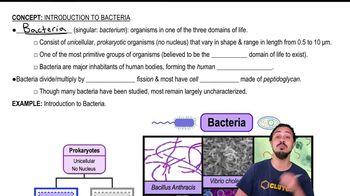
Introduction to Bacteria

Bacteria and Nutrient Cycling

Through decomposition and other metabolic activities, bacteria facilitate nutrient cycling, which is vital for soil fertility and plant growth. This cycling ensures that nutrients are continuously available in ecosystems, supporting various life forms including humans.
Recommended video:

Misconceptions about Bacterial Functions

While bacteria can cause diseases and be used in biotechnology (e.g., insulin production), their essential ecological function is not disease causation or direct food provision. Understanding these distinctions helps clarify bacteria’s fundamental role in sustaining life.
Recommended video:
Guided course
06:04
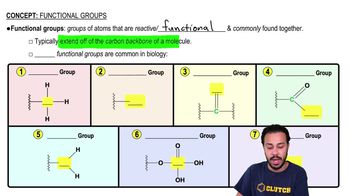
Functional Groups