Ch. 18 - Practical Applications of Immunology
Tortora - Microbiology: An Introduction 14th Edition
Tortora14th EditionMicrobiology: An IntroductionISBN: 9780138200398Not the one you use?Change textbook
Chapter 18, Problem 4

Use the following choices to answer questions 4 and 5:
a. Anti-Brucella
b. Brucella
c. Substrate for the enzyme
Which is the third step in a direct ELISA test?

Verified step by step guidance
1
Understand the principle of a direct ELISA test: it involves detecting an antigen immobilized on a surface using a labeled antibody specific to that antigen.
Recall the sequence of steps in a direct ELISA: first, the antigen (in this case, Brucella) is attached to the well surface.
Second, a labeled antibody (anti-Brucella) is added, which binds directly to the antigen.
Third, after washing away unbound antibodies, a substrate for the enzyme linked to the antibody is added to produce a detectable signal.
Therefore, identify the third step as the addition of the substrate for the enzyme to develop the signal.

Verified video answer for a similar problem:

This video solution was recommended by our tutors as helpful for the problem above.
Video duration:
2m
Was this helpful?

Key Concepts

Here are the essential concepts you must grasp in order to answer the question correctly.

Direct ELISA Procedure

Direct ELISA is an immunoassay technique used to detect the presence of an antigen in a sample. It involves immobilizing the antigen on a surface, then adding a labeled antibody that directly binds to the antigen. Understanding the sequence of steps—coating, blocking, antibody binding, and detection—is essential to identify the third step.
Recommended video:
Guided course
03:28
Direct Microscopic Cell Counts

Role of Antibodies in ELISA

Antibodies are proteins that specifically bind to antigens. In direct ELISA, a labeled antibody (such as anti-Brucella if detecting Brucella antigen) binds directly to the target antigen. Recognizing the function and specificity of antibodies helps clarify which reagent is added at each step.
Recommended video:

Enzyme-Substrate Reaction in ELISA Detection

The enzyme linked to the antibody catalyzes a reaction with a substrate to produce a detectable signal, usually a color change. This step follows antibody binding and is crucial for visualizing the presence of the antigen. Knowing when the substrate is added helps determine the order of ELISA steps.
Recommended video:
Guided course
03:49
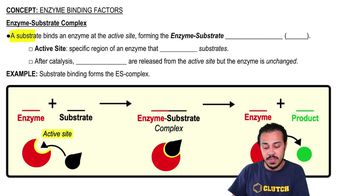
Enzyme-Substrate Complex