 Back
BackDemand, Supply, and Market Equilibrium: Microeconomics Study Guide
Study Guide - Smart Notes
 Tailored notes based on your materials, expanded with key definitions, examples, and context.
Demand and Supply in Competitive Markets
Perfectly Competitive Markets
Microeconomics often analyzes markets under the assumption of perfect competition. In such markets, there are many buyers and sellers, products are identical, and there are no barriers to entry for new firms. This model forms the foundation for understanding how prices and quantities are determined.
Key Features: Many participants, identical products, free entry and exit.
Importance: Ensures that no single buyer or seller can influence the market price.
Application: Used to analyze agricultural markets, stock exchanges, and other highly competitive environments.

Market Equilibrium
Definition and Determination
Market equilibrium occurs at the intersection of the supply and demand curves, where the quantity supplied equals the quantity demanded. At this point, the market price is stable, and there is no tendency for it to change unless an external factor intervenes.
Equilibrium Price: The price at which supply equals demand.
Equilibrium Quantity: The quantity bought and sold at the equilibrium price.
Role of Prices: Prices adjust to move markets toward equilibrium, ensuring efficient allocation of resources.
Shortages and Surpluses
When the market price is below equilibrium, a shortage occurs (quantity demanded exceeds quantity supplied). Conversely, when the price is above equilibrium, a surplus occurs (quantity supplied exceeds quantity demanded). These imbalances prompt price adjustments:
Shortage: Sellers raise prices to increase revenue and reduce excess demand.
Surplus: Sellers lower prices to clear excess inventory.


Demand: Changes and Shifts
Change in Demand vs. Change in Quantity Demanded
It is crucial to distinguish between a change in demand (shift of the demand curve) and a change in quantity demanded (movement along the demand curve):
Change in Quantity Demanded: Caused by a change in the price of the good itself; represented as movement along the curve.
Change in Demand: Caused by external factors; represented as a shift of the entire curve.

Factors That Shift Demand
Several external factors can shift the demand curve:
Price of Related Goods: Substitutes and complements affect demand.
Income: Higher income increases demand for normal goods, decreases demand for inferior goods.
Tastes and Preferences: Changes in consumer preferences shift demand.
Expectations: Anticipated future prices or income affect current demand.
Number of Consumers: More consumers increase market demand.
Substitutes and Complements
Related goods influence demand:
Substitutes: Goods that can replace each other. An increase in the price of one increases demand for the other.
Complements: Goods consumed together. An increase in the price of one decreases demand for the other.


Income Effects: Normal vs. Inferior Goods
Income changes affect demand differently depending on the type of good:
Normal Goods: Demand increases as income rises.
Inferior Goods: Demand decreases as income rises.


Supply: Changes and Shifts
Factors That Shift Supply
Supply curves shift due to changes in:
Input Prices: Higher input costs reduce supply; lower costs increase supply.
Price of Related Goods in Production: Substitutes and complements in production affect supply decisions.
Technology: Improvements increase supply.
Expectations: Anticipated future prices affect current supply.
Number of Producers: More producers increase market supply.
Input Prices
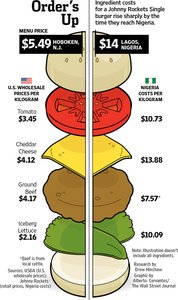
Examples of input price changes include labor costs, maintenance, advertising, electricity, taxes, and rent. Input price changes are inversely related to a firm’s willingness to supply.
Related Goods in Production
Substitutes in Production: If the price of a substitute rises, supply of the original good decreases.
Complements in Production: If the price of a complement rises, supply of the original good increases.

Shifts in Supply and Demand: Effects on Equilibrium
Demand Curve Shifts
An increase in demand leads to a higher equilibrium price and quantity. A decrease in demand leads to a lower equilibrium price and quantity.
Supply Curve Shifts
An increase in supply leads to a lower equilibrium price and higher equilibrium quantity. A decrease in supply leads to a higher equilibrium price and lower equilibrium quantity.
Simultaneous Shifts
When both supply and demand shift, the effect on equilibrium price and quantity depends on the relative magnitude of each shift:
Large increase in demand, small decrease in supply: Price rises, quantity rises.
Small increase in demand, large decrease in supply: Price rises, quantity falls.
Real-World Complications
Market Dynamics and Expectations
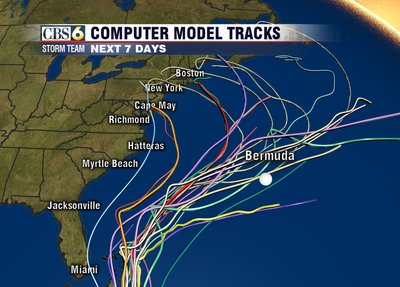
Markets are influenced by real-world events such as natural disasters, policy changes, and consumer expectations. For example, the anticipation of a hurricane can cause shifts in supply and demand as consumers and producers adjust their behavior.
Summary Table: Demand and Supply Shifters
Demand Shifters | Supply Shifters |
|---|---|
Price of related goods (substitutes/complements) | Input prices |
Income (normal/inferior goods) | Price of related goods in production |
Tastes & preferences | Technology |
Expectations | Expectations |
Number of consumers | Number of producers |
Key Equations
Market Equilibrium:
Demand Function:
Supply Function:
Additional info: These equations are foundational for quantitative analysis in microeconomics and are used to solve for equilibrium price and quantity.
