 Back
BackEconomic Methods, Models, and Evidence-Based Questions in Microeconomics
Study Guide - Smart Notes
 Tailored notes based on your materials, expanded with key definitions, examples, and context.
Economic Methods and Economic Questions
Key Concepts from Chapter 1
Microeconomics explores how individuals and firms make decisions, optimize outcomes, and interact within markets. It also examines broader issues such as equilibrium, public goods, and empirical analysis.
Optimization: The process of making the best possible choice given constraints. Cost-benefit analysis is a key tool for optimization, weighing the benefits and costs of different actions.
Equilibrium: A state in which no participant can benefit by changing their behavior. In labor markets, equilibrium means wages and employment levels are stable unless external factors intervene.
Free-Rider Problem: Occurs when individuals benefit from resources without paying for them, leading to under-provision of public goods.
Tragedy of the Commons: When individuals overuse a shared resource, depleting it for everyone. Such systems are rarely Pareto optimal.
Economic Empiricism: The use of theory, data, and statistical techniques to test hypotheses about human behavior.
Evidence-Based Economics: Is College Worth It?
Economists use models and data to evaluate the costs and benefits of decisions, such as investing in college education. Opportunity costs, tuition, and future earnings are central to this analysis.
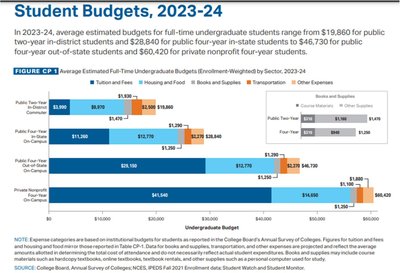
Costs: Tuition, room and board, and opportunity cost (foregone earnings).
Benefits: Increased future earnings and improved employment prospects.
The Scientific Method in Economics
Developing and Testing Models
The scientific method in economics involves creating simplified models to explain real-world phenomena and testing these models with empirical data.
Model: A simplified description of reality, often mathematical or descriptive.
Theory: A set of statements about relationships between variables, used to account for observed phenomena.
Exogeneity: Variables determined outside the system.
Endogeneity: Variables determined within the system.


Empirical Applications: Institutions and Growth
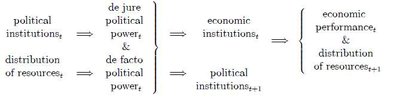
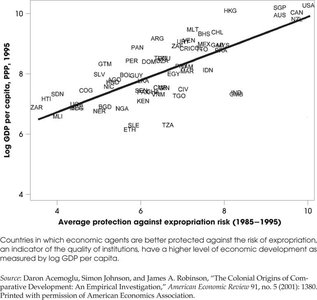
Institutions play a fundamental role in economic development. The framework by Acemoglu, Johnson, and Robinson links political and economic institutions to long-run growth.
Political Institutions: Shape economic institutions and performance.
Economic Institutions: Affect economic outcomes and resource distribution.
Modeling and Measuring Causal Effects
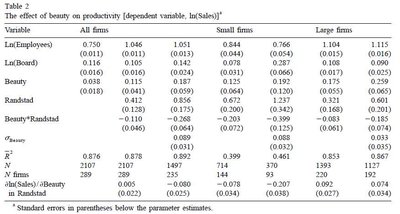
Beauty Capital and Firm Performance
Economists use models to estimate the impact of variables such as employee attractiveness (beauty capital) on firm productivity and revenue.
Production Function: , where is value added, is number of employees, is physical capital, and is beauty capital.
Profit Maximization: Firms choose , , and to maximize profits: .
Empirical Findings: Firms with more beautiful executives generate higher revenues.

Returns to Education
Models estimate the effect of additional education on future earnings. Empirical data is used to test these predictions.
Model: Each additional year of education increases earnings by 10%.
Formula: where is earnings after years.
Example: Four years of college increases earnings from $15 to $21.97, a 46.5% increase.
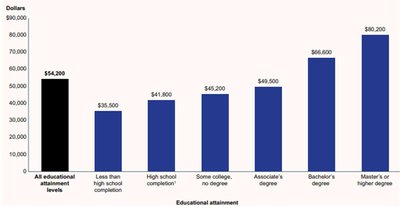
Empirical Data: Median earnings for college graduates are about 59% higher than for high school graduates.
Mean vs. Median
Definitions and Applications
Understanding the difference between mean and median is crucial for interpreting wage data.
Mean: The average value of a group of numbers.
Median: The middle value in a sorted group of numbers.
Example: Wage distribution among workers can be skewed, making median a better measure of central tendency.

Educational Attainment and Earnings
Comparing Wages by Education Level
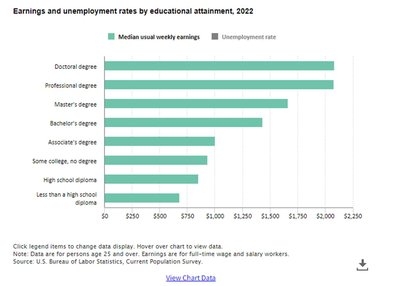
Higher educational attainment is associated with higher earnings. The wage premium for college graduates is substantial.
College Wage Premium: for college graduates vs. for high school graduates.
Percentage Increase: (59% higher).




Trends in College Pricing and Opportunity Cost
Cost Components and Trends
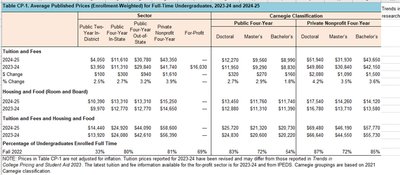
College expenses include tuition, room and board, and opportunity costs. These costs vary by institution type and location.
Tuition: Ranges from $5,014 (community college) to $41,540 (private college).
Room and Board: $12,770-$14,650 per year.
Opportunity Cost: At least $15,000 per year in foregone earnings.

Unemployment and Educational Attainment
Labor Market Outcomes
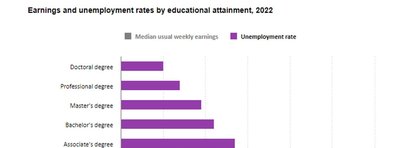
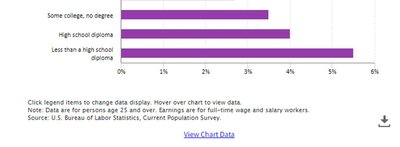
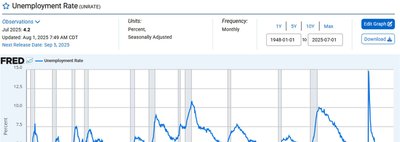
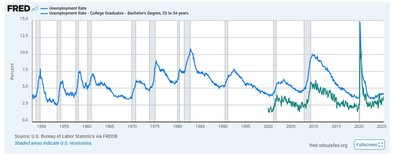
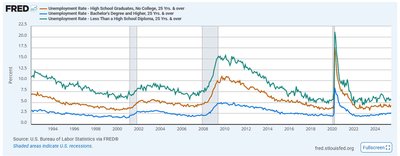
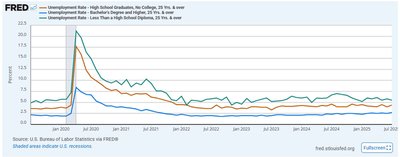
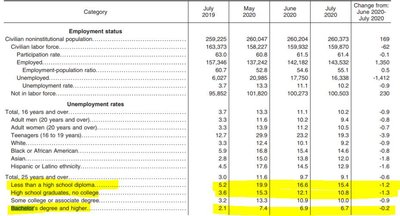
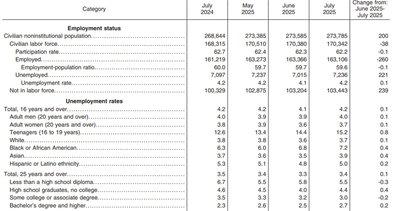
Unemployment rates are lower for individuals with higher educational attainment, especially during economic downturns.
Data: Bureau of Labor Statistics and Federal Reserve Economic Data (FRED).
Trend: College graduates have consistently lower unemployment rates than those with only a high school diploma.

Causation and Correlation
Key Concepts
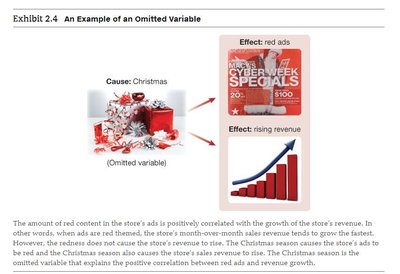
Distinguishing between causation and correlation is essential for economic analysis. Correlation does not imply causality, and omitted variables or reverse causality can confound results.
Causation: One variable directly affects another.
Correlation: Two variables are related, but not necessarily causally.
Omitted Variable: A missing factor that explains the relationship between two variables.
Reverse Causality: The direction of cause and effect is mixed up.




Experiments in Economics
Controlled and Natural Experiments
Experiments help economists distinguish causality from correlation. Randomized controlled trials (RCTs) and natural experiments are key methods.
Controlled Experiment: Subjects are randomly assigned to treatment and control groups.
Natural Experiment: Assignment to groups occurs due to external factors, not researcher intervention.
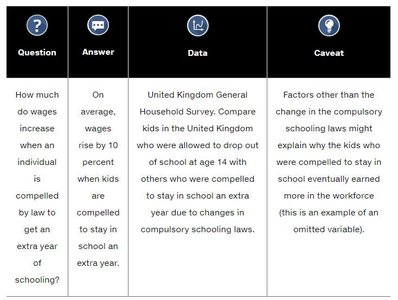
Example: Compulsory schooling laws in the UK provided a natural experiment to study the effect of education on earnings.
Randomized Controlled Trials and Omitted Variable Bias
Mask Studies and Meta-Analysis
RCTs are used to test interventions such as mask-wearing during the COVID-19 pandemic. Meta-analyses aggregate evidence from multiple studies.
Denmark Mask Study: No statistically significant difference in infection rates between mask and control groups.
Bangladesh Study: Surgical masks reduced symptomatic seroprevalence among older adults.
Meta-Analysis: Mask-wearing in the community probably makes little or no difference to the outcome of influenza-like illness or COVID-19.
Hand Hygiene: May reduce respiratory illness by 11%.
Properties of Good Economic Questions
Relevance and Empirical Testability
Good economic questions are relevant to social welfare and can be answered empirically using models and data.
Example: The Alaska Native Claims Settlement Act (ANCSA) as a natural experiment to study the effect of shareholder status on lifetime outcomes.
Summary Table: Returns to Education Natural Experiment
Question | Answer | Data | Caveat |
|---|---|---|---|
How much do wages increase when an individual is compelled by law to get an extra year of schooling? | On average, wages rise by 10 percent when kids are compelled to stay in school an extra year. | United Kingdom General Household Survey. Compare kids in the United Kingdom who were allowed to drop out of school at age 14 with others who were compelled to stay in school an extra year due to changes in compulsory schooling laws. | Factors other than the change in the compulsory schooling laws might explain why the kids who were compelled to stay in school eventually earned more in the workforce (this is an example of an omitted variable). |
