Back
BackElasticity: The Responsiveness of Demand and Supply & Firm Funds, Taxation, and Income Distribution
Study Guide - Smart Notes
 Tailored notes based on your materials, expanded with key definitions, examples, and context.
Elasticity: The Responsiveness of Demand and Supply
Introduction to Elasticity
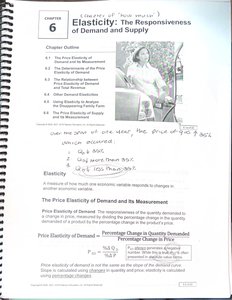
Elasticity measures how much one economic variable responds to changes in another economic variable. In microeconomics, the most common applications are the price elasticity of demand and supply, which quantify how quantity demanded or supplied responds to price changes.
Price Elasticity of Demand and Its Measurement
The price elasticity of demand is the percentage change in quantity demanded divided by the percentage change in price. It is a key concept for understanding consumer responsiveness to price changes.
Formula:
Interpretation: If elasticity > 1 (in absolute value), demand is elastic; if elasticity < 1, demand is inelastic; if elasticity = 1, demand is unit elastic.
Example: If the price of a good increases by 10% and quantity demanded falls by 20%, the price elasticity of demand is -2 (elastic demand).
Elastic and Inelastic Demand
Elasticity values help classify demand:
Elastic Demand: (quantity demanded changes more than price)
Inelastic Demand: (quantity demanded changes less than price)
Unit-Elastic Demand: (quantity demanded changes exactly as price does)
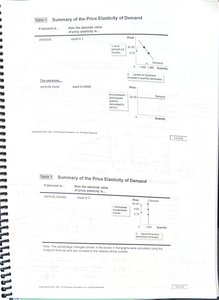
Summary of the Price Elasticity of Demand
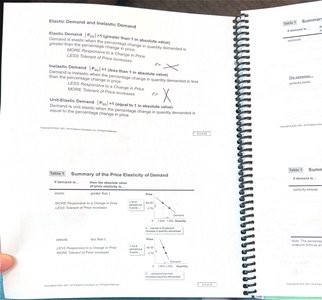
Tables and graphs are used to summarize the different types of price elasticity of demand, showing the relationship between price changes and total revenue.
The Midpoint Formula
The midpoint formula is used to calculate elasticity between two points on a demand curve, ensuring consistent results regardless of the direction of change.
Example: If , , , , plug into the formula to find elasticity.

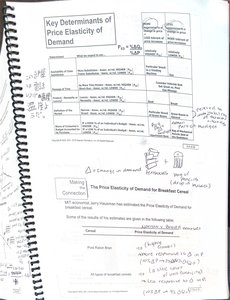
Key Determinants of Price Elasticity of Demand
Several factors influence the price elasticity of demand:
Availability of close substitutes
Passage of time
Necessities versus luxuries
Definition of the market
Share of a good in a consumer’s budget
Elasticity and Total Revenue
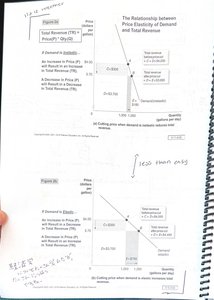
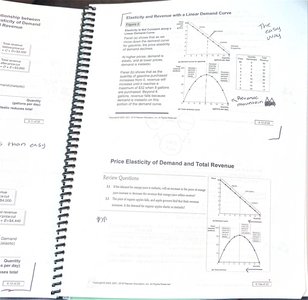
The relationship between price elasticity of demand and total revenue is crucial for businesses:
If demand is elastic, a price decrease increases total revenue.
If demand is inelastic, a price decrease decreases total revenue.
If demand is unit elastic, total revenue remains unchanged when price changes.
Cross-Price and Income Elasticity of Demand
Other important elasticity measures include:
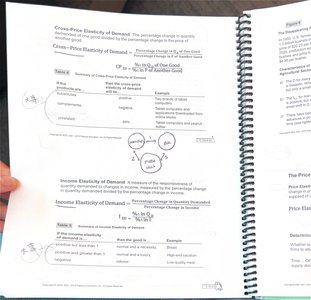
Cross-Price Elasticity of Demand: Measures the responsiveness of quantity demanded for one good to a change in the price of another good.
Income Elasticity of Demand: Measures the responsiveness of quantity demanded to a change in income.
Price Elasticity of Supply
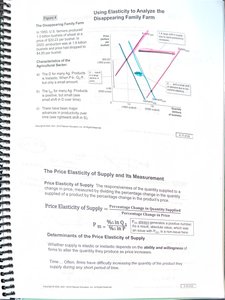
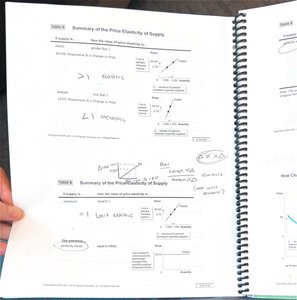
The price elasticity of supply measures how much the quantity supplied responds to changes in price. It is calculated similarly to demand elasticity.
Determinants: Availability of inputs, time period for adjustment, and flexibility of production.
Firm Funds, Government Taxation, and Consumer Income
Types of Firms, Funding, and Profits
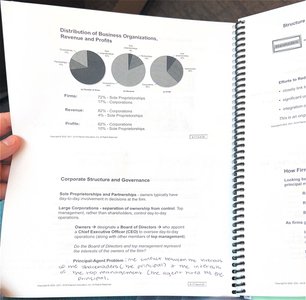
Firms can be organized in several ways, each with different implications for funding and profits:
Sole Proprietorship: Owned by one individual.
Partnership: Owned by two or more individuals.
Corporation: Legal entity separate from its owners.

Corporate Structure and Governance
Corporations have a formal structure, typically including a board of directors and managers. The principal-agent problem arises when managers (agents) do not act in the best interests of shareholders (principals).
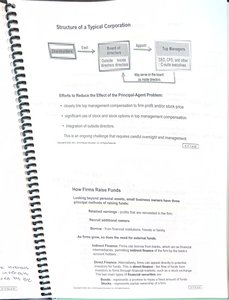
How Firms Raise Funds
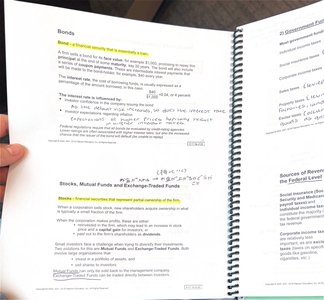
Firms raise funds through retained earnings, borrowing (loans or bonds), and issuing stock. Bonds are debt securities, while stocks represent ownership in the firm.
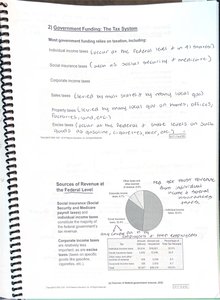
Government Funding: The Tax System
Governments fund expenditures primarily through taxes, including individual and corporate income taxes, property taxes, and social insurance taxes.
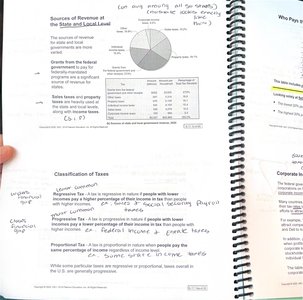
Classification of Taxes
Taxes can be classified as:
Regressive: Lower-income individuals pay a higher percentage of income.
Progressive: Higher-income individuals pay a higher percentage of income.
Proportional: All individuals pay the same percentage of income.
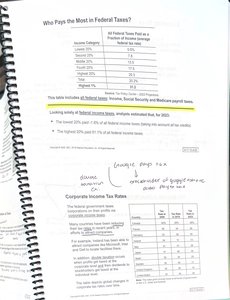
Who Pays the Most in Federal Taxes?
Tax burdens vary by income group, with higher-income households typically paying a larger share of total federal taxes.
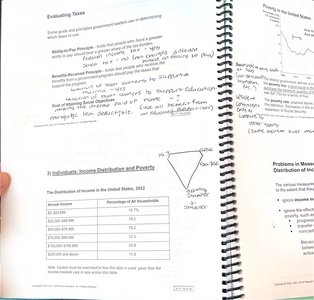
Evaluating Taxes and Income Distribution
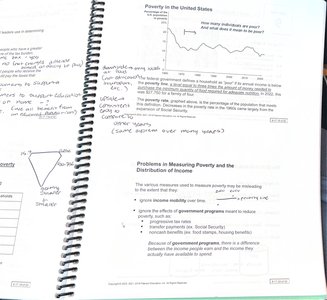
Taxes are evaluated based on principles such as the ability-to-pay principle and benefits-received principle. Income distribution and poverty are important considerations in tax policy.