 Back
BackGovernment Intervention: Taxes, Subsidies, and Market Outcomes
Study Guide - Smart Notes
 Tailored notes based on your materials, expanded with key definitions, examples, and context.
Government Intervention in Markets
Overview of Government Intervention
Government intervention in microeconomics typically involves the use of taxes, subsidies, price ceilings, and price floors to influence market outcomes. The government may intervene to raise revenue, redistribute income, finance operations, or correct market failures such as externalities.
Taxes are used to fund public goods, redistribute wealth, and address market failures.
Subsidies are used to encourage production or consumption in specific markets.
Price controls (ceilings and floors) are used to regulate prices for essential goods.
Government Budget Deficit and Surplus
The government budget is determined by the difference between tax revenue and government spending.
Budget Deficit: Occurs when government spending exceeds tax revenue.
Budget Surplus: Occurs when tax revenue exceeds government spending.
Formula: 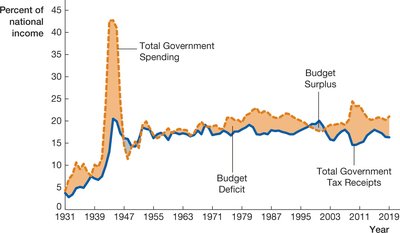
Sources of Tax Revenue
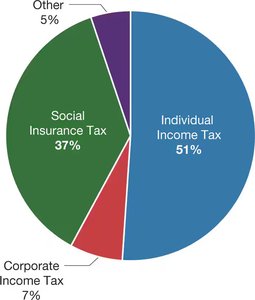
Federal Tax Revenues: Primarily from individual income taxes, social insurance taxes, and corporate income taxes.
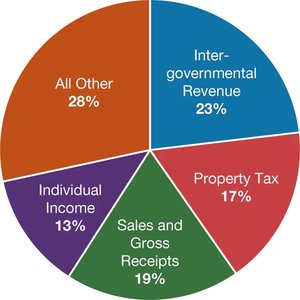
State Tax Revenues: Include sales taxes, property taxes, and intergovernmental revenue.
Government Spending Allocation
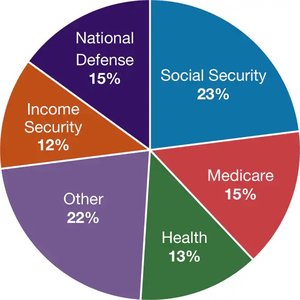
Federal Spending: Major categories include Social Security, Medicare, National Defense, Health, and Income Security.
State Spending: Major categories include Education, Public Welfare, Insurance, Utilities, and Hospitals.
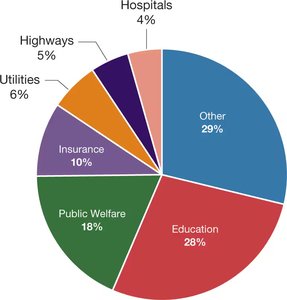
Types of Taxes
Classification of Taxes
Taxes can be classified based on how they are levied and their impact on income distribution.
Individual Income Taxes: Tax on personal income. Can be progressive, proportional, or regressive.
Payroll Taxes: Tax on wages, often used to fund social insurance programs.
Excise Taxes: Per-unit taxes on specific goods (e.g., alcohol, tobacco).
Sales Taxes: Ad valorem taxes, calculated as a percentage of the sale price.
Type of Tax | Description |
|---|---|
Progressive | Higher rates for higher incomes |
Proportional | Same rate for all incomes |
Regressive | Lower rates for higher incomes |
Effects of Taxes on Market Outcomes
Per-Unit Tax
A per-unit tax is imposed on each unit sold, either on producers or consumers. This shifts the supply or demand curve, affecting equilibrium price and quantity.
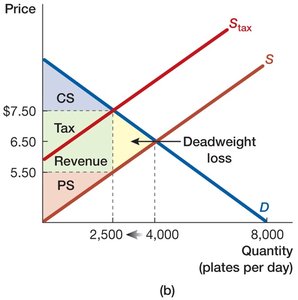
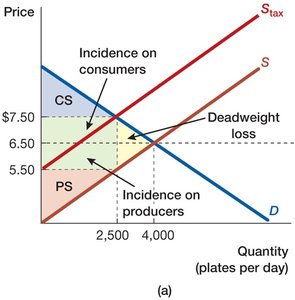
Imposing a tax on producers shifts the supply curve upward by the amount of the tax.
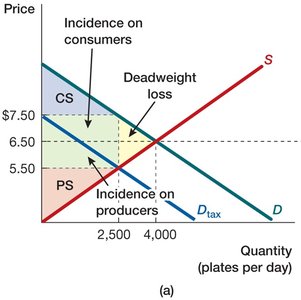
Imposing a tax on consumers shifts the demand curve downward by the amount of the tax.
Consumer Surplus (CS) and Producer Surplus (PS) decrease.
Total Surplus (TS) decreases due to Deadweight Loss (DWL).
Tax revenue is collected by the government.
Formula for Deadweight Loss (DWL): 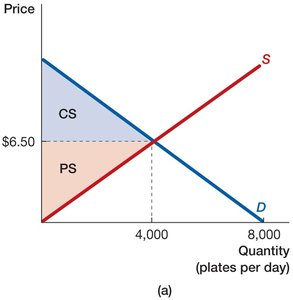
Tax Incidence
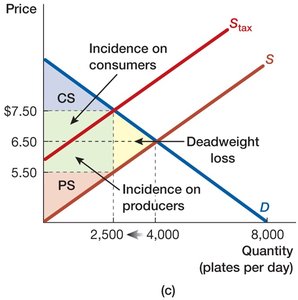
Tax incidence describes how the burden of a tax is shared between consumers and producers, regardless of who legally pays the tax.
Tax incidence depends on the relative elasticities of supply and demand.
The side of the market that is less elastic bears more of the tax burden.
In a typical example, a $2/unit tax may be split equally between consumers and producers.
Tax Incidence and Elasticities
If supply is more elastic than demand, consumers bear more of the tax burden.
If demand is more elastic than supply, producers bear more of the tax burden.
Tax revenue decreases and deadweight loss increases as curves become more elastic.
Ad Valorem Tax
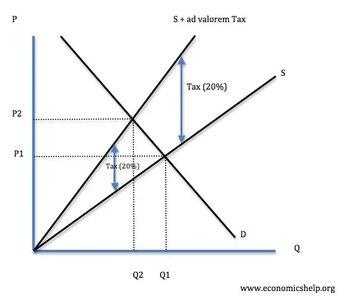
Ad valorem taxes are levied as a percentage of the sale price.
Imposing an ad valorem tax rotates the supply curve to the left, rather than shifting it parallel.
The higher the price, the greater the tax amount.
Effects of Subsidies
Subsidies in Competitive Markets
Subsidies are negative taxes, used to encourage production or consumption.
A per-unit subsidy shifts the supply curve downward, increasing equilibrium quantity.
Consumer Surplus and Producer Surplus increase.
Government revenue becomes negative, and deadweight loss is created due to overproduction.
Summary of Tax and Subsidy Effects
Taxes reduce consumer and producer surplus, create deadweight loss, and generate government revenue.
Subsidies increase consumer and producer surplus, create deadweight loss, and reduce government revenue.
Incidence of taxes and subsidies depends on the relative elasticities of supply and demand.
Key Equations:
Example: If a \frac{2 \times (4,000 - 2,500)}{2} = 1,500$. Additional info: These notes expand on the lecture slides by providing definitions, formulas, and examples for key concepts in government intervention, tax incidence, and subsidies.
