 Back
Back6. Government Policies in Markets: Price Controls and Tax Incidence
Study Guide - Smart Notes
 Tailored notes based on your materials, expanded with key definitions, examples, and context.
Government Policies in Markets
Introduction to Government Intervention
Government policies such as price controls and taxes are implemented to influence market outcomes, often with the intention of correcting perceived market failures or achieving social objectives. These interventions can have significant effects on prices, quantities, and the welfare of market participants.
Economic Methodology
Steps in Economic Analysis
Identify Decision Makers: Determine who is making choices in the market (e.g., consumers, firms).
Model Optimization: Analyze how decision makers compare marginal benefit and marginal cost to make optimal choices.
Aggregate Choices: Combine individual choices to find the market equilibrium, where supply equals demand.
At equilibrium, society's optimal choice is found by comparing marginal social benefit with marginal social cost.
Price Controls
Price Ceilings
A price ceiling is a legal maximum on the price at which a good can be sold. Common examples include rent control laws. Price ceilings can be either binding or non-binding:
Non-binding: Set above equilibrium price; has no effect on the market.
Binding: Set below equilibrium price; causes a shortage as quantity demanded exceeds quantity supplied.
In the long run, shortages caused by binding price ceilings become larger as supply and demand become more elastic. Additional effects include rationing, long lines, potential discrimination by sellers, and deterioration in quality.
Example: Rent Control
Rent control can lead to housing shortages, lower quality apartments, and inefficient allocation of housing.
Case Study: Hong Kong's rent control on subdivided units includes a cap on rent increases and standard lease terms.
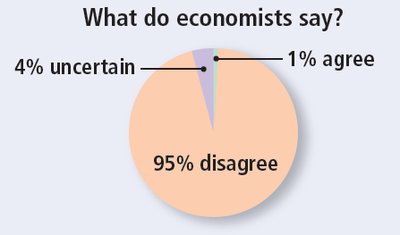
Figure: Survey of economists shows overwhelming disagreement with the effectiveness of rent control policies.
Price Floors
A price floor is a legal minimum on the price at which a good can be sold, such as minimum wage laws. Price floors can also be binding or non-binding:
Non-binding: Set below equilibrium price; has no effect.
Binding: Set above equilibrium price; causes a surplus as quantity supplied exceeds quantity demanded (e.g., unemployment in labor markets).
Binding price floors can lead to unemployment, especially among low-skilled workers, and may incentivize behaviors such as dropping out of school.
Example: Minimum Wage
Minimum wage laws set a legal minimum for hourly wages.
Empirical studies (e.g., Card & Krueger, 1994) examine the effects on employment and income distribution.
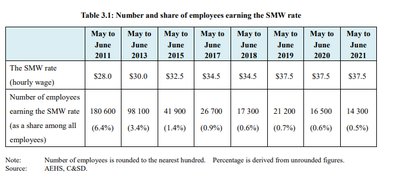
Table: Trends in statutory minimum wage (SMW) rates and the number of employees earning the SMW in Hong Kong.
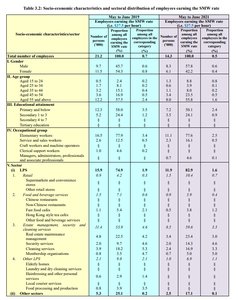
Table: Socio-economic characteristics and sectoral distribution of employees earning the SMW rate.
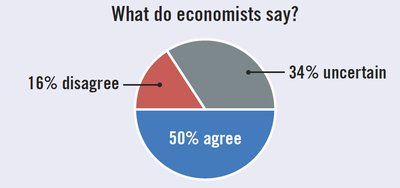
Figure: Survey of economists shows divided opinions on the employment effects of raising the minimum wage.
Evaluating Price Controls
Markets typically allocate resources efficiently through price mechanisms.
Price controls are often intended to help the poor but may have unintended negative consequences, such as shortages or surpluses.
Alternative policies include rent or wage subsidies.
Taxes and Tax Incidence
Tax Incidence
Tax incidence refers to how the burden of a tax is divided between buyers and sellers. The statutory burden (who pays the tax to the government) may differ from the economic burden (who actually bears the cost).
When a tax is imposed on buyers, the demand curve shifts downward by the amount of the tax.
When a tax is imposed on sellers, the supply curve shifts upward by the amount of the tax.
The final burden depends on the relative elasticities of supply and demand, not on who is legally responsible for paying the tax.
Example: Tax on Pizza
A $1.50 tax on buyers or sellers results in the same division of the tax burden and the same market outcome: buyers pay more, sellers receive less, and quantity traded falls.
Elasticity and Tax Incidence
If demand is inelastic and supply is elastic, buyers bear most of the tax burden.
If demand is elastic and supply is inelastic, sellers bear most of the tax burden.
The more inelastic side of the market bears a greater share of the tax burden.
Application: Luxury Tax
Luxury goods often have elastic demand and inelastic supply in the short run, so producers bear most of the tax burden.
Worked Examples and Problems
Price Floor in the Cheese Market
Suppose the government imposes a binding price floor in the cheese market:
At the price floor, quantity supplied exceeds quantity demanded, resulting in a surplus.
If demand is elastic, total revenue for producers may fall despite the higher price.
If the government purchases the surplus, producers benefit but taxpayers bear the cost.
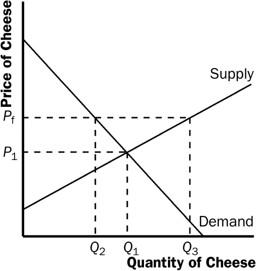
Figure: A binding price floor in the cheese market creates a surplus (Q3 - Q2).
Tax on Beer
Suppose a $2 tax is imposed on beer:
The tax creates a wedge between the price buyers pay and the price sellers receive.
Quantity sold decreases, and the market outcome depends on the elasticities of supply and demand.
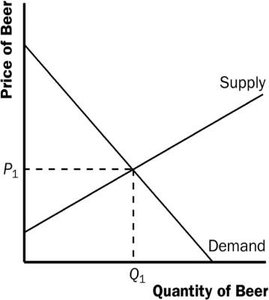
Figure: Beer market equilibrium without tax.
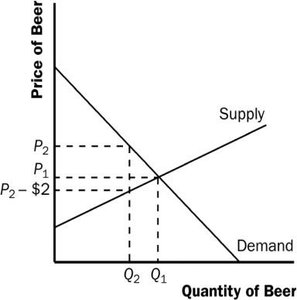
Figure: Beer market with a $2 tax, showing the wedge between prices and reduced quantity.
Tax on Tickets with Perfectly Inelastic Supply
When the supply of tickets is perfectly inelastic (fixed number of seats), a tax on tickets is fully borne by the sellers (team owners), as the price buyers pay falls by the amount of the tax.
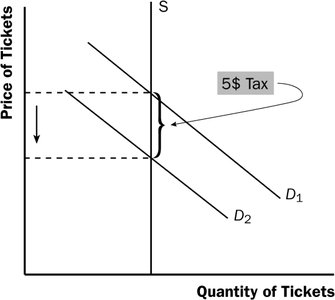
Figure: Tax on tickets with perfectly inelastic supply shifts the demand curve downward, reducing the price received by sellers.
Summary Table: Effects of Price Controls and Taxes
Policy | Binding Condition | Market Outcome | Who Benefits? | Who Loses? |
|---|---|---|---|---|
Price Ceiling | Below equilibrium price | Shortage, lower quality, rationing | Some consumers (if they obtain the good) | Producers, consumers who cannot buy |
Price Floor | Above equilibrium price | Surplus, unemployment (labor market) | Some producers (if surplus is purchased) | Consumers, taxpayers (if surplus is purchased) |
Tax | Any | Quantity falls, price wedge between buyers and sellers | Government (tax revenue) | Buyers and sellers (depending on elasticity) |
Conclusion
Government interventions such as price ceilings, price floors, and taxes can significantly alter market outcomes. Understanding the mechanisms and consequences of these policies is essential for evaluating their effectiveness and for designing better economic policies.
