 Back
BackComprehensive Study Notes on Lipids for Nutrition Students
Study Guide - Smart Notes
 Tailored notes based on your materials, expanded with key definitions, examples, and context.
Lipids: Structure, Types, and Functions
Definition and Basic Properties
Lipids are a diverse group of organic compounds composed primarily of carbon (C), hydrogen (H), and oxygen (O), and sometimes phosphorus (P). Unlike carbohydrates, lipids are hydrophobic (insoluble in water) due to their nonpolar structure.
Key Point 1: Lipids include fats, phospholipids, steroids, and eicosanoids.
Key Point 2: Their hydrophobic nature allows them to serve as energy storage and structural components in cells.
Example: Animal fats (lard, butter) and plant/fish fats (olive oil, cod liver oil) are common dietary lipids.
Main Types of Lipids
Lipids are classified into several types based on their structure and function:
Fats (Triglycerides): The most abundant lipids in the body, composed of glycerol and fatty acids.
Phospholipids: Essential for cell membrane structure.
Steroids: Include cholesterol and hormones.
Eicosanoids: Signaling molecules derived from fatty acids.
Lipid Functions in the Body
Energy Storage and Metabolism
Lipids are a major source of fuel for the body.
Key Point 1: 1 gram of fat provides approximately 9 kcal of energy, more than carbohydrates or proteins.
Key Point 2: Fatty acids and glycerol can be metabolized for energy or stored for later use.
Example: Lipids are the preferred energy source for the liver, heart, and muscles.
Signaling and Transport
Some lipids function as signaling molecules, such as fat-soluble vitamins, sex hormones, and neurotransmitters. Lipids also aid in the transport of vitamins and phytochemicals.
Key Point 1: Fat-soluble vitamins (A, D, E, K) require lipids for absorption.
Key Point 2: Lipids are involved in hormone synthesis and cellular communication.
Structural Roles
Lipids are integral to cell membranes and organ protection.
Key Point 1: Membranes contain various lipids, including phospholipids and cholesterol.
Key Point 2: Lipids form myelin sheaths and act as a "blanket" over organs.
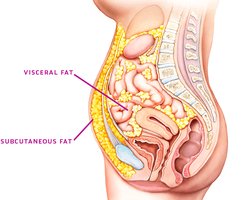
Fat in Food: Nutritional and Sensory Qualities
Caloric Density and Nutrient Content
Fats are concentrated sources of calories and essential nutrients.
Key Point 1: Fat-soluble nutrients include vitamins and essential fatty acids.
Key Point 2: Fats contribute to the sensory qualities of food, such as aroma, flavor, and tenderness.

Fatty Acids: Structure and Saturation
Saturation Levels
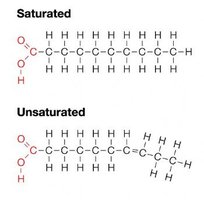
Fatty acids are classified by their degree of saturation:
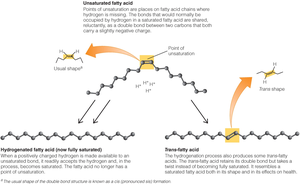
Saturated: No double bonds between carbon atoms; solid at room temperature.
Unsaturated: One or more double bonds; liquid at room temperature.
Monounsaturated: One double bond.
Polyunsaturated: Multiple double bonds.
Melting Point and Health Implications
Key Point 1: More unsaturated fatty acids have lower melting points and are generally healthier.
Key Point 2: Softer fats are typically better for cardiovascular health.
Nomenclature of Fatty Acids
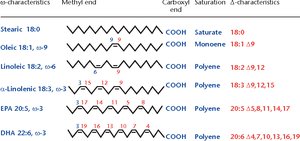
Fatty acids are named based on their methyl (omega) and carboxyl (delta) ends.
Key Point 1: The omega (w) end is the methyl group (CH3).
Key Point 2: The delta (Δ) end is the carboxyl group (COOH).
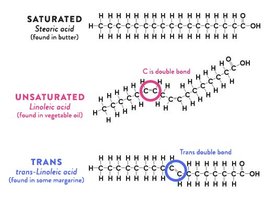
Cis vs. Trans Fatty Acids
Cis: Hydrogen atoms are on the same side of the double bond, causing a bend in the molecule.
Trans: Hydrogen atoms are on opposite sides, making the molecule straighter and more similar to saturated fat.
Health Effects: Trans fats increase heart disease risk and should be minimized in the diet.
Triglycerides: Structure and Function
Formation and Role
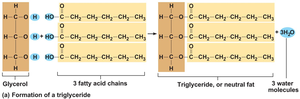
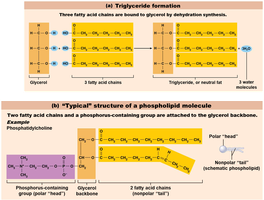
Triglycerides are formed from glycerol and three fatty acids.
Key Point 1: They are the most common lipids in the body and can be solid (fat) or liquid (oil).
Key Point 2: Triglycerides provide energy, insulation, protection, and structure.
Example: Triglycerides provide twice as much energy per gram as carbohydrates or proteins.
Regulation of Triglycerides
Lipolysis: Breakdown of stored triglycerides into fatty acids and glycerol (hydration reaction).
Lipogenesis: Synthesis of triglycerides from excess fats in adipocytes (dehydration reaction).
Phospholipids: Structure and Functions
Structure
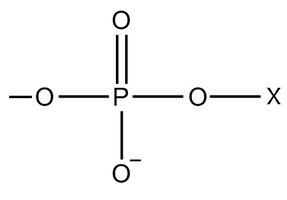
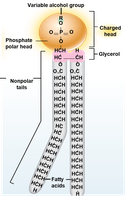
Phospholipids are modified triglycerides with two fatty acids and a phosphate group.
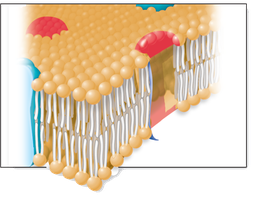
Key Point 1: The "head" (phosphate group) is hydrophilic, while the "tail" (fatty acids) is hydrophobic.
Key Point 2: This dual nature allows phospholipids to form bilayers in cell membranes.
Phospholipid Functions
Main component of membranes: Phospholipid bilayer forms the structural basis of cell membranes.
Solubility: Phospholipids are soluble in both water and fat.
Liposomes: Man-made lipid bilayers used for drug delivery and targeting cancer cells.
Steroids: Structure and Biological Importance
Structure and Functions
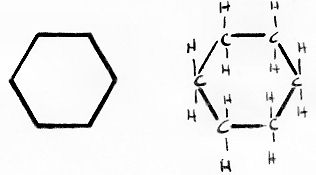
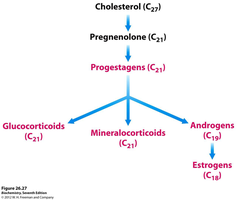
Steroids are large fat molecules made of four interlocking hydrocarbon rings.
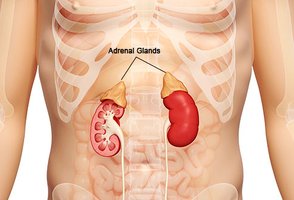
Key Point 1: Steroids are found in cell membranes and function as hormones.
Key Point 2: They regulate metabolism, immune function, and contribute to homeostasis.
Cholesterol
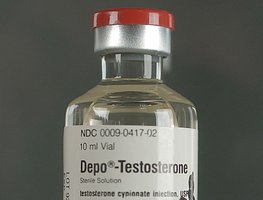
Cholesterol is produced by the liver and ingested from animal products.
Key Point 1: Cholesterol is used to make vitamin D, hormones (testosterone, estrogen), and is a component of cell membranes.
Key Point 2: Excess cholesterol can contribute to cardiovascular disease.

Eicosanoids: Signaling Molecules
Structure and Functions
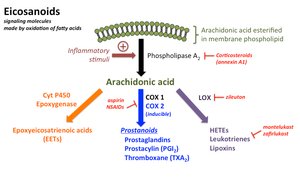
Eicosanoids are derived from unsaturated fatty acids (arachidonic acid) in cell membranes.
Key Point 1: Most important eicosanoids are prostaglandins.
Key Point 2: Eicosanoids play roles in blood clotting, blood pressure control, inflammation, and labor contractions.
Digestion and Absorption of Lipids
Digestive Process
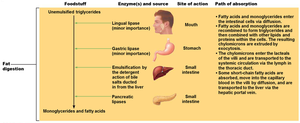
Lipid digestion occurs in the mouth, stomach, and small intestine, with the help of bile from the gallbladder.
Key Point 1: Enzymes break down triglycerides into fatty acids and glycerol.
Key Point 2: Bile shuttles lipids across the mucus layer for absorption.
Fat and Health: Dietary Recommendations
Cardiovascular Disease and Obesity
Key Point 1: Saturated and trans fats increase heart disease risk; beneficial fats (unsaturated) are protective.
Key Point 2: Essential fatty acids are required for health; dietary fat intake should be within a healthy range (DRI: 20-35% of daily energy).
Lipoproteins and Heart Disease Risk
Lipoprotein Types and Functions
Lipoproteins transport lipids in the body and are classified by density:
Chylomicrons
Very-low-density lipoproteins (VLDL)
Intermediate-density lipoproteins (IDL)
Low-density lipoproteins (LDL): "Bad" cholesterol, increases heart disease risk.
High-density lipoproteins (HDL): "Good" cholesterol, reduces heart disease risk.
LDL vs. HDL
Key Point 1: LDL delivers cholesterol to tissues; HDL scavenges cholesterol from tissues.
Key Point 2: High LDL and low HDL are associated with increased heart attack risk.
Essential Polyunsaturated Fatty Acids
Types and Functions
Linoleic acid (omega-6) and linolenic acid (omega-3) are essential fatty acids.
Key Point 1: They are precursors to eicosanoids and are important for heart health, cancer prevention, cell membranes, brain function, and vision.
Key Point 2: DHA and EPA are omega-3 fatty acids found in fish oils.
Fat in the Diet: Practical Considerations
Sources and Recommendations
Key Point 1: Essential fat intake includes a few teaspoons of raw oil per day and two servings of seafood per week.
Key Point 2: Replace fats instead of adding fats; most dietary fats are "invisible" (added during processing).
Example: Choose low-fat meats (ground turkey or chicken) and be mindful of fat in meat, dairy, grain, and baked goods.
Smart Choices and Fat Replacers
Key Point 1: Read ingredient lists and choose unsaturated oils and "fat-free" options.
Key Point 2: Revamp recipes and make healthier fast food choices to reduce fat intake.
Summary Table: Types of Lipids and Their Functions
Type of Lipid | Main Function | Example |
|---|---|---|
Triglycerides | Energy storage, insulation, protection | Butter, olive oil |
Phospholipids | Cell membrane structure | Lecithin |
Steroids | Hormones, cell membrane stability | Cholesterol, testosterone |
Eicosanoids | Signaling molecules | Prostaglandins |
Key Equations and Concepts
Triglyceride Formation:
Energy Yield:
Conclusion
Lipids are essential macronutrients with diverse roles in energy storage, cellular structure, signaling, and health. Understanding their types, functions, and dietary recommendations is crucial for nutrition students. Additional info: Academic context was added to clarify incomplete points and provide a self-contained study guide.
