 Back
BackDigestion and Senses: The Role of Sensory Systems in Nutrition
Study Guide - Smart Notes
 Tailored notes based on your materials, expanded with key definitions, examples, and context.
Digestion and Senses
Overview of Senses in Nutrition
The senses play a crucial role in nutrition by helping the body detect and respond to various stimuli related to food intake and digestion. Sensory systems are essential for identifying nutrients, avoiding toxins, and regulating digestive processes.
Sensory Receptors: Specialized cells that detect changes such as stretch, vibration, temperature, pH, and nutrient levels.
Pathways: Sensory information is transmitted to the nervous system for processing.
Response: The nervous system elicits appropriate responses, such as salivation or digestive enzyme release.
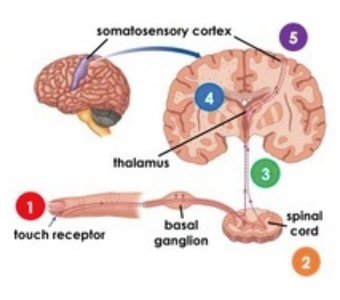
Types of Senses: Vision, hearing, balance, taste, smell, touch, pain, temperature, proprioception, and internal senses like pH and nutrient levels.
GI System and Sensory Receptors
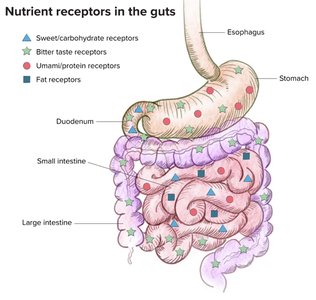
The gastrointestinal (GI) system contains numerous sensory receptors that monitor the internal environment and contribute to digestion and nutrient absorption. These receptors are mostly autonomic and respond to various stimuli.
Stretch Receptors: Detect distension in the GI tract, signaling fullness.
Vibration and Temperature Receptors: Monitor physical and thermal changes.
pH and Nutrient Receptors: Sense acidity and the presence of specific nutrients.
Taste and Smell Receptors: Present in the GI tract, though they do not contribute directly to conscious taste.
Taste and Flavor
Evolutionary Basis of Taste
Taste evolved as a mechanism to help organisms identify safe and nutritious foods while avoiding harmful substances. Different taste sensations are linked to evolutionary advantages.
Bitter and Sour: Often signal poisonous plants (bitter) or spoiled/rotting food (sour).
Sweet, Salty, Umami: Indicate nutrient-rich foods, such as carbohydrates, sodium, and proteins.
Taste vs. Flavor
Flavor is a complex sensation that combines taste, smell, texture, temperature, sound, and color. The five basic tastes are:
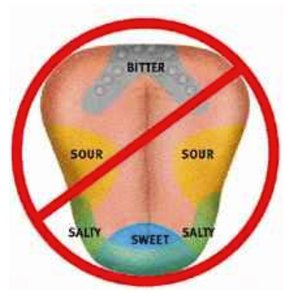
Sweet: Monosaccharides (simple sugars)
Salty: Sodium ions
Sour: Acidity (pH)
Bitter: Alkaloids
Umami: Glutamates and amino acids
All taste chemicals must be dissolved in saliva to be detected.
Umami: The Savory Taste
Umami is the taste of glutamates and certain amino acids, commonly found in protein-rich and fermented foods. It is recognized as a distinct taste and is associated with savory flavors.
Sources: Soy sauce, miso paste, fish sauce, mushrooms, ketchup, meat broth, parmesan cheese, MSG (monosodium glutamate).
Applications: Used in culinary practices to enhance flavor and palatability.




Hot & Spicy Sensations
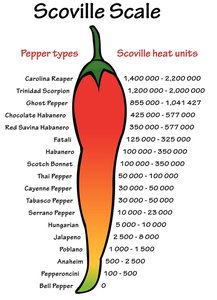
Hot and spicy sensations are not tastes but are detected by touch and temperature receptors. Capsaicin, found in chili peppers, causes a sensation of pain and heat.
Pain Signal: Capsaicin activates pain and heat receptors.
Scoville Scale: Measures the heat intensity of peppers.
Taste Buds and Gustation
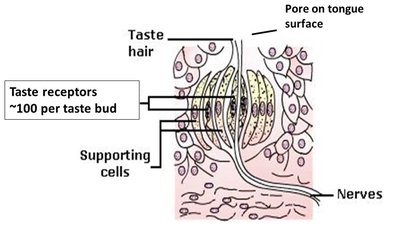
Taste buds are specialized structures located on the tongue, cheeks, roof of mouth, upper esophagus, and nasal cavity. Each taste bud contains multiple taste receptor cells.
Location: Taste buds are distributed throughout the oral cavity.
Function: Molecules bind to taste receptors, activating second messenger systems and resulting in nerve signals.
Direct Depolarization: Some tastes (salty, sour) depolarize cells directly.
Salt Reduction and Bioprospecting
Bioprospecting involves discovering new compounds from natural sources to reduce salt content in foods while maintaining flavor. The process includes extraction, fractionation, bioassay testing, toxicology assessment, and commercialization.
Application: Used in food industry to develop healthier products.
Smell (Olfaction)
Olfactory System
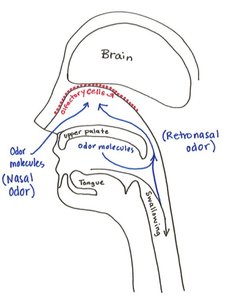
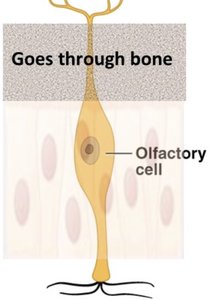
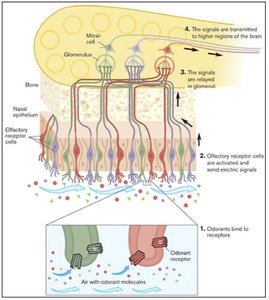
Smell is mediated by olfactory receptor cells located in the olfactory mucosa of the nasal cavity. Olfaction is highly sensitive and plays a significant role in flavor perception.
Location: Superior concha and nasal septum.
Olfactory Cells: Neurons with cilia (olfactory hairs) that bind odor molecules in mucus.
Regeneration: Olfactory cells survive about 60 days and are replaced by basal cells.

Olfactory Receptors and Odor Detection
Humans possess over 400 types of olfactory receptors, enabling the detection of more than 1 trillion odors. The combination of receptor activation allows for complex odor discrimination.
Olfactometry and Applied Flavor Chemistry
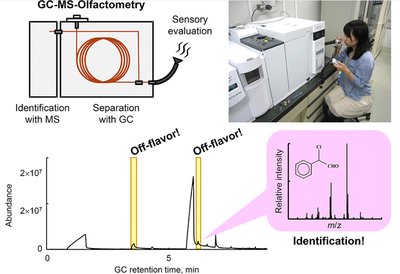
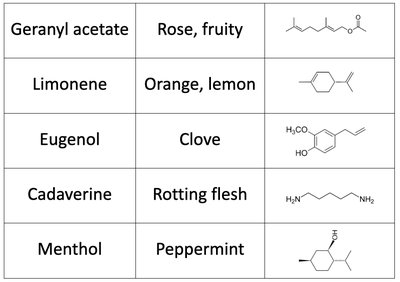
Olfactometry is a technique used to identify and analyze odor compounds. Samples are separated by gas chromatography, and human subjects evaluate the fractions to describe odors. Chemical identification is performed by mass spectrometry (MS).
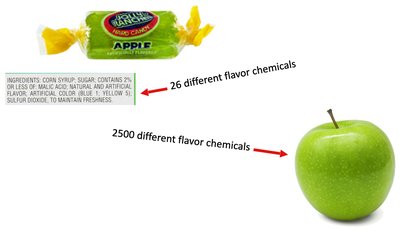
Application: Used in food science to create specific flavor profiles based on consumer preferences.
Example: Peach flavor can be described as juicy, fuzzy, jammy, or green.

Other Senses Contributing to Taste
Multisensory Integration in Flavor Perception
Flavor perception is influenced by multiple senses beyond taste and smell. Vision, touch, hearing, and temperature all contribute to the overall experience of eating.
Vision: Color can affect perceived flavor (e.g., food coloring in juice).
Touch: Texture influences food preference.
Hearing: Sounds associated with food can alter taste perception.
Temperature: Mint and capsaicin interact with temperature receptors.
Additional info: The notes above expand on the original content by providing academic context, definitions, and examples relevant to nutrition students. All included images directly reinforce the explanations adjacent to their placement.
