 Back
BackFats, Oils, and Other Lipids: Structure, Function, and Health Implications
Study Guide - Smart Notes
 Tailored notes based on your materials, expanded with key definitions, examples, and context.
Fats, Oils, and Other Lipids
Introduction to Lipids
Lipids are a diverse group of hydrophobic compounds containing carbon, hydrogen, and oxygen. They are essential for various physiological functions and are a major component of the human diet. The three main types of lipids found in foods and the body are triglycerides, phospholipids, and sterols.
Triglycerides: Commonly referred to as fats, these are the most abundant lipids in foods and the body.
Phospholipids: Key components of cell membranes, containing a phosphate group.
Sterols: Lipids with a ring structure, such as cholesterol.
Lipids provide energy, insulation, and are involved in the transport of compounds in the blood and the structure of cell membranes.
Classification and Structure of Lipids
Fatty Acids
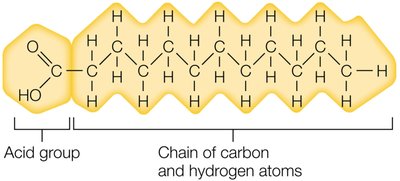
Fatty acids are the building blocks of triglycerides and phospholipids. They consist of a chain of carbon and hydrogen atoms with an acid group (COOH) at one end.
Vary by chain length, degree of saturation (number of double bonds), and position of double bonds.
Over 20 different fatty acids exist in nature.
Types of Fatty Acids
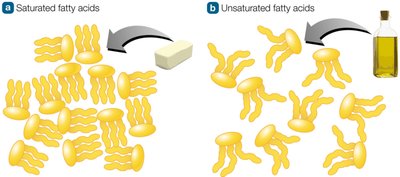
Saturated fatty acids: All carbons are bonded to hydrogen; solid at room temperature (e.g., stearic acid).
Monounsaturated fatty acids (MUFAs): Contain one double bond; liquid at room temperature (e.g., oleic acid in olive oil).
Polyunsaturated fatty acids (PUFAs): Contain more than one double bond; include essential fatty acids like linoleic and alpha-linolenic acid.
Triglycerides
Triglycerides are composed of three fatty acids attached to a glycerol backbone. They are the primary form of fat in foods and the body.
Saturated fats contain mostly saturated fatty acids.
Unsaturated fats contain mostly unsaturated fatty acids.
Oils are fats that are liquid at room temperature.

Phospholipids
Phospholipids have a glycerol backbone, two fatty acids, and a phosphate group. The phosphate head is hydrophilic, while the fatty acid tails are hydrophobic. This structure allows them to form the phospholipid bilayer of cell membranes and act as emulsifiers in foods.
Lecithin is a major phospholipid in cell membranes and is used as an emulsifier in foods like salad dressings.



Sterols
Sterols are lipids with a unique ring structure. Cholesterol is the most well-known sterol, playing a vital role in cell membrane structure and serving as a precursor for vitamin D, bile acids, and sex hormones. The body can synthesize all the cholesterol it needs.

Digestion, Absorption, and Transport of Fats
Fat digestion begins in the mouth and stomach but primarily occurs in the small intestine. Bile acids emulsify fats, and pancreatic lipase breaks them down into fatty acids and monoglycerides. These are absorbed as micelles and transported via lipoproteins.
Chylomicrons: Transport digested fat through lymph to the bloodstream.
VLDL: Deliver fat made in the liver to cells.
LDL ("bad" cholesterol): Deposit cholesterol on artery walls.
HDL ("good" cholesterol): Remove cholesterol from the body and deliver it to the liver for excretion.




Functions of Fat in the Body
Fats are an energy-dense source of fuel (9 kcal/g), provide insulation, protect organs, and are necessary for the absorption of fat-soluble vitamins (A, D, E, K). Essential fatty acids (linoleic and alpha-linolenic acid) are required for healthy skin, nerve function, and as precursors to important compounds like eicosanoids.
EPA and DHA (omega-3 fatty acids) are heart-healthy and found in fatty fish.

Dietary Recommendations for Fats
The Acceptable Macronutrient Distribution Range (AMDR) for fat is 20–35% of total daily calories. Saturated fat should be less than 10% (ideally less than 7%) of total calories. Dietary cholesterol should be limited to less than 300 mg per day for healthy individuals over age 2.
Fat provides more than twice the calories per gram compared to carbohydrates or protein.
Trans fats should be minimized due to their negative impact on heart health.
Calculating Fat Intake
To calculate grams of fat based on calorie intake:
Multiply total daily calories by the desired percentage (e.g., 0.20 for 20%).
Divide by 9 (since fat provides 9 kcal/g).
For example, for a 2,000 calorie diet:
20%: grams
35%: grams
7% saturated fat: grams
10% saturated fat: grams
Types and Sources of Dietary Fats
Unsaturated fats (monounsaturated and polyunsaturated) are healthier and found in vegetable oils, nuts, seeds, and fish.
Saturated fats are found in animal products and some tropical oils.
Trans fats are found in partially hydrogenated oils and processed foods.
Fat Substitutes
Fat substitutes are used to reduce calories in foods while maintaining texture and mouthfeel. They can be carbohydrate-, protein-, or fat-based.
Name (Trade Name) | Calories per Gram | Properties | How It's Used |
|---|---|---|---|
Fibers from Grains (Beta-Trim) | 1–4 | Gelling, thickener | Baked goods, meats, spreads |
Fibers, Cellulose (Avicel cellulose gel) | 0 | Water retention, texture, mouthfeel | Sauces, dairy products, frozen desserts, salad dressings |
Gums (Slendid) | 0 | Thickener, texture, mouthfeel, water retention | Salad dressings, processed meats |
Polydextrose (Litesse) | 1 | Water retention, adds bulk | Baked goods, dairy products, salad dressings, cookies, gum |
Modified Food Starch (STA-SLIM) | 1–4 | Thickener, gelling, texture | Processed meats, salad dressings, frostings, fillings, frozen desserts |
Microparticulated Protein (Simplesse) | 1–4 | Mouthfeel | Dairy products, salad dressings, spreads |
Mono- or Diglycerides (Dur-Lo) | 9* | Mouthfeel, moisture retention | Baked goods |
Short-Chain Fatty Acids (Salatrim) | 5 | Mouthfeel | Confections, baked goods |
Olestra (Olean) | 0 | Mouthfeel | Savory snacks |
*Less of this fat substitute is needed to create the same effect as fat, so the calories are reduced in foods using this product.
Heart Disease and Lipids
Atherosclerosis and Risk Factors
Heart disease often begins with atherosclerosis, the buildup of plaque in the arteries. This process is influenced by high blood pressure, high cholesterol, smoking, and other factors.
Uncontrollable risk factors: Age, gender, family history, type 1 diabetes.
Controllable risk factors: Type 2 diabetes, high blood pressure, smoking, inactivity, excess weight, low HDL, high LDL.
Factors You Cannot Control | Factors You Can Control |
|---|---|
Your age and sex Your family history of heart disease Type 1 diabetes mellitus | Type 2 diabetes mellitus High blood pressure Smoking Physical inactivity Excess weight Low HDL High LDL |
Maintaining Healthy Blood Cholesterol
Minimize saturated fats, trans fats, and cholesterol in the diet.
Include fish and plant foods rich in antioxidants and phytochemicals.
Exercise regularly and maintain a healthy weight.
Moderate alcohol consumption may reduce risk for some individuals.
Cholesterol Levels and Interpretation
Total Cholesterol (mg/dL) | Interpretation |
|---|---|
<200 | Fabulous! Keep up the good work! |
200–239 | Borderline high |
≥240 | High |
LDL Cholesterol (mg/dL) | Interpretation |
|---|---|
<100 | Fabulous! Congratulations! |
100–129 | Near or above optimal |
130–159 | Borderline high |
160–189 | High |
≥190 | Much too high! |
HDL Cholesterol (mg/dL) | Interpretation |
|---|---|
≥60 | Fabulous! |
40–60 | Good |
<40 | Too low |
Dietary Patterns and Heart Health
The traditional Mediterranean diet, rich in plant-based foods, olive oil, and fish, is associated with lower risk of heart disease and cancer. It emphasizes whole grains, fruits, vegetables, legumes, nuts, and moderate wine consumption, with limited red meat and sweets.
Special Considerations: Mercury in Fish
Methylmercury is a toxic chemical that accumulates in large, long-lived fish. Pregnant women, women of childbearing age, and young children should avoid high-mercury fish (e.g., swordfish, shark, king mackerel, tilefish) and limit albacore tuna intake.
Plant Foods, Antioxidants, and Phytochemicals
Plant foods high in soluble fiber and phytosterols can help lower LDL cholesterol. Antioxidants and flavonoids in fruits, vegetables, tea, nuts, and seeds may reduce LDL and inhibit blood clot formation.
Summary Table: Strategies to Decrease LDL Cholesterol
Dietary Changes | Lifestyle Changes |
|---|---|
Consume less saturated fat Consume less trans fats Consume less dietary cholesterol Consume more soluble fiber–rich foods Consume a more plant-based diet | Lose excess weight Exercise more |
