 Back
BackFoundations of Nutrition: Science, Healthful Eating, and Professional Practice
Study Guide - Smart Notes
 Tailored notes based on your materials, expanded with key definitions, examples, and context.
Science of Nutrition
Nutrition and Its Importance to Health
Nutrition is the study of how organisms obtain, metabolize, and utilize nutrients to support life processes such as growth, maintenance, and tissue repair. It is a fundamental aspect of health, impacting physical, mental, and social well-being.
Health Definition: A state of complete physical, mental, and social well-being, not merely the absence of disease.
Nutrition Definition: The sum of all processes involved in obtaining and using nutrients for life’s functions.
Role in Health: Nutrition promotes well-being, prevents and treats disease, and supports optimal functioning.
Orthorexia: An unhealthy obsession with healthy eating, which can have negative consequences.

Example: Poor nutrition can contribute to chronic diseases such as diabetes, cardiovascular disease, and obesity.
Tools for Healthful Eating
Dietary Recommendations and Guidelines
Dietary recommendations are evidence-based guidelines designed to promote health and prevent disease. They are developed by national and international organizations and are used to inform public health policy and individual dietary choices.
USDA Dietary Guidelines for Americans: Updated every five years to reflect current scientific knowledge.
Dietary Reference Intakes (DRIs): Includes EAR, RDA, AI, UL, and AMDR.
Federal Nutrition Programs: SNAP, WIC, school nutrition standards, and food label standards.
Food as Medicine Initiatives: Culinary medicine, healthy cooking classes, and food pharmacies.

Example: The RDA for iron is used to guide supplementation for individuals with anemia.
The Human Body & Digestion
Determinants of Health
Health is influenced by a variety of factors, including genetics, environment, lifestyle, and nutrition. Nutrition is a modifiable determinant that can significantly impact disease risk and overall well-being.
Chronic Disease: Nutrition is linked to the prevention and management of chronic diseases.
Mortality Rates: High rates of chronic disease in the U.S. are associated with poor dietary habits.
National Statistics: 70% of American adults have overweight or obesity; 1 in 3 adolescents has prediabetes.
Example: Dietary interventions can reduce the risk of developing type 2 diabetes.
Tools for Healthful Eating
What is a Healthful Diet?
A healthful diet includes a variety of nutrient-dense foods and limits those associated with increased disease risk. Evidence-based dietary patterns, such as the Mediterranean diet, are broadly recommended for their health benefits.
Include: Fruits, vegetables, whole grains, nuts, seeds, legumes, lean or plant proteins.
Limit: Ultra-processed foods, saturated fat, sugar, sodium, alcohol.
Mediterranean Diet: Emphasizes plant-based foods, healthy fats, moderate fish and poultry, and limited red meat.
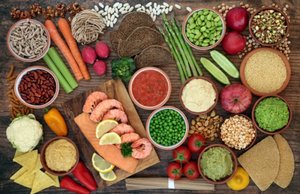

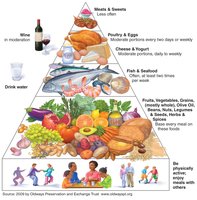
Example: The Mediterranean diet is associated with reduced risk of heart disease and improved longevity.
Science of Nutrition
Six Classes of Nutrients
Nutrients are substances required by the body for energy, growth, and maintenance. They are classified into six categories, each with distinct functions.
Carbohydrates: Primary energy source for the body.
Fats (Lipids): Energy storage, cell structure, and hormone production.
Proteins: Building blocks for tissues, enzymes, and hormones.
Vitamins: Organic compounds essential for metabolic processes.
Minerals: Inorganic elements required for structural and functional roles.
Water: Vital for hydration, metabolic reactions, and temperature regulation.






Example: Protein is required for muscle repair after exercise.
Tools for Healthful Eating
Dietary Recommendations (DRIs)
Dietary Reference Intakes (DRIs) are a set of reference values used to assess and plan nutrient intakes for healthy people. They include several categories:
Estimated Average Requirement (EAR): The average daily nutrient intake level estimated to meet the requirements of half the healthy individuals in a group.
Recommended Dietary Allowance (RDA): The average daily intake level sufficient to meet the nutrient requirements of nearly all (97-98%) healthy individuals.
Adequate Intake (AI): Used when an RDA cannot be determined; based on observed or experimentally determined estimates.
Tolerable Upper Intake Level (UL): The highest daily intake unlikely to cause adverse health effects.
Acceptable Macronutrient Distribution Range (AMDR): The range of intake for each macronutrient associated with reduced risk of chronic disease.
Example: The AMDR for carbohydrates is 45-65% of total daily calories.
Formula Example:
To calculate the percentage of calories from protein:
Scope of Practice & Professional Roles
Registered Dietitian vs. Nutritionist
Registered Dietitians (RDs) are nutrition professionals who have met rigorous educational and credentialing standards. Nutritionists may have varying levels of training and are not always regulated.
RD/RDN: Registered Dietitian Nutritionist; requires accredited education, supervised practice, and passing a national exam.
Nutritionist: May refer to individuals with varying backgrounds; not always regulated.
Scope of Practice: RDs can provide Medical Nutrition Therapy; other health professionals should provide general, evidence-based nutrition advice and refer to RDs for specialized care.
Example: Only RDs can diagnose and treat nutrition-related medical conditions.
Career Opportunities in Dietetics
RDs and DTRs (Dietetics Technician Registered) have diverse career opportunities in clinical, community, academic, sports, business, and food service management settings.
Clinical: Hospitals, clinics, long-term care.
Community: Public health, grocery stores.
Academic: Research, teaching.
Sports: Individual/team nutrition for athletes.
Business/Industry: Corporate nutrition, entrepreneurship, food/nutrition products.
Food Service Management: Hospitals, schools, correctional facilities, corporations.
Example: A dietitian may work in a hospital providing nutrition therapy to patients with chronic diseases.
Nutrition Scope of Practice for Other Health Professionals
Other health professionals can discuss general nutrition topics but must adhere to evidence-based guidelines and refer to dietitians for medical nutrition therapy.
General Nutrition Education: Schools, day-care centers, correctional facilities, public health agencies.
Medical Nutrition Therapy: Assessment, diagnosis, intervention, monitoring, and evaluation by RDs.
Example: A nurse may provide general nutrition advice but should refer patients with complex needs to a dietitian.
Summary Table: Six Classes of Nutrients
Nutrient Class | Main Function | Examples |
|---|---|---|
Carbohydrates | Energy source | Bread, rice, fruits |
Fats (Lipids) | Energy storage, cell structure | Olive oil, butter, nuts |
Proteins | Tissue building, enzymes | Meat, beans, tofu |
Vitamins | Metabolic regulation | Vitamin C, Vitamin D |
Minerals | Structural, functional roles | Calcium, iron |
Water | Hydration, metabolic reactions | Drinking water |
Additional info: Expanded explanations and examples were added for clarity and completeness.
