 Back
BackIntroduction to Nutrition: Essential Concepts and Nutrient Classification
Study Guide - Smart Notes
 Tailored notes based on your materials, expanded with key definitions, examples, and context.
Science of Nutrition
Definition and Importance of Nutrition
Nutrition is the scientific study of food and how the body obtains, metabolizes, and uses nutrients. Adequate nutrition is essential for human health, affecting disease risk, growth, and daily functioning. Poor nutrition is linked to chronic diseases such as diabetes, heart disease, and certain cancers.
Nutrient: A chemical substance required by the body for basic functions, obtained from food.
Nutrition's Role: Influences health, heritage, and social interactions.
Health Impact: Deficiencies or excesses in nutrients can cause disease or contribute to chronic conditions.

Classes of Nutrients
Macronutrients and Micronutrients
Nutrients are classified based on the amount required by the body. Macronutrients are needed in large amounts and provide energy, while micronutrients are required in smaller quantities and regulate body processes.
Macronutrients: Carbohydrates, lipids (fats), proteins, and water.
Micronutrients: Vitamins and minerals.
Organic vs. Inorganic: Organic nutrients contain carbon (carbohydrates, lipids, proteins, vitamins); inorganic nutrients do not (water, minerals).
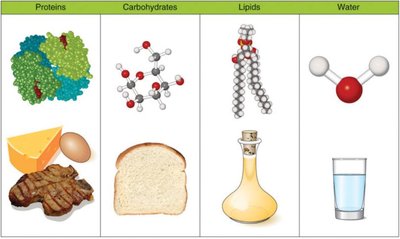
Macronutrients
Carbohydrates: Provide energy (4 kcal/g), found in grains, fruits, milk, and starchy vegetables. Classified as simple (sugars) or complex (starch, fiber).
Lipids: Provide energy (9 kcal/g), found in oils, butter, nuts, and animal products. Include triglycerides, phospholipids, and sterols.
Proteins: Provide energy (4 kcal/g), essential for tissue formation, cell repair, and enzyme production. Found in meats, dairy, seafood, and plant sources.
Water: Essential for life, makes up over 60% of body weight, transports nutrients, regulates temperature, and does not provide energy.
Micronutrients
Vitamins: Organic compounds required for regulating body processes. Can be destroyed by heat, light, or oxygen.
Minerals: Inorganic substances required for body processes, resistant to environmental changes.
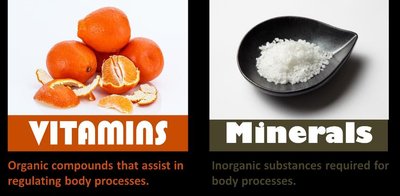
Carbohydrates
Structure and Function
Carbohydrates are composed of carbon, hydrogen, and oxygen. They are the primary energy source for the body and are essential for the nervous system, heart, and kidneys.
Simple Carbohydrates: Monosaccharides and disaccharides (e.g., glucose, sucrose).
Complex Carbohydrates: Polysaccharides (e.g., starch, glycogen, fiber).
Energy Yield:
Storage: Glucose stored as glycogen in animals, starch in plants.
Lipids
Types and Functions
Lipids are hydrophobic molecules composed of carbon, hydrogen, and oxygen. They provide energy, store energy, and are structural components of cell membranes.
Types: Triglycerides, phospholipids, sterols.
Energy Yield:
Functions: Energy storage, insulation, organ protection, cell membrane structure.
Proteins
Structure and Functions
Proteins are composed of amino acids, which contain carbon, hydrogen, oxygen, and nitrogen. They are essential for tissue formation, cell repair, and enzyme production.
Building Blocks: 20 amino acids.
Energy Yield:
Functions: Structure, enzymes, hormones, immune system.
Water
Role in the Body
Water is an inorganic nutrient required in large amounts. It is vital for transport, chemical reactions, temperature regulation, and organ protection.
Body Composition: Over 60% of body weight.
Daily Intake: Over 2 liters from food and drink.
Energy Yield: 0 kcal/g (does not provide energy).
Vitamins
Classification and Functions
Vitamins are organic compounds required for various body processes. They are classified as water-soluble or fat-soluble.
Water-Soluble: Vitamin C and B vitamins (thiamine, riboflavin, niacin, pantothenic acid, pyridoxine, biotin, folate, cobalamin).
Fat-Soluble: Vitamins A, D, E, K.
Functions: Red blood cell synthesis, bone formation, vision, immune function.
Deficiency Diseases: Pellagra (niacin), scurvy (vitamin C), night blindness (vitamin A), rickets (vitamin D).
Minerals
Classification and Functions
Minerals are inorganic nutrients classified as major (macrominerals) or trace minerals based on the amount required.
Major Minerals: Sodium, chloride, potassium, calcium, phosphorus, magnesium.
Trace Minerals: Iron, zinc, iodine, selenium, copper, manganese, fluoride.
Functions: Fluid balance, bone health, nerve transmission, enzyme function, hormone synthesis.
Table: Minerals and Their Major Functions
Mineral | Major Functions |
|---|---|
Sodium | Fluid balance, nerve transmission, muscle contraction |
Chloride | Fluid balance, stomach acid |
Potassium | Fluid balance, nerve transmission, muscle contraction |
Calcium | Bone and tooth health, nerve transmission, muscle contraction, blood clotting |
Phosphorus | Bone and tooth health, acid-base balance, DNA structure |
Magnesium | Protein production, nerve transmission, muscle contraction |
Iron | Oxygen transport, energy production |
Zinc | Protein and DNA production, wound healing, growth, immune system function |
Iodine | Thyroid hormone production, growth, metabolism |
Selenium | Antioxidant |
Copper | Coenzyme, iron metabolism |
Manganese | Coenzyme for many functions |
Fluoride | Bone and tooth health, tooth decay prevention |
Units of Measure in Nutrition
Metric System and Conversions
Nutritionists use the metric system for measuring mass, volume, and length. Common prefixes include kilo- (1000x), milli- (1/1000), and micro- (1/1,000,000).
Mass: Grams (g), milligrams (mg), micrograms (μg)
Volume: Liters (L), milliliters (mL)
Length: Meters (m), millimeters (mm)
Table: Common Metric Prefixes
Prefix | Meaning |
|---|---|
Micro- (μ) | 1/1,000,000th |
Milli- (m) | 1/1,000th |
No prefix | Base unit |
Kilo- (k) | 1000x |
Unit Conversion and Dimensional Analysis
Dimensional analysis is used to convert between units using conversion factors. This method ensures accurate calculations in nutrition, such as converting grams to kilocalories.
Conversion Factors: Ratios equal to one, used to change units (e.g., 1 lb = 454 g).
Energy Calculations: for carbohydrates and proteins, for lipids.
Example: Calculating Grams of Carbohydrate from Kilocalories
Given: 300 kcal
Conversion factor:
Calculation:
Nutrient Summary
Overview of Nutrient Functions
Nutrients are categorized as macronutrients or micronutrients. Macronutrients provide energy and structure, while micronutrients regulate processes and support cellular function.
Nutrient | Major Functions |
|---|---|
Protein | Tissue formation, cell repair, hormone and enzyme production, muscle and immune system health |
Carbohydrates | Energy source, structural constituents of cells |
Fats | Energy storage, cell structure, signaling, insulation, organ protection |
Vitamins | Regulate body processes |
Minerals | Regulate body processes, cellular function, body tissue composition |
Water | Transport of nutrients and oxygen, waste removal, temperature maintenance |
