 Back
BackNutrients Essential to Key Body Functions: Vitamins
Study Guide - Smart Notes
 Tailored notes based on your materials, expanded with key definitions, examples, and context.
Introduction to Vitamins
What are Vitamins?
Vitamins are organic, noncaloric, essential micronutrients required in small amounts for overall health. Although the body can synthesize some vitamins (e.g., vitamin D), most must be obtained from the diet. Each vitamin has a specific name and chemical designation (e.g., vitamin B1 is thiamin). Vitamins are generally named in the order of their discovery, though some letters and numbers were discarded or reassigned over time. There are 13 essential vitamins for humans, divided into two categories: fat-soluble and water-soluble vitamins. Most vitamins represent families of related molecules with similar biological functions.
Fat-soluble vitamins: A, D, E, K
Water-soluble vitamins: B vitamins (B1, B2, B3, B5, B6, B7, B9, B12) and vitamin C
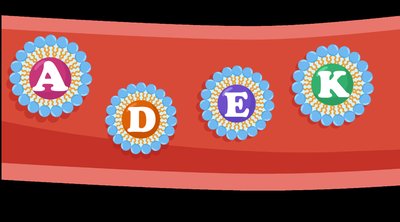
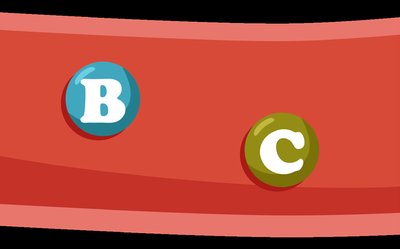
Key Point: Vitamins are required in microgram or milligram quantities, much less than macronutrients.
Antioxidants
Role of Antioxidants
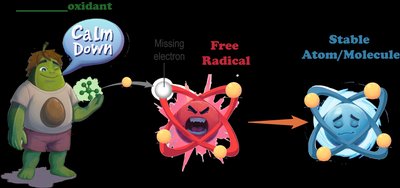
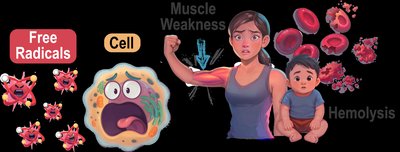
An antioxidant is a substance that protects cells from oxidative damage caused by free radicals. Oxidation is a chemical process where a substance loses electrons, potentially generating free radicals—highly reactive molecules with unpaired electrons that can damage cells. Vitamins E and C, as well as some phytochemicals, function as antioxidants.
Free radicals can cause chain reactions that damage cell membranes, proteins, and DNA.
Antioxidants stabilize free radicals by donating electrons, preventing cellular damage.
Forms of Vitamins & Bioavailability
Bioavailability and Forms
Bioavailability refers to the proportion of a vitamin that is absorbed and available for use in the body. Provitamins, fat-soluble vitamins, and plant-based vitamins are typically less bioavailable than preformed vitamins.
Provitamin: An inactive precursor that is converted into an active vitamin after absorption (e.g., β-carotene to retinol).
Preformed vitamin: Already in an active, usable form (e.g., retinol from animal sources).
Not all consumed vitamins are fully absorbed or utilized by the body.
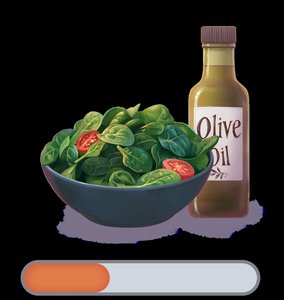
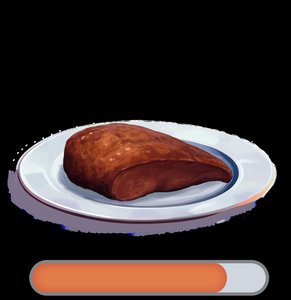
Example: Spinach salad contains β-carotene (provitamin A) with lower bioavailability, while beef liver contains preformed retinol with higher bioavailability.
Fat-Soluble Vitamins
Absorption, Storage, and Toxicity
Fat-soluble vitamins (A, D, E, K) require dietary fat for absorption and are transported via micelles and chylomicrons. They are stored in the liver, muscles, and fatty tissues, making them more prone to accumulation and potential toxicity.
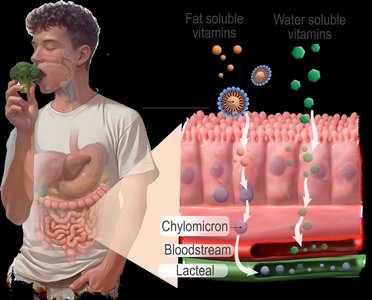

Fat-soluble vitamins: Can be stored for weeks or months; risk of toxicity if consumed in excess, especially vitamins A and D.
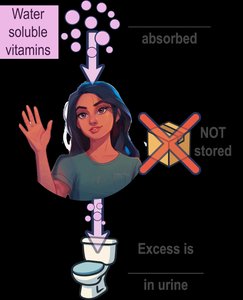
Water-soluble vitamins: Absorbed directly into the bloodstream and not stored in significant amounts; excess is excreted in urine.
Vitamin A
Vitamin A is a group of fat-soluble micronutrients, including retinoids (animal sources) and carotenoids (plant sources). Preformed vitamin A (retinoids) includes retinol, retinal, and retinoic acid. Provitamin A carotenoids (e.g., β-carotene) are pigments in vegetables and are converted to retinol in the body.
Functions: Vision (component of light-sensitive proteins), gene expression, cell differentiation, growth, reproduction, skin and bone health, immunity.
Deficiency: Night blindness, xerophthalmia (corneal damage), keratinization of epithelial tissue, stunted bone growth.
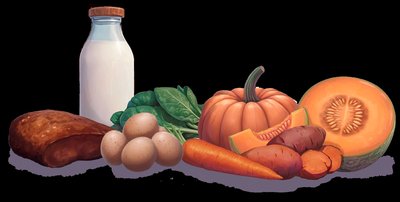
Sources: Preformed: liver, fish, dairy, eggs, fortified foods. Provitamin A: carrots, sweet potatoes, spinach, other orange/yellow/dark leafy vegetables.

Form | Common Molecules | Sources | Bioavailability | Function |
|---|---|---|---|---|
Preformed Vitamin A (Retinoids) | Retinol, retinal, retinoic acid | Animals (liver, dairy, eggs) | Higher | Vision, immune function, growth |
Provitamin A (Carotenoids) | β-carotene, α-carotene | Plants (carrots, spinach) | Lower | May function as antioxidants |
Vitamin D (Calciferol)
Vitamin D includes D2 (from fungi) and D3 (from animals). Both are converted to calcitriol, which is essential for immune function and bone health by regulating calcium and phosphorus absorption. The body synthesizes D3 from cholesterol when exposed to sunlight; activation occurs in the liver and kidneys.
Functions: Calcium and phosphorus balance, bone health, immune function.
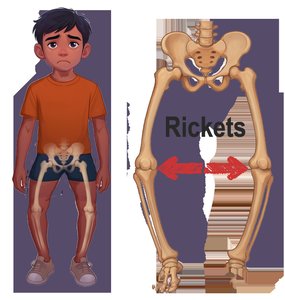
Deficiency: Rickets (children), osteomalacia (adults), osteoporosis.
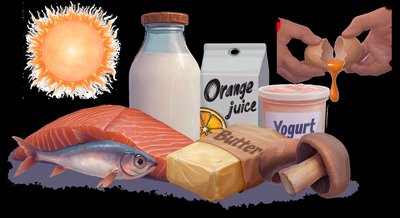
Sources: Sunlight, fatty fish, egg yolks, butter, fortified foods, mushrooms.
Vitamin E
Vitamin E is a group of eight fat-soluble antioxidant micronutrients, mainly α-tocopherol. It protects cell membranes from free radicals, prevents oxidation of LDL cholesterol (reducing plaque buildup), and acts as an anticoagulant to prevent unnecessary blood clots.
Deficiency: Cell membrane vulnerability, nerve damage, muscle weakness, hemolysis in premature infants.
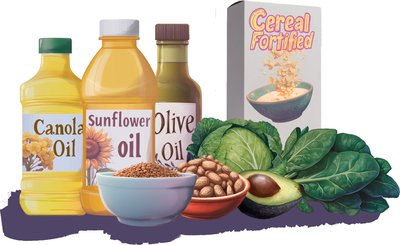
Sources: Vegetable oils, nuts, seeds, green leafy vegetables, avocados, fortified cereals.
Vitamin K
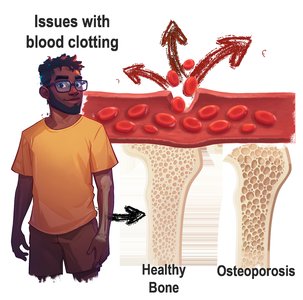
Vitamin K is essential for blood clotting (coagulation) and bone health. K1 (phylloquinone) is found in plants, while K2 (menaquinone) is found in animal products and produced by gut bacteria. Vitamin K can interact with anticoagulant medications and enables osteocalcin to bind calcium in bones.
Deficiency: Issues with blood clotting, osteoporosis.
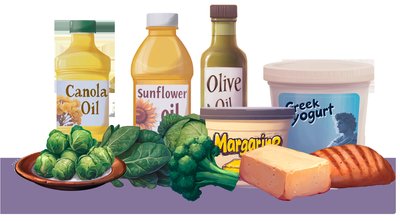
Sources: K1: green leafy vegetables, vegetable oils. K2: meats, egg yolks, hard cheeses, fermented foods.
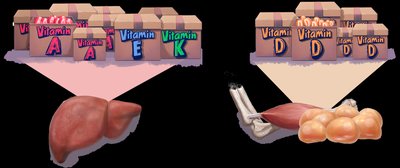
Storage of Fat-Soluble Vitamins
Fat-soluble vitamins are stored in the body, mainly in the liver (A, E, K) and in fat and muscle tissue (D). This allows survival for weeks without intake, but also increases the risk of toxicity (especially A and D) if consumed in excess.
Vitamin | Function(s) | Food Sources | Deficiency Symptoms |
|---|---|---|---|
Vitamin A | Vision, immune function, growth | Orange/yellow fruits & veg, eggs, dairy, liver | Night blindness, stunted bone growth, keratinization |
Vitamin D | Ca2+/P balance, bone health | Fatty fish, dairy, sunlight | Rickets, osteoporosis |
Vitamin E | Antioxidant, anticoagulant, prevents plaques | Vegetable oils, nuts/seeds, avocados | Cell membrane vulnerability, nerve damage |
Vitamin K | Blood clotting, bone health | Leafy greens, meat, egg yolks | Issues with clotting, osteoporosis |
Water-Soluble Vitamins
Absorption, Storage, and Excretion
Water-soluble vitamins dissolve in water, are easily absorbed, and excess amounts are excreted in urine rather than stored. This group includes the B vitamins and vitamin C.
B vitamins: B1 (thiamin), B2 (riboflavin), B3 (niacin), B5 (pantothenic acid), B6 (pyridoxine), B7 (biotin), B9 (folate), B12 (cobalamin)
Vitamin C: Ascorbic acid
Fat-Soluble Vitamins (A, D, E, K) | Water-Soluble Vitamins (Bs & C) | |
|---|---|---|
Absorption | Requires fat to be absorbed | Easily absorbed in water |
Transport | Packed in chylomicrons in lymph | Directly enters bloodstream |
Storage | Stored in liver, fat, muscle | Not stored; excess excreted in urine |
Toxicity | Can be toxic in high doses | Low risk of toxicity |
B Vitamins
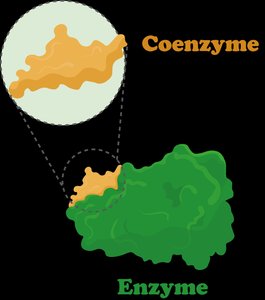
B vitamins are a group of water-soluble micronutrients that serve as coenzymes, helping enzymes catalyze metabolic reactions. They are often found together in foods, and deficiencies in one may indicate deficiencies in others. B vitamins are essential for converting carbohydrates, fats, and proteins into energy.
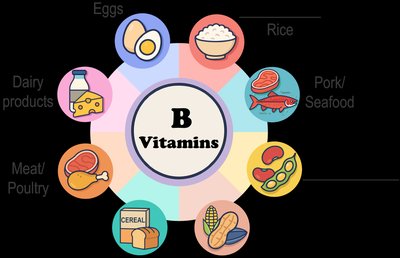
B1 (Thiamin): Carbohydrate and amino acid metabolism; deficiency causes beriberi, Wernicke-Korsakoff syndrome.
B2 (Riboflavin): Metabolism of macronutrients; forms FAD; deficiency causes sore throat, swollen mouth, cracked lips.
B3 (Niacin): Energy metabolism (NAD+, NADP+); deficiency causes pellagra (dermatitis, dementia, diarrhea).
B5 (Pantothenic Acid): Component of Coenzyme A; deficiency causes nerve issues, GI distress.
B6 (Pyridoxine): Protein metabolism, hemoglobin synthesis; deficiency causes anemia, depression, confusion.
B7 (Biotin): Coenzyme in metabolism; deficiency causes hair loss, skin inflammation.
B9 (Folate): DNA synthesis, pregnancy health; deficiency causes macrocytic anemia, neural tube defects.
B12 (Cobalamin): Red blood cell and DNA synthesis; only water-soluble vitamin stored in the liver; deficiency causes macrocytic anemia.
Vitamin C (Ascorbic Acid)
Vitamin C is a water-soluble micronutrient that acts as a coenzyme and antioxidant. It is required for collagen synthesis, amino acid metabolism, iron absorption, and immune system health. Unlike most vitamins, vitamin C is a single compound, not a group.
Deficiency: Scurvy (swollen gums, tooth loss, poor wound healing)
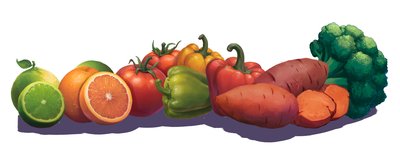
Sources: Citrus fruits, tomatoes, peppers, broccoli, sweet potatoes

Dietary Guidelines for Vitamins
General Recommendations
To meet vitamin requirements, consume a variety of fruits, vegetables, whole grains, and lean dairy products. Fortified foods can help meet needs, especially for those with dietary restrictions. Each vitamin has a recommended dietary allowance (RDA) or adequate intake (AI) and an upper limit (UL).
Preserving Vitamins in Foods
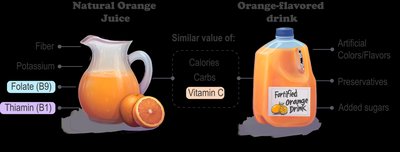
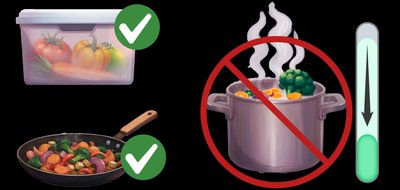
Fat-soluble vitamins are more stable than water-soluble vitamins, which are sensitive to air, water, light, pH, and heat. To preserve vitamins:
Store fruits and vegetables in airtight containers.
Cut produce just before cooking or serving.
Cook with minimal water; use microwaving, steaming, or stir-frying.
Refrigerate and minimize cooking time and heat exposure.
Vitamin Supplements
Use and Risks
Supplements should not replace a healthy diet and may increase the risk of vitamin toxicity, especially with fat-soluble vitamins. They are most appropriate for groups with increased needs or dietary restrictions (e.g., pregnant women, vegans, people with certain diseases). Excess water-soluble vitamins are excreted in urine, often resulting in wasted money.


Other Vitamin-Like Nutrients
Conditionally Essential Nutrients
Some nutrients are considered "vitamin-like" because they are conditionally essential. Examples include:
Choline: Fat metabolism, cell membrane structure; found in milk, eggs, liver, peanuts.
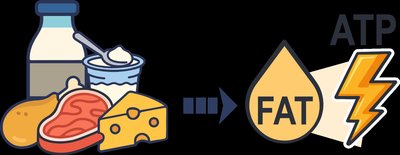
Carnitine: Fat utilization; found in meat and dairy.
Lipoic acid: Cellular energy generation; found in liver, red meat, spinach, broccoli, tomatoes, potatoes.
Inositol: Cell membrane health; found in plant sources.

Appendix: Recommended Daily Intake for Vitamins
Vitamin | RDA/AI | Upper Limit |
|---|---|---|
Vitamin A | 900µg RAE (men), 700µg RAE (women) | 3,000µg RAE |
Vitamin D | 15µg | 100µg |
Vitamin E | 15mg | 1,000mg |
Vitamin K | 120µg (men), 90µg (women) | Not established |
Thiamin (B1) | 1.2mg (men), 1.1mg (women) | Not established |
Riboflavin (B2) | 1.3mg (men), 1.1mg (women) | Not established |
Niacin (B3) | 16mg NE (men), 14mg NE (women) | 35mg |
Pantothenic Acid (B5) | 5mg | Not established |
Pyridoxine (B6) | 1.3mg | 100mg |
Biotin (B7) | 30µg | Not established |
Folate (B9) | 400µg DFE | 1,000µg |
Cobalamin (B12) | 2.4µg | Not established |
Vitamin C | 90mg (men), 75mg (women) | 2,000mg |
Notes: RAE = Retinol Activity Equivalents; NE = Niacin Equivalents; DFE = Dietary Folate Equivalents. Upper limits are not established for some vitamins due to insufficient data.
