 Back
BackNutrition and the Human Body: Digestion, Energy, and Disorders
Study Guide - Smart Notes
 Tailored notes based on your materials, expanded with key definitions, examples, and context.
Nutrition and the Human Body
Digestion and Absorption
The digestive system is responsible for breaking down food into absorbable units, which are then used by the body for energy and as building blocks. Digestion involves both mechanical and chemical processes, and absorption occurs primarily in the small intestine.
Ingestion: The process of collecting nutrients into the digestive tract.
Mechanical breakdown: Includes mastication (chewing) and muscular contractions (peristalsis and segmentation) that mash, mix, and propel food.
Chemical breakdown: Enzymes from the salivary glands, stomach, pancreas, and small intestine break apart food macromolecules.
Major organs: Mouth, pharynx, esophagus, stomach, small intestine, large intestine (colon), rectum, and anus.
Secondary organs: Salivary glands, pancreas, liver, and gallbladder secrete digestive juices.
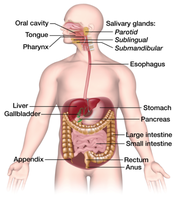
From the Stomach to the Small Intestine: The stomach stores food, breaks it down mechanically and chemically, and empties partially digested food (chyme) into the small intestine. The time food spends in the stomach depends on its macronutrient composition; high-fat or high-protein meals take longer to digest than carbohydrate-rich meals.
Chyme: A semiliquid mass of partially digested food mixed with gastric juices.
Small intestine: Maximizes nutrient absorption through folds, villi, and microvilli, increasing surface area.
Absorbed nutrients enter capillaries or lymphatic vessels within microvilli.
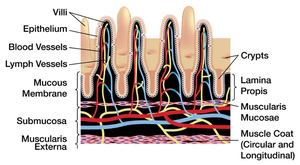
From the Small Intestine to the Large Intestine: Indigestible food and fiber move to the large intestine, where water and electrolytes are reabsorbed.
Key Takeaways: Digestion and Absorption
The digestive system breaks down complex macromolecules into simple, absorbable units.
Mechanical breakdown occurs via peristalsis and segmentation; chemical breakdown is accomplished by digestive enzymes and bile.
Four steps in digestion: ingestion, mechanical and chemical breakdown, nutrient absorption, and elimination.
Energy and Calories
Energy Concepts and Caloric Needs
Energy is essential for life and is categorized as kinetic (moving) or potential (stored). The body maintains metabolic homeostasis by balancing nutrient intake and energy output. The liver plays a central role in distributing nutrients and maintaining energy equilibrium.
Energy: The capacity to perform work.
Forms of energy: Thermal (heat), chemical (in chemical bonds), and electrochemical (nerve impulses).
Calorie: The amount of energy required to heat 1 gram of water by 1°C.
Kilocalorie (Calorie): The amount of energy needed to heat 1 kilogram of water by 1°C; used on nutrition labels.
Estimating Energy from Macronutrients
Carbohydrates and protein: 4 kcal/gram
Fat: 9 kcal/gram
Alcohol: 7 kcal/gram
To calculate the energy from each macronutrient:
Protein:
Percentage of energy from protein:
Key Takeaways: Energy and Calories
Calories are a measurement of energy in food.
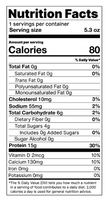
Nutrition Facts panels list the total Calories per serving.
Metabolic homeostasis is achieved when nutrient intake matches energy needs.
Digestion and Absorption Disorders
Gastroesophageal Reflux Disease (GERD)
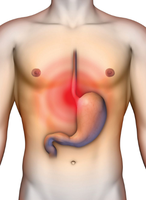
GERD is a persistent form of acid reflux, characterized by heartburn, regurgitation, coughing, and trouble swallowing. It is managed through dietary and lifestyle modifications, and sometimes surgery.
Symptoms: Heartburn, regurgitation, frequent coughing, trouble swallowing.
Treatment: Avoid trigger foods, eat smaller meals, stop smoking, remain upright after meals, surgery if needed.
Irritable Bowel Syndrome (IBS)
IBS is characterized by muscle spasms in the colon, leading to abdominal pain, bloating, constipation, and/or diarrhea. Diet and stress are primary contributors, and management includes dietary changes, increased fiber, hydration, and exercise.
Symptoms: Abdominal pain, bloating, constipation, diarrhea.
Treatment: Food journal, slower eating, more fiber and water, exercise.
Celiac Disease
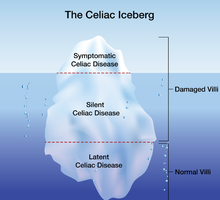
Celiac disease is an autoimmune disorder triggered by gluten, affecting the small intestine and leading to malabsorption and nutritional deficiencies. Symptoms include gastrointestinal upset, abdominal pain, weight loss, and failure to thrive in children.
Symptoms: Pale, fatty, loose stools, abdominal pain, weight loss, failure to thrive.
Diagnosis: Many cases are undiagnosed or "silent." Proper diagnosis is essential for management.
Diverticulitis
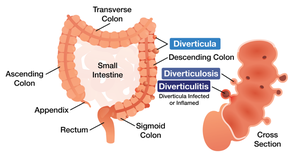
Diverticulitis occurs when sacs in the colon lining become inflamed, causing abdominal pain, nausea, and alternating constipation and diarrhea. Treatment includes antibiotics and, in severe cases, hospitalization.
Symptoms: Lower abdominal pain, nausea, constipation, diarrhea.
Treatment: Antibiotics, hospital stay for severe cases.
Colon Cancer
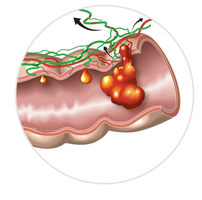
Colon cancer is a slow-progressing malignancy in the colon. Risk can be reduced by a high-fiber diet, regular exercise, avoiding smoking and excessive alcohol, and regular screenings.
Prevention: Eat fruits, vegetables, whole grains; exercise; avoid smoking and excess alcohol; regular screenings.
Stages: Progresses from intestinal polyp to malignant polyp to cancerous mass.
Food Allergies
Food allergies affect millions and can range from mild to life-threatening. Symptoms include tingling mouth, swelling, difficulty breathing, hives, stomach cramps, diarrhea, vomiting, drop in blood pressure, loss of consciousness, and death. Proper diagnosis is crucial for management.
Symptoms: Tingling mouth, swelling, difficulty breathing, hives, stomach cramps, diarrhea, vomiting, drop in blood pressure, loss of consciousness, death.
Key Takeaways: Digestion and Absorption Disorders
Unbalanced diets can cause diseases; certain disorders can lead to inadequate nutrient intake and absorption.
High-fat diets can worsen GERD and IBS symptoms.
Celiac disease can cause nutritional deficiencies and compromise organ function.
Diverticulitis and colon cancer can be prevented with a high-fiber diet.
Food allergies require proper diagnosis and management.
