 Back
BackNutrition and the Scientific Method: Foundations for Evidence-Based Practice
Study Guide - Smart Notes
 Tailored notes based on your materials, expanded with key definitions, examples, and context.
Science of Nutrition
The Importance of Research and Scientific Methods in Nutrition
Understanding nutrition relies on rigorous scientific research and the application of the scientific method. This process allows scientists to systematically investigate the effects of nutrients, foods, and dietary patterns on health, leading to evidence-based recommendations and guidelines.
Research in Nutrition: Essential for identifying essential nutrients, their functions, and their impact on health and disease.
Scientific Method: Provides a structured approach to inquiry, ensuring findings are reliable and reproducible.
Evidence-Based Practice: Nutrition guidelines are developed using accumulated scientific evidence, minimizing bias and maximizing public health benefit.
Steps in the Scientific Method
The scientific method is a systematic process used to answer questions and solve problems in nutrition science. It involves several key steps, each building upon the previous to ensure robust conclusions.
Step 1: Ask a Question
Step 2: Do Background Research
Step 3: Form a Hypothesis
Step 4: Test Your Hypothesis
Step 5: Analyze the Data
Step 6: Determine Your Conclusion
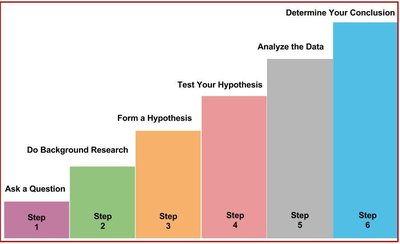
Example: The discovery of iodine as a treatment for goiter followed these steps, from observation of seaweed's effects to hypothesis formation, experimental testing, and eventual public health implementation.
Types of Scientific Nutrition Studies
Overview of Study Designs
Nutrition research employs various study designs, each with unique strengths and limitations. Understanding these types is crucial for interpreting scientific findings.
Observational Studies: Researchers observe subjects without intervention. Can identify associations but not causation.
Experimental Studies (Interventional): Researchers manipulate variables to test effects. Can establish causation.
Animal Studies: Used for preliminary safety and efficacy data; more controlled but less directly applicable to humans.
In Vitro Studies: Conducted on cells or molecules outside living organisms; useful for mechanistic insights.
Type | Description | Example | Notes |
|---|---|---|---|
Observational | Observe without intervention | Diet and heart disease | Shows correlation, not causation |
Experimental | Intervention between groups | Calcium supplement and osteoporosis | Can show causation |
Animal | Uses animal subjects | Drug effects in rats | Preliminary, ethical considerations |
In Vitro | Cells/molecules in lab | Drug crossing cell membrane | Mechanistic, not whole organism |
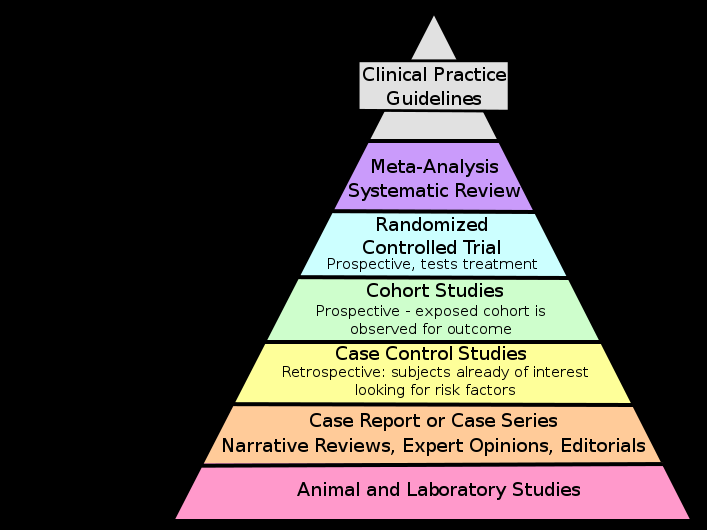
Additional info: The hierarchy of evidence places randomized controlled trials and meta-analyses at the top for reliability in human health decisions.
Observational Studies: Prospective and Retrospective
Observational studies can be prospective (cohort studies) or retrospective (case-control studies). Both are valuable for identifying associations between exposures and outcomes.
Prospective Cohort Studies: Follow healthy subjects over time to observe exposure and outcome.
Retrospective Case-Control Studies: Compare subjects with a disease (cases) to matched controls, looking back at exposures.
Example: Studying vitamin E intake and Alzheimer’s disease risk using both cohort and case-control designs.
Experimental Studies: Randomization and Blinding
Experimental studies, especially randomized, double-blind, placebo-controlled trials, are considered the gold standard for establishing causation in nutrition research.
Randomization: Assigns subjects to groups by chance, reducing bias.
Blinding: Prevents subjects and/or researchers from knowing group assignments, minimizing placebo effects and bias.
Placebo: An inactive treatment used to compare against the active intervention.
Example: Testing the effect of iodized salt on goiter prevalence in school-aged girls.
Nutritional Assessment
ABCD Methods of Nutritional Assessment
Nutritional assessment determines whether individuals or populations are well-nourished, undernourished, or over-nourished. The ABCD methods provide a comprehensive approach.
Anthropometry: Measurement of physical dimensions and body composition.
Biochemical Methods: Laboratory analysis of nutrients or metabolites in biological samples.
Clinical Methods: Physical examination for signs of nutrient deficiencies or toxicities.
Dietary Methods: Assessment of food and nutrient intake using recalls, questionnaires, diaries, or direct observation.
Anthropometric Methods
Anthropometry involves measuring height, weight, head circumference, skin-fold thickness, and other parameters to assess growth and body composition.

Example: Height and weight measurements are essential for evaluating physical growth in children.
Biochemical Methods
Biochemical assessment includes measuring nutrients or their metabolites in blood, urine, or tissues. This method is useful for diagnosing conditions like diabetes.
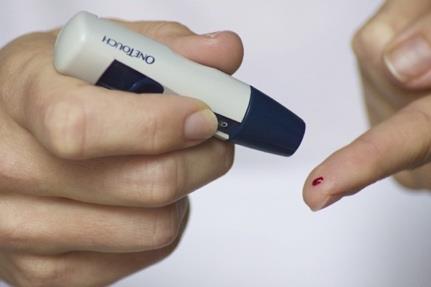
Example: Blood glucose measurement is used to assess diabetes risk.
Clinical Methods
Clinical assessment involves examining physical signs and symptoms that may indicate nutrient deficiencies or toxicities, such as changes in skin, hair, nails, or gums.
Dietary Methods
Dietary assessment methods include:
24-hour recall: Subject recalls all food and drink consumed in the past 24 hours.
Food frequency questionnaire: Subject reports frequency of intake for various foods.
Food diary: Subject records food intake at the time of eating.
Observed food consumption: Food is weighed and calculated for accuracy.
Evaluating Nutrition Research and Media
Bias and Evolving Science
Scientific conclusions can be influenced by funding sources and researcher interests. It is important to critically evaluate the origin and funding of studies to minimize bias.
Example: Studies funded by industry (e.g., tobacco or beef producers) may be biased.
Nutrigenomics
Nutrigenomics is an emerging field that studies how individual genetic differences affect responses to nutrients, aiming for personalized nutrition recommendations.
Genes: DNA sequences inherited from parents, coding for proteins and traits.
Gene-Environment Interaction: Food choices can influence gene expression and health outcomes.
Evaluating Nutrition Information in the Media
Critical evaluation of nutrition news and websites is essential. The ABCD criteria (Authority, Bias, Currency, Documentation) help assess reliability.
Authority: Credentials and expertise of the author.
Bias: Balance and objectivity of information.
Currency: Timeliness and relevance of information.
Documentation: References and evidence supporting claims.
Trustworthy Sources for Nutrition Information
US Department of Agriculture Food and Nutrition Information Center
Academy of Nutrition and Dietetics
Department of Health and Human Services
Centers for Disease Control and Prevention
Types of Scientific Publications
Primary, Secondary, and Tertiary Sources
Scientific publications are categorized based on their content and reliability.
Primary Source: Original research conducted by the authors.
Secondary Source: Summaries or reviews of primary sources.
Tertiary Source: Summaries of secondary sources, such as textbooks.
Additional info: Peer-reviewed journals are more reliable than news or magazine articles.
Statistical Analysis in Nutrition Research
Statistical Significance and p-Values
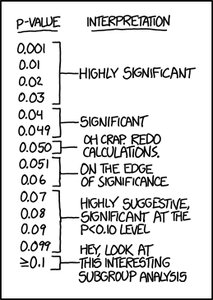
Statistical analysis is crucial for interpreting nutrition research. The p-value indicates the likelihood that observed differences are due to chance.
p-value: Probability that results occurred by chance. A p-value less than 0.05 () is considered statistically significant.
Odds Ratio (OR), Relative Risk (RR), and Hazard Ratio (HR)
These ratios compare the risk of an outcome between treated and untreated groups.
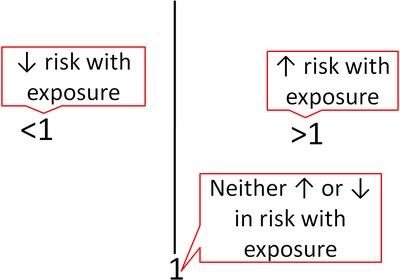
OR, RR, HR = 1: No difference in risk.
OR, RR, HR < 1: Decreased risk with treatment.
OR, RR, HR > 1: Increased risk with treatment.
Example: An OR of 2 means twice the risk; an OR of 0.5 means half the risk.
Confidence Intervals (CI)
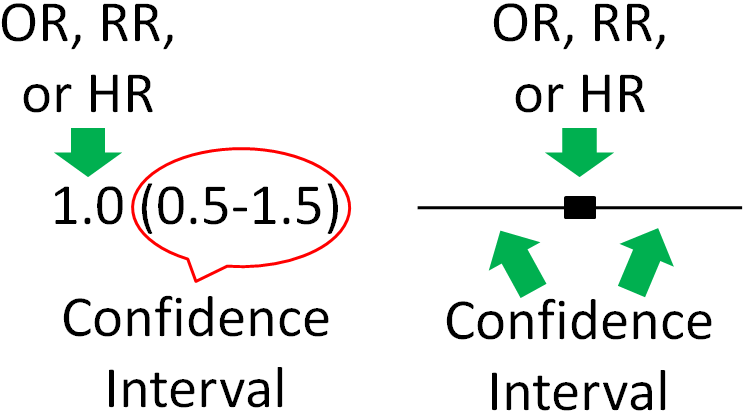
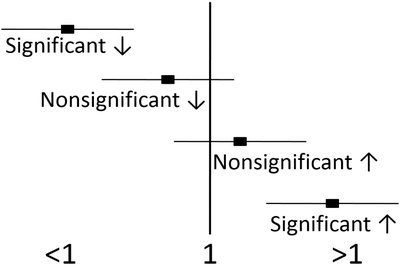
Confidence intervals indicate the range within which the true value is likely to fall. A 95% CI means researchers are 95% confident the value is within this range.
Small CI: Greater confidence in results.
Large CI: Less confidence in results.
CI including 1.0: No statistically significant effect.
Summary
Interpreting nutrition research requires understanding the scientific method, study designs, nutritional assessment methods, and statistical analysis. Critical evaluation of sources and evidence is essential for making informed nutrition decisions.
