 Back
BackNutrition Science and Research: Evaluating Nutrition Information and Research Methods
Study Guide - Smart Notes
 Tailored notes based on your materials, expanded with key definitions, examples, and context.
Science of Nutrition
Evaluating Nutrition Information
Understanding how to critically evaluate nutrition information is essential for both students and professionals in the field. With the abundance of nutrition-related content available online and in the media, it is important to distinguish between credible sources and misinformation.
Website Reliability: Check the credentials of website sponsors and information suppliers. Reliable sites often end in “.gov”, “.edu”, or “.org”.
Currency: Ensure the information is up-to-date and regularly reviewed.
Source of Information: Determine if the content is provided by qualified professionals and whether there is expert review.
Conflict of Interest: Investigate who funded the study or website and whether there are financial ties that could bias the information.
Example: A nutrition blog sponsored by a supplement company may present biased information favoring their products.
Nutrition Quackery
Nutrition quackery refers to the promotion of unproven or fraudulent nutrition products and practices, often for financial gain. Recognizing red flags can help prevent the spread of misinformation.
Promises of quick health improvements or miraculous results
Use of secret ingredients or formulas
Reliance on testimonials rather than scientific evidence
Exaggeration of simple truths about nutrients
Use of celebrity endorsements
High costs compared to ordinary foods
Claims that seem too good to be true
Example: A supplement claiming to "melt fat overnight" without scientific backing is likely quackery.
Reliable Professional Organizations
Academy of Nutrition and Dietetics (AND)
American Society for Nutrition Sciences
Society for Nutrition Education
American College of Sports Medicine (ACSM)
Centers for Disease Control and Prevention (CDC)
Tools for Healthful Eating
Assessing Nutrient Intake
Several techniques are used to assess nutrient intake in individuals and populations. These methods vary in accuracy, comprehensiveness, and practicality.
24-Hour Recall: An interview-based method where individuals recall all foods and beverages consumed in the past 24 hours. Specialized software or tools like ASA24 may be used.
Food Record: Individuals record their food and beverage intake over several days, either in written logs or digital applications.
Food Frequency Questionnaire (FFQ): Assesses usual intake by asking how often certain foods are consumed over a specific period.
Example: A researcher may use a 24-hour recall to estimate average sodium intake in a population.
Consumer-Facing Dietary Intake Tools
Many applications are available for consumers to track their dietary intake and support healthful eating habits. These tools vary in features, ease of use, and the nutrients they report.
MyFitnessPal: Popular for its large food database and integration with fitness trackers.
Cronometer: Known for detailed micronutrient tracking.
Noom: Focuses on behavior change and psychological aspects of eating.
Lose It!: Emphasizes calorie counting and weight management.
FatSecret: Offers community support and food diary features.
When evaluating these tools, consider their messaging, usability, nutrient reporting, and suitability for different populations (e.g., athletes, individuals with medical conditions, or those with disordered eating).





Science of Nutrition
Scientific Method in Nutrition Research
The scientific method is a systematic approach used to investigate nutrition questions and establish guidelines. It involves several key steps:
Observation: Identifying a phenomenon or problem.
Hypothesis: Formulating a testable prediction.
Experimentation: Designing and conducting studies to test the hypothesis.
Analysis: Interpreting data and drawing conclusions.
Peer Review and Publication: Sharing findings with the scientific community for validation.
Example: A hypothesis might state, "Increased dietary fiber intake reduces cholesterol levels in adults." Researchers would then design studies to test this prediction.
Well-Designed Experiments
Key features of a well-designed nutrition experiment include:
Sample Size: Sufficient number of subjects to ensure results are not due to chance.
Control Group: A group that does not receive the intervention, used for comparison.
Control for Variables: Minimizing the influence of confounding factors.
Types of Nutrition Research Studies
Animal and Cell Studies
These studies are important for pre-clinical research, helping to screen drugs, understand mechanisms, and test safety before human trials.
In Vitro (Cell Studies): Conducted outside a living organism, often in petri dishes or test tubes.
In Vivo (Animal Studies): Conducted in living animals to test safety, efficacy, and dosage.
Observational Studies
Observational studies assess nutritional habits, disease trends, or health phenomena in populations. They can indicate relationships (associations) but cannot prove causation.
Cohort Studies: Follow groups over time to compare outcomes based on different exposures.
Case-Control Studies: Compare individuals with a condition (cases) to those without (controls) to identify risk factors.
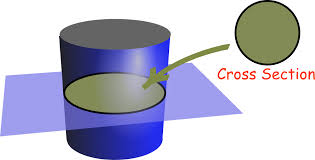
Cross-Sectional Studies: Examine a population at a single point in time to assess relationships between variables.
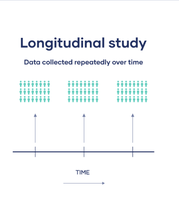
Longitudinal Studies: Track the same individuals over an extended period to observe changes and associations over time.
Intervention Studies: Randomized Controlled Trials (RCTs)
RCTs are tightly controlled experiments where participants are randomly assigned to either an experimental group (receiving the intervention) or a control group (not receiving the intervention). This design allows for the determination of causation.
Randomization: Reduces bias by evenly distributing confounding variables.
Causation: RCTs can establish cause-and-effect relationships.
Example: Testing whether a new dietary supplement lowers blood pressure compared to a placebo.
Evaluating Nutrition Research and Claims
Peer-Reviewed Articles
Peer-reviewed articles are evaluated by experts before publication, ensuring higher quality and reliability. However, it is important to assess for potential conflicts of interest, especially when industry funding is involved.
Articles with food industry involvement are more likely to report findings favorable to industry interests.
Always check the acknowledgements or conflict of interest section for transparency.
Association vs. Causation
Understanding the difference between association and causation is critical in interpreting nutrition research.
Association: A relationship between two variables, often found in observational studies. Does not imply one causes the other.
Causation: One event directly results from another, typically demonstrated in experimental studies such as RCTs.
Evaluating Nutrition Claims
When evaluating nutrition claims, consider the following questions:
Who conducted or funded the study?
Are there financial interests involved?
Is the claim supported by multiple, well-designed studies?
Does the claim rely on testimonials or anecdotal evidence?
Summary Table: Types of Nutrition Research Studies
Study Type | Main Purpose | Strengths | Limitations |
|---|---|---|---|
Animal/Cell Studies | Pre-clinical testing, mechanism discovery | Controlled environment, mechanistic insight | May not translate to humans |
Cohort Studies | Follow groups over time | Can assess temporal relationships | Cannot prove causation, expensive |
Case-Control Studies | Compare cases vs. controls | Efficient for rare diseases | Recall bias, cannot prove causation |
Cross-Sectional Studies | Snapshot at one time point | Quick, inexpensive | No temporal sequence, cannot prove causation |
Longitudinal Studies | Track same individuals over time | Can observe changes, associations | Expensive, time-consuming |
Randomized Controlled Trials | Test interventions, establish causation | Gold standard for causality | Expensive, may not reflect real-world conditions |
