Back
BackPrinciples of Nutrition: Linking Food, Health, and Dietary Guidelines
Study Guide - Smart Notes
 Tailored notes based on your materials, expanded with key definitions, examples, and context.
Food and Nutrition
Definitions and Importance
Nutrition is the scientific study of food, including how it nourishes the body and influences health. Food is any substance the body takes in and assimilates to stay alive and grow. Nutrients are components of food indispensable to the body’s functioning. Essential nutrients must be obtained from the diet, while non-essential nutrients can be synthesized by the body.
Nutrition: Supports health and well-being, including physical, mental, and social aspects.
Health: Defined as a state of complete physical, mental, and social well-being.

Nutrition and Health
Role of Nutrition in Disease Prevention
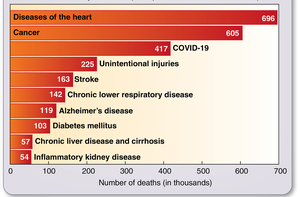
Nutrition can prevent both nutrient-deficiency diseases (e.g., scurvy, pellagra) and chronic diseases (e.g., heart disease, stroke, diabetes). Obesity is a primary link between poor nutrition and increased mortality.
Nutrient-deficiency diseases: Caused by lack of specific nutrients.
Chronic diseases: Strongly associated with poor nutrition and lifestyle choices.
Trends in Obesity Rates
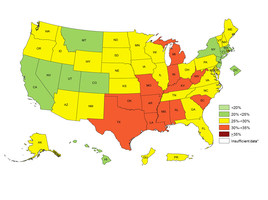
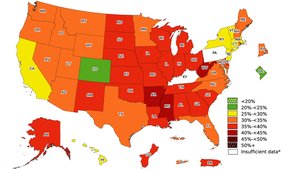
Obesity rates in the United States have increased significantly over the past decade, with regional differences across states.
Nutrients: Types and Functions
Six Classes of Essential Nutrients
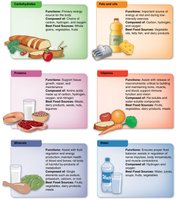
There are six groups of essential nutrients found in foods:
Carbohydrates
Fats and oils
Proteins
Vitamins
Minerals
Water
Macronutrients
Macronutrients are required in large amounts and provide energy:
Carbohydrates: 4 kcal/g; primary energy source, especially for the brain.
Fats and oils: 9 kcal/g; energy storage, cell structure, and hormone production.
Proteins: 4 kcal/g; build and repair tissues, enzymes, and hormones.
Energy is measured in kilocalories (kcal):
Micronutrients
Micronutrients are required in smaller amounts and do not provide energy but are essential for body functions:
Vitamins: Organic, regulatory roles, coenzymes in metabolism.
Minerals: Inorganic, structural and regulatory roles (e.g., calcium in bones, sodium in fluid balance).
Bioavailability refers to the body's ability to absorb and use nutrients, which can be affected by dietary factors (e.g., fiber, phytic acid, oxalic acid).
Water
Water is an inorganic macronutrient vital for health and survival, involved in fluid balance, nutrient transport, nerve impulses, waste removal, muscle contractions, and temperature regulation.
Beneficial Non-Nutrient Compounds
Functional foods: Contain biologically active ingredients with health benefits beyond basic nutrition.
Probiotics: Beneficial bacteria for gut health.
Prebiotics: Nondigestible ingredients that stimulate probiotic growth.
Phytochemicals: Plant compounds beneficial to health.
Interpreting Nutrition Research
The Scientific Method
Nutrition research applies the scientific method to investigate the effects of food and nutrients on health:
Observation and description of a phenomenon
Creation of a hypothesis
Design of a repeatable experiment
Data collection, analysis, and interpretation
Conclusion or alternative hypothesis
Development of a theory

Types of Research Studies
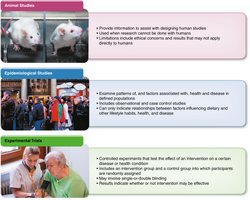
Laboratory Animal Studies: Use animal models to study nutrition interventions not feasible in humans.
Epidemiologic Studies: Examine patterns and associations in populations (observational and case-control studies).
Experimental Trials: Test interventions in controlled groups to suggest cause and effect (randomization, blinding, placebo).
Evaluating Nutrition Information
Credible sources include Registered Dietitians (RDN), peer-reviewed journals, government organizations (CDC, NIH), and reputable websites (.gov, .edu, .org).
Be aware of misinformation (inaccurate or incomplete information) and disinformation (intentional falsehoods).
Consider conflict of interest and bias in research funding and reporting.
Nutritional Status
Assessing Nutritional Status
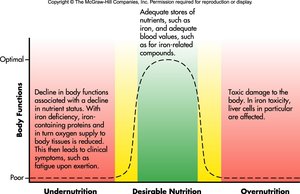
Nutritional status reflects the balance between nutrient intake and the body's needs. Deviation from optimal status can result in undernutrition, overnutrition, or imbalance.
Optimal/Desirable Status: Supports routine processes and provides surplus stores.
Undernutrition: Insufficient intake leads to deficiency symptoms (e.g., iron deficiency anemia).
Overnutrition: Excess intake may cause toxicity or increase disease risk (e.g., excess sodium and hypertension).
Imbalance: Excess of one nutrient interferes with another (e.g., copper and zinc).
Nutrition Assessment Methods
Anthropometrics: Height, weight, waist circumference, body composition.
Biochemical indices: Blood and urine tests.
Clinical examination: Medical history, physical exam.
Dietary assessment: 24-hour recall, food records.
Environmental assessment: Education and economic background.
Nutrition Guidelines and Diet Planning
Dietary Guidelines for Americans (DGA)
The DGA provides science-based advice for healthy eating, revised every 5 years. Key recommendations include:
Eat the right amount for you
Prioritize protein foods at every meal (1.2–1.6 g/kg body weight)
Consume dairy (3 servings/day), vegetables (3 servings/day), fruits (2 servings/day)
Incorporate healthy fats and focus on whole grains (2–4 servings/day)
Limit highly processed foods, added sugars, refined carbohydrates, and alcoholic beverages
Limit saturated fat to <10% of total calories
Diet Planning Tools
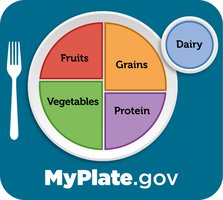
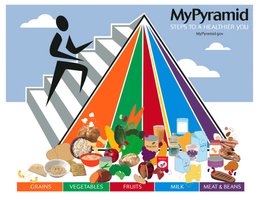
MyPlate: Visual guide to balanced meals, dividing the plate into fruits, vegetables, grains, protein, and dairy.
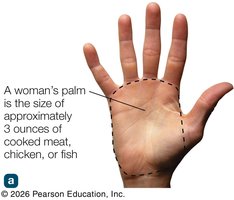
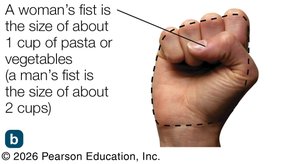
Serving sizes: Standardized amounts help compare nutrient intake (e.g., 1 cup of milk, 1 ounce of meat, 1 cup of vegetables).
Handy Guide to Serving Sizes
A woman’s palm ≈ 3 ounces of cooked meat, chicken, or fish
A woman’s fist ≈ 1 cup of pasta or vegetables
The "O" made by thumb and forefinger ≈ 1 tablespoon of oil

Designing a Healthful Diet
A healthful diet is:
Adequate: Provides enough energy, nutrients, and fiber.
Moderate: Contains appropriate amounts of foods and limits sugar, salt, and saturated fat.
Balanced: Combines foods to provide proper nutrient proportions.
Varied: Includes many different foods from all food groups.
Nutrient Dense: Supplies the highest level of nutrients for the lowest calories (e.g., fruits, vegetables, lean proteins, whole grains).