 Back
BackSpotlight on Sugar: Metabolism, Types, and Health Implications
Study Guide - Smart Notes
 Tailored notes based on your materials, expanded with key definitions, examples, and context.
Carbohydrates: Simple and Complex Sugars
Types of Sugars in Foods
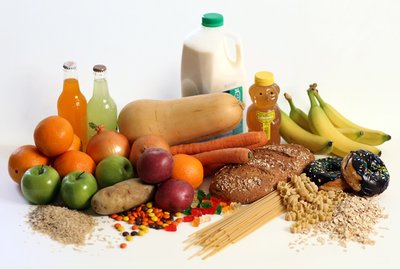
Carbohydrates are a primary source of energy in the human diet, found in both unprocessed foods (such as fruits, vegetables, and dairy) and processed foods (where sugars are often added for flavor and preservation). The distinction between naturally occurring sugars and added sugars is important for nutritional health, though both types are chemically similar and metabolized by the body using the same enzymatic pathways.
Naturally occurring sugars: Present in whole foods like fruits, vegetables, and milk.
Added sugars: Incorporated into processed foods and beverages to enhance taste or shelf life.
Absorption and Satiety: The form and amount of sugar consumed affect how quickly it is absorbed and how the body signals fullness.
Simple vs. Complex Carbohydrates
All digestible carbohydrates, whether simple or complex, are broken down into individual sugar units before absorption. Both types provide 4 calories per gram and must be converted to simple sugars for use by the body.
Simple carbohydrates: Include monosaccharides (glucose, fructose) and disaccharides (sucrose, lactose).
Complex carbohydrates: Include polysaccharides (starch, glycogen) that are broken down into glucose units.
Absorption rate: Starch is absorbed at nearly the same rate as pure glucose; sucrose is absorbed as quickly as high fructose corn syrup.
Glucose and Fructose: Chemical Properties and Metabolism
Chemical Structure and Sweetness
Glucose and fructose share the same chemical formula (), but their atomic arrangements differ, resulting in distinct properties.
Sweetness: Fructose is about twice as sweet as glucose. Sucrose (table sugar) is intermediate in sweetness.
Food examples: Agave nectar (high in fructose) tastes sweeter than high fructose corn syrup, which is sweeter than sucrose.
Metabolic Pathways
Glucose and fructose are processed differently in the body:
Glucose: Circulates in the bloodstream and is used by all cells for energy.
Fructose: Primarily metabolized in the liver. Excess fructose can lead to fat accumulation in the liver, contributing to nonalcoholic fatty liver disease.
Fat storage: Excess glucose is more likely stored in adipose tissue, while excess fructose is stored in the liver.
Blood Sugar Regulation and Energy Storage
Blood Glucose, Glycogen, and Fat
The body maintains stable blood glucose levels through storage and conversion mechanisms. Glucose is stored as glycogen in the liver and muscles, and as fat in adipose tissue.
Blood glucose: Only a small amount circulates in the blood at any time (about 5 grams).
Glycogen: Stored in liver and muscle cells; can be converted back to glucose.
Fat: Most energy reserves are stored as fat. Only the glycerol component of fat can be converted to glucose; fatty acids cannot.
Protein breakdown: When glycogen is depleted, muscle proteins are used to regenerate blood glucose.
Health Implications of Added Sugar
Sources and Consumption Patterns
Added sugars are prevalent in the American diet, especially in processed foods and sugar-sweetened beverages.
Soda: Accounts for 30% of added sugar intake.
Processed foods: 74% contain added sugars, contributing to an average of 22 teaspoons (88 grams) per day.
Health risks: Excessive added sugar increases the risk of obesity, Type 2 diabetes, and cardiovascular disease.
Dietary recommendations: Limit added sugar to less than 10% of total daily calories.
Identifying Hidden Sugars
Added sugars may appear under various names on food labels, making them difficult to identify.
Ingredient | What's in it |
|---|---|
Beet sugar / Cane sugar / Cane juice | Mainly sucrose (glucose + fructose) |
Dextrose, Fructose, Lactose, Maltose, Sucrose | Chemical names of specific sugars |
Rice syrup / Brown rice syrup | Mainly maltose and maltotriose (2 or 3 glucose units) |
Corn syrup / Corn syrup solids | Mainly glucose |
High fructose corn syrup | Glucose and fructose (high in fructose) |
Malt syrup / Barley malt | Mainly maltose |
Fruit juice / Fruit juice concentrate | Fructose, glucose, and sucrose (proportions vary) |
Honey | Fructose and glucose |
Maple syrup | Mainly sucrose |
Molasses | Mainly sucrose |
Comparing Fruits and Soda: Satiety and Nutritional Value
Caloric and Nutritional Comparison
Consuming equivalent calories from fruits or soda yields different effects on satiety and nutrition.
Satiety: Fruits require chewing and spend more time in the stomach, leading to slower absorption and greater feelings of fullness.
Fiber: Fruits contain 6–7 grams of fiber, which triggers hormones signaling fullness.
Absorption: Sugar from fruit is absorbed more slowly than from soda, preventing rapid blood sugar spikes and crashes.
Nutrients: Fruits provide vitamins (e.g., vitamin C, calcium, magnesium) absent in soda.
Factors Influencing Sugar Consumption
Why Is Sugar Intake High?
Despite health risks, sugar consumption remains high due to several factors:
Convenience: Processed foods are quicker to prepare than whole foods.
Addiction: Sugar can cause physiological addiction, similar to drugs of abuse.
Marketing: Processed foods are heavily marketed and profitable.
Cost: Sugar is inexpensive, making processed foods more accessible.
Habit: Changing dietary habits can be challenging and personally threatening.
