 Back
BackThe Science of Nutrition: Foundations and the Scientific Method
Study Guide - Smart Notes
 Tailored notes based on your materials, expanded with key definitions, examples, and context.
The Science of Nutrition
What is Science?
Science is an active, ongoing process aimed at understanding the natural world. It relies on observation, experimentation, and reasoning, and is guided by the scientific method. In nutrition, science helps us understand how food and nutrients affect health and disease.
Observation: Careful and accurate observation of the natural world is the foundation of scientific inquiry. Observations can be biased or incomplete, so accuracy is essential.
Experimentation: Testing ideas through controlled experiments allows scientists to gather evidence and draw conclusions.
Reasoning: Logical thinking is used to interpret results and form explanations.
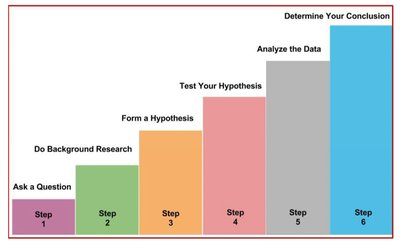
The Scientific Method
Steps of the Scientific Method
The scientific method is a systematic approach to answering questions about the natural world. It is essential in nutrition research to ensure findings are reliable and reproducible.
Step 1: Ask a Question – Identify a specific question based on observation.
Step 2: Do Background Research – Review existing knowledge to inform the question.
Step 3: Form a Hypothesis – Propose an educated guess or explanation that can be tested.
Step 4: Test Your Hypothesis – Design and conduct experiments to collect data.
Step 5: Analyze the Data – Use statistical and logical methods to interpret results.
Step 6: Determine Your Conclusion – Decide whether the data support or refute the hypothesis.
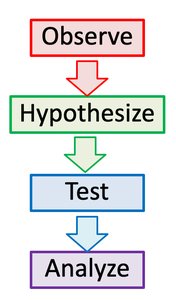
Hypothesis and Experimentation
A hypothesis is an educated guess that explains an observation. It must be testable and falsifiable. Experiments are designed to test hypotheses, often by comparing experimental and control groups.
Example: "There is something in apple peels that causes itching. Cooking the peel deactivates this factor." An experiment could compare reactions to raw and cooked apple peels.
Analysis and Consensus
After collecting data, scientists analyze results to determine if the hypothesis is supported. If not, a new hypothesis is formed. If supported, further experiments are conducted to replicate findings. Scientific consensus is reached when multiple studies by different researchers yield similar results.
Replication: Repeating experiments increases confidence in results.
Peer Review: Other scientists evaluate and critique findings before acceptance.
Historical Example: Scurvy and Nutrition Science
Scurvy and the First Clinical Trial
Scurvy, a disease caused by vitamin C deficiency, was common among sailors. Early observations showed that sailors who ate citrus fruits or even rats (which produce vitamin C) were protected from scurvy. James Lind conducted the first controlled clinical trial, dividing sailors with scurvy into groups and giving them different treatments. Only those given citrus fruits recovered quickly.
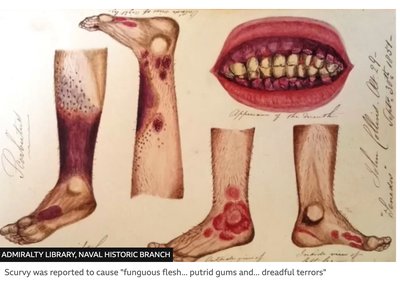
Key Point: This experiment demonstrated the importance of controlled trials in nutrition science.
Outcome: Eventually, the British Navy adopted citrus juice as a preventive measure, though the active component (vitamin C) was not identified until 1928.

Scientific Theories in Nutrition and Biology
From Hypothesis to Theory
A scientific theory is a well-supported explanation for a phenomenon, based on repeated experiments and observations. Theories can make predictions and are subject to revision as new evidence emerges.
Example: Germ theory of disease, cell theory, and the theory of evolution are foundational to understanding biology and nutrition.
Cell Theory
Cell theory states that all living organisms are composed of cells, which are the basic units of life. This concept is fundamental to understanding how nutrients affect cellular function and health.
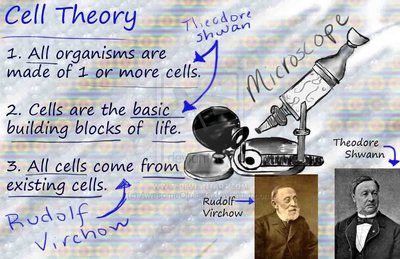
Characteristics of Science
Focuses on the Natural World
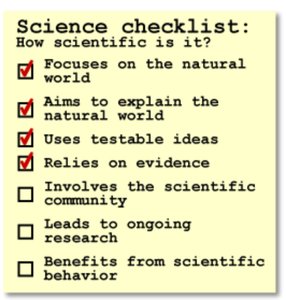
Science seeks to explain the physical universe and the natural forces that act upon it, including atoms, plants, food, ecosystems, and human societies. Supernatural explanations are outside the scope of science.

Uses Testable Ideas and Evidence
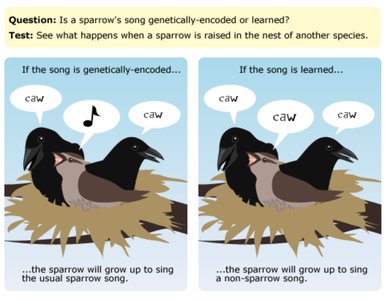
Scientific ideas must be testable and supported by evidence. Acceptance or rejection of ideas depends on data, not tradition or opinion.
Involves the Scientific Community
Progress in science depends on collaboration, peer review, and communication within the scientific community. Conferences, publications, and open sharing of results are essential for building knowledge.
Ongoing Research and Scientific Behavior
Science is a continuous process. As new questions arise, research continues. Scientists are expected to act with integrity, communicate openly, and build on previous work.
Code of Conduct: Know prior research, test ideas, assimilate evidence, communicate openly, and act with integrity.
Summary Table: The Scientific Method in Nutrition Research
Step | Description | Nutrition Example |
|---|---|---|
Observation | Notice a pattern or phenomenon | Some people develop scurvy on long sea voyages |
Hypothesis | Propose an explanation | Lack of fresh fruits causes scurvy |
Experiment | Test the hypothesis | Give citrus fruits to sailors and observe outcomes |
Analysis | Interpret data | Sailors who eat citrus recover from scurvy |
Conclusion | Draw conclusions and share results | Citrus fruits prevent scurvy; vitamin C identified later |
Additional info: The scientific method is foundational to all nutrition research, ensuring that dietary recommendations are based on evidence rather than anecdote or tradition. Understanding how science works is essential for evaluating nutrition information critically.
