 Back
BackTrace Elements in Human Nutrition: Functions, Sources, and Health Implications
Study Guide - Smart Notes
 Tailored notes based on your materials, expanded with key definitions, examples, and context.
Trace Elements
Trace elements are essential minerals required by the human body in amounts less than 100 mg per day. They play critical roles in various physiological processes, including enzyme function, oxygen transport, and antioxidant defense. The main trace elements include iron, zinc, copper, manganese, selenium, iodine, fluoride, chromium, and molybdenum.
Trace elements are difficult to study due to their low dietary requirements and challenges in removing them from the diet.
Bioavailability, or the rate at which these minerals are absorbed and utilized, is a significant concern.
Iron
Functions and Forms
Iron is the most common nutritional deficiency in Canada and is vital for oxygen transport and cellular metabolism.
Heme iron: Found in animal products; more efficiently absorbed.
Nonheme iron: Found in plant sources and iron cookware; less efficiently absorbed.
Ferritin: Major iron storage protein.
Transferrin: Iron transport protein in the blood.
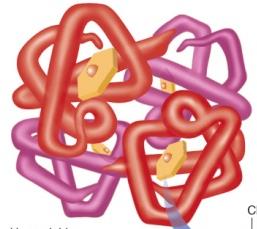
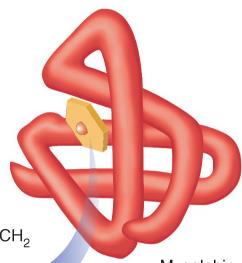
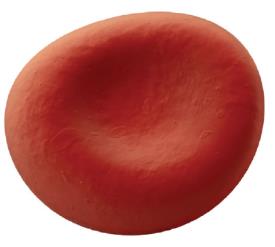
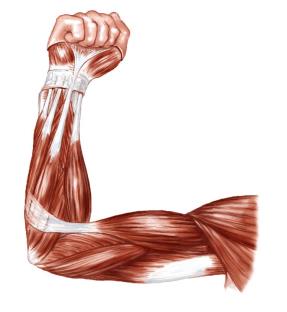
Iron is a component of hemoglobin (in red blood cells) and myoglobin (in muscle), both of which are essential for oxygen delivery.
Other functions: Drug metabolism, immune function, and antioxidant enzyme activity.
Absorption and Bioavailability
Heme iron is absorbed about twice as efficiently as nonheme iron.
Absorption depends on iron intake, iron stores, and the type of iron in foods.
Vitamin C enhances nonheme iron absorption.
Absorption is inhibited by fiber, phytates, oxalates, tannins, and calcium—an issue for vegans and vegetarians.
Iron Deficiency: Stages and Symptoms
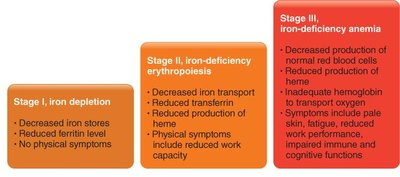
Iron deficiency develops in three stages, ultimately leading to microcytic, hypochromic anemia (small, pale red blood cells).
Stage I: Iron depletion – Decreased iron stores, reduced ferritin, no physical symptoms.
Stage II: Iron-deficiency erythropoiesis – Reduced transferrin, reduced heme production, physical symptoms such as reduced work capacity.
Stage III: Iron-deficiency anemia – Decreased hemoglobin, pale skin, fatigue, impaired immune and cognitive function.
Iron Toxicity and Overload
UL (Upper Limit): 45 mg/day from all sources.
Excess iron accumulates in tissues such as the heart and liver.
Hemochromatosis: Genetic disorder causing increased iron absorption, leading to weight loss, fatigue, abdominal pain, and iron deposits in the skin.
Iron poisoning can cause intestinal damage, changes in body pH, shock, and liver failure.
Treatment: Regular blood donation.
Dietary Recommendations and Sources
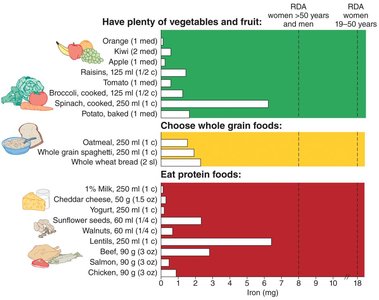
RDA: 8 mg/day (adult males, postmenopausal females), 15 mg/day (females 14–18 years), 18 mg/day (females 19–50 years).
Sources: Red and organ meats, legumes, leafy greens, whole and enriched grains.
Deficiency symptoms: Fatigue, weakness, headache, decreased work capacity, impaired development, increased infection risk.
Excess symptoms: Intestinal damage, abnormal body acidity, shock, liver failure.
Zinc
Functions and Bioavailability
Zinc is essential for growth, tissue repair, immune function, and the development of sex organs and bone. It is the most abundant intracellular trace element and is involved in over 300 enzymes.
Better absorbed from animal sources; plant sources contain phytates that reduce bioavailability.
Functions include scavenging free radicals, DNA/RNA synthesis, carbohydrate metabolism, acid–base balance, folate absorption, insulin storage/release, vitamin A mobilization, cell membrane stabilization, and hormonal regulation of cell division.
Dietary Recommendations and Sources
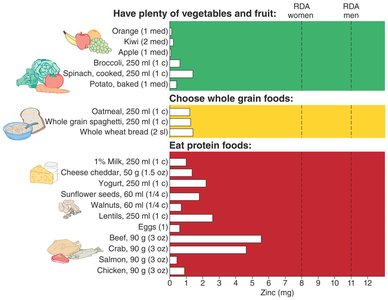
RDA: Males = 11 mg/day (important for sperm health); females = 8 mg/day.
Sources: Red meat, liver, eggs, dairy, seafood.
Vegetarians and especially vegans are at higher risk of deficiency due to lower bioavailability from plant sources and higher intake of phytates, fiber, tannins, and oxalates.
Vegan RDA: Males up to 17 mg/day, females up to 12 mg/day.
Deficiency and Excess
Deficiency: Decreased growth, development, immunity; skin rashes; diarrhea.
Excess: Gastrointestinal irritation, vomiting, appetite loss, diarrhea, abdominal cramps, headaches; decreased immunity, HDL, copper, and iron absorption.
Zinc and Gene Expression
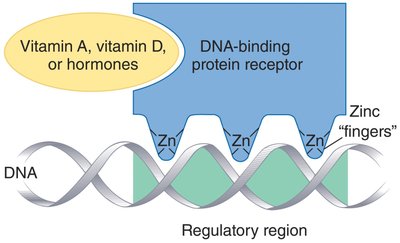
Zinc is a structural component of "zinc fingers," which are motifs in DNA-binding proteins that regulate gene expression in response to vitamin A, vitamin D, or hormones.
Copper
Functions and Sources
Copper is necessary for preventing certain types of anemia and is interrelated with iron metabolism. It is a component of proteins and enzymes involved in connective tissue synthesis, lipid metabolism, heart muscle maintenance, and immune and nervous system function.
Sources: Organ meats, seafood, nuts, seeds, whole grains, chocolate.
Zinc and copper are antagonistic; excess zinc decreases copper bioavailability. Excess vitamin C also decreases copper absorption.
RDA: 900 micrograms/day (adults); UL: 10 mg/day.
Deficiency: Iron-deficiency anemia, decreased collagen, high blood cholesterol, impaired growth, heart and nervous system degeneration, hair color/structure changes, increased infections, decreased antioxidants.
Excess: From supplements, copper containers, contaminated water; symptoms include anxiety, abdominal pain, vomiting, diarrhea.
Manganese
Functions and Sources
Manganese is a constituent and activator of enzymes involved in carbohydrate and cholesterol metabolism, bone formation, urea synthesis, and prevention of oxidative damage (e.g., superoxide dismutase).
RDA: Males = 2.3 mg/day; females = 1.8 mg/day.
Sources: Whole grains, nuts, legumes, leafy green vegetables.
Selenium
Functions and Sources
Selenium content in food depends on soil concentration. It is incorporated into proteins such as glutathione peroxidase, which decreases oxidative damage, and is needed for thyroid hormone synthesis.
RDA: 55 micrograms/day (adults); UL: 400 micrograms/day.
Sources: Seafood, kidney, liver, eggs, grains, nuts, seeds.
Deficiency: Keshan disease (heart muscle disorder), increased cancer risk, thyroid imbalances, muscular discomfort, and weakness.
Iodine
Functions and Sources
Iodine is essential for the synthesis of thyroid hormones, which regulate metabolic rate, growth, and development. Most dietary iodine comes from iodized salt, with higher concentrations in ocean-derived foods.
RDA: 150 micrograms/day (adults); UL: 1100 micrograms/day.
Sources: Seafood, iodized salt, dairy, food additives.
Deficiency leads to decreased thyroid hormones, goiter, fatigue, weight gain, and in pregnancy, cretinism (brain damage).
Excess can also cause goiter.
Goitrogens in foods like raw cabbage, cassava, and millet can limit iodine bioavailability.
Chromium
Functions and Sources
Chromium is involved in carbohydrate and lipid metabolism and is required to maintain normal blood glucose levels.
RDA: Males (19–50 years) = 35 micrograms/day; females = 25 micrograms/day.
Sources: Brewer’s yeast, liver, nuts, whole grains, mushrooms.
Deficiency is rare; excess effects are not well established.
Fluoride
Functions and Sources
Fluoride is present in small amounts in soil, water, plants, and animals. It is incorporated into bone and tooth crystals, reducing bacterial acid production and enhancing enamel remineralization.
RDA: 0.05 mg/kg/day; UL: 0.1 mg/kg/day for children under 9, 10 mg/day for ages 9–70.
Sources: Fluoridated water, tea, marine fish with bones, toothpaste.
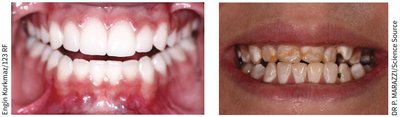
Deficiency increases risk of tooth decay; excess causes fluorosis (staining, cracking, and pitting of teeth).
Molybdenum
Functions and Sources
Molybdenum is a cofactor for enzymes involved in the metabolism of sulfur-containing amino acids, nitrogen-containing compounds (DNA, RNA), uric acid production, and oxidation/reduction reactions.
RDA: 45 micrograms/day (adults); UL: 2,000 micrograms/day.
Sources: Milk, organ meats, grains, legumes.
Deficiency is unknown in humans; excess may cause arthritis and joint inflammation.
Summary Table: Trace Elements
Mineral | Sources | Recommended Intake | Major Functions | Deficiency Diseases/Symptoms | Groups at Risk | Toxicity/UL |
|---|---|---|---|---|---|---|
Iron | Red meats, leafy greens, dried fruit, whole/enriched grains | 8–18 mg/d | Oxygen transport, immune function | Anemia, fatigue, weakness | Infants, children, women of childbearing age, athletes | Liver damage, 45 mg/d |
Zinc | Meat, seafood, whole grains, eggs | 8–11 mg/d | Protein synthesis, immunity, antioxidant protection | Poor growth, skin rashes, decreased immunity | Vegetarians, elderly | Decreased copper absorption, 40 mg/d |
Copper | Organ meats, nuts, seeds, whole grains, seafood, cocoa | 900 µg/d | Iron absorption, lipid metabolism, collagen synthesis | Anemia, poor growth, bone abnormalities | Those over-supplementing zinc | Vomiting, 10 mg/d |
Manganese | Nuts, legumes, whole grains | 1.8–2.3 mg/d | Carbohydrate/lipid metabolism, antioxidant protection | Growth retardation | None | Nerve damage, 11 mg/d |
Iodine | Iodized salt, seafood, dairy | 150 µg/d | Thyroid hormone synthesis | Goiter, cretinism, mental retardation | Populations with low-iodine soil | Enlarged thyroid, 1110 µg/d |
Chromium | Brewer's yeast, nuts, whole grains, mushrooms | 25–35 µg/d | Enhances insulin action | High blood glucose | Malnourished children | None reported |
Fluoride | Fluoridated water, tea, fish, toothpaste | 3–4 mg/d | Strengthens tooth enamel | Dental caries | Populations with unfluoridated water | Mottled teeth, 10 mg/d |
Molybdenum | Milk, organ meats, grains, legumes | 45 µg/d | Cofactor for enzymes | Unknown in humans | None | Arthritis, 2 mg/d |
Benefits and Risks of Trace Element Supplements
Iron: Needed for hemoglobin; supplements help if deficient but high doses are toxic.
Zinc: Needed for enzyme function; supplements do not prevent colds or aging; high doses cause copper deficiency and GI symptoms.
Copper: Useful for deficiency; no evidence for heart disease or arthritis prevention; high doses cause vomiting.
Selenium: Antioxidant; may protect against cancer in low-selenium populations; high doses cause hair/nail changes.
Chromium: Needed for insulin action; may help blood sugar regulation; high doses may cause headaches and mood swings.
Vanadium: No proven benefit for bodybuilders; high doses exceed safe limits.
