 Back
BackVitamins: Classification, Functions, Sources, and Health Implications
Study Guide - Smart Notes
 Tailored notes based on your materials, expanded with key definitions, examples, and context.
Vitamins: Classification, Functions, Sources, and Health Implications
What Are Vitamins?
Vitamins are tasteless, organic compounds required in small amounts for essential metabolic functions. They assist enzymes, regulate metabolism, help convert energy from macronutrients into ATP, and promote growth and reproduction. Deficiencies can result in serious symptoms, sometimes causing permanent damage if not corrected.
Definition: Organic compounds that cannot be synthesized in sufficient amounts by the body and whose chronic deficiency causes physical symptoms.
Criteria: Symptoms disappear once vitamin levels are restored; thirteen compounds meet these criteria.
Classification: Based on solubility—fat-soluble (A, D, E, K) and water-soluble (B-complex, C).
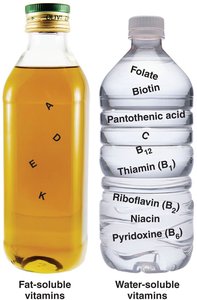
Classification of Vitamins
Vitamins are classified according to their solubility, which affects their absorption, storage, and excretion.
Fat-soluble vitamins: A, D, E, K—absorbed with dietary fat, stored in liver and adipose tissue, can accumulate to toxic levels.
Water-soluble vitamins: B-complex and C—absorbed with water, not stored, excess excreted in urine, must be consumed daily.
Roles of Vitamins in Health
Vitamins play diverse roles in maintaining health, including acting as antioxidants, supporting bone health, energy production, immune function, and protein metabolism.
Metabolic Function | Vitamins Involved |
|---|---|
Antioxidants | Vitamin C, Vitamin E |
Blood clotting & RBC synthesis | Folate, B6, B12, K |
Bone health | A, C, D, K |
Energy production | Biotin, Niacin, Pantothenic acid, Riboflavin, Thiamin, B6, B12 |
Growth & reproduction | A, D |
Immune function | A, C, D |
Protein metabolism | Folate, B6, B12, C |
Provitamins and Preformed Vitamins
Some vitamins are consumed as provitamins (inactive forms) and converted to active forms in the body, such as beta-carotene to vitamin A. Preformed vitamins are already active and do not require conversion.
Example: Beta-carotene (provitamin) → Vitamin A (active)
Vitamin Toxicity
Overconsumption of certain vitamins, especially through supplements, can lead to toxicity (hypervitaminosis), causing tissue saturation and potential permanent damage. Dietary Reference Intakes (DRIs) include a tolerable upper intake level (UL) to prevent excess.
Absorption and Storage of Vitamins
All vitamins are absorbed in the small intestine, but fat-soluble and water-soluble vitamins differ in their absorption, bioavailability, and storage.
Fat-soluble: Less bioavailable, especially from plant sources; stored in liver, fat, and muscle tissue.
Water-soluble: More bioavailable; not stored, excess excreted in urine.
Sources of Vitamins
Whole foods such as fruits, vegetables, and whole grains are the best sources of vitamins, phytochemicals, antioxidants, and fiber. Dietary guidelines recommend a wide variety of vitamin-rich foods from each food group.
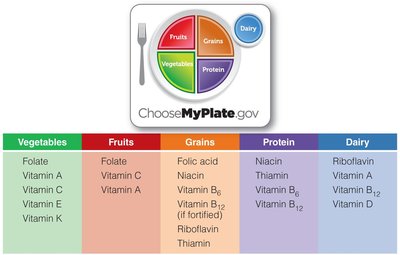
Destruction of Vitamins During Cooking and Storage
Vitamins can be destroyed by exposure to oxygen, ultraviolet light, water, changes in pH, and heat. Water-soluble vitamins are especially vulnerable.
Examples: Vitamin C destroyed by heat; riboflavin by UV light; thiamin by pH changes.
Fat-Soluble Vitamins
Vitamin A (Retinoids)
Vitamin A is found as preformed vitamin A in animal foods and as provitamin A (carotenoids) in plant foods. It is essential for vision, protein synthesis, cell differentiation, reproduction, bone health, and immune function.
Daily Needs: Males: 900 μg RAE; Females: 700 μg RAE; UL: 3,000 μg
Deficiency: Night blindness, xerophthalmia, keratinization, increased infection risk
Food Sources: Beef liver, fortified dairy, carotenoid-rich vegetables (e.g., canned pumpkin)
Vitamin D
Known as the "sunshine vitamin," vitamin D is synthesized in the skin via UV exposure and found in two forms: cholecalciferol (D3, animal) and ergocalciferol (D2, plant). It is essential for calcium balance, bone health, cell differentiation, immune function, and may reduce cancer and autoimmune risk.
Daily Needs: Adults: 15–20 μg (600–800 IU); UL: 100 μg (4,000 IU)
Deficiency: Rickets, osteomalacia
Food Sources: Fatty fish, fortified foods (dairy, orange juice, cereals)
Vitamin E
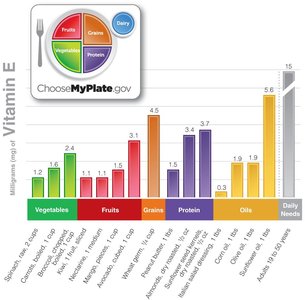
Alpha-tocopherol is the most active form of vitamin E, a powerful antioxidant that protects cell membranes and prevents LDL cholesterol oxidation. It also acts as an anticoagulant.
Daily Needs: 15 mg alpha-tocopherol; UL: 1,000 mg
Deficiency: Nerve problems, muscle weakness, hemolysis of RBCs
Food Sources: Vegetable oils, nuts, seeds, fortified cereals, green leafy vegetables
Vitamin K
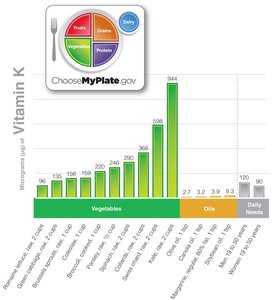
Vitamin K is essential for blood clotting and bone health. It is found in green plants and can be synthesized by intestinal bacteria.
Daily Needs: Men: 120 μg; Women: 90 μg
Deficiency: Excessive bleeding, rare but may cause hip fracture in older adults
Food Sources: Green leafy vegetables, soybeans, oils, beef liver
Vitamin Supplements
Are Vitamin Supplements Necessary?
Supplements are not a substitute for healthy eating and are not proven to prevent chronic diseases or cognitive decline. Toxicity from food is rare; most toxicity results from supplements. Supplements are not regulated like drugs and may not contain what they claim.
USP Seal: Choose supplements with the United States Pharmacopeial Convention (USP) seal for quality assurance.
Who may benefit: Pregnant/lactating women, older adults (B12), those lacking dietary vitamin D or sun exposure, strict vegetarians, individuals with food allergies, alcohol abuse, food insecurity, breast-fed infants.
Water-Soluble Vitamins
Overview of Water-Soluble Vitamins
There are nine water-soluble vitamins: vitamin C and eight B-complex vitamins. They are easily destroyed by heat, light, and oxidation, and must be consumed daily as they are not stored in the body.
B-complex: Thiamin (B1), Riboflavin (B2), Niacin (B3), Pantothenic acid (B5), Vitamin B6, Biotin (B7), Folate (B9), Vitamin B12
Vitamin C: Ascorbic acid
Functions of Water-Soluble Vitamins
B vitamins act as coenzymes in metabolic processes, catalyzing reactions to build or break apart compounds and transform macronutrients to ATP. Vitamin C acts as an antioxidant and supports immune function.
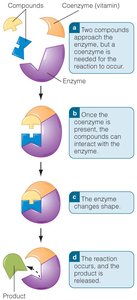
Coenzyme roles: Thiamin, Riboflavin, Niacin, Pantothenic acid, Biotin, Vitamin B6
Other roles: Nerve function (Thiamin), protein synthesis (Niacin), RBC formation (Folate, B12), heart health (several B vitamins)
Comparison: Fat-Soluble vs. Water-Soluble Vitamins
Property | Fat-Soluble | Water-Soluble |
|---|---|---|
Absorption | With fat, lymph | With water, blood |
Storage | Yes (liver, fat) | No |
Toxicity risk | Yes | Rare |
Daily need | No | Yes |
Key Water-Soluble Vitamins: Functions, Sources, Deficiency
Vitamin | Function | Daily Needs | Sources | Deficiency |
|---|---|---|---|---|
Thiamin (B1) | Carbohydrate metabolism, nerve function | 1.2 mg (M), 1.1 mg (F) | Pork, whole grains | BeriBeri (nerve damage) |
Riboflavin (B2) | Energy metabolism, fat metabolism | 1.3 mg (M), 1.1 mg (F) | Milk, grains, spinach | Ariboflavinosis (mouth/tongue inflammation) |
Niacin (B3) | Energy metabolism, DNA repair | 16 mg (M), 14 mg (F) | Meats, grains | Pellagra (dermatitis, diarrhea, dementia) |
Pantothenic acid (B5) | Energy metabolism, hormone synthesis | 5 mg | Widespread in foods | Fatigue, nausea, cramps |
Biotin (B7) | Energy metabolism, hair/nails | 30 μg | Peanuts, egg yolks, grains | Dermatitis, hair loss |
Vitamin B6 | Protein metabolism, hemoglobin synthesis | 1.3 mg | Cereals, meat, vegetables | Anemia, nerve damage |
Folate (B9) | DNA/RBC formation | 400 μg (adults), 600 μg (pregnant) | Leafy greens, legumes | Anemia, birth defects |
Vitamin B12 | Cell synthesis, nerve health | 2.4 μg | Animal products | Pernicious anemia, nerve damage |
Vitamin C | Collagen formation, antioxidant | 90 mg (M), 75 mg (F) | Citrus, tomatoes, broccoli | Scurvy (bleeding gums, joint pain) |
Diet and Cancer Risk
A plant-based diet may modestly reduce cancer risk. Specific vitamins and minerals (retinoids, C, E, D, folate, selenium, omega-3 fatty acids) may help lower risk. Recommendations include maintaining healthy weight, being physically active, limiting energy-dense foods, eating a variety of fruits, vegetables, whole grains, and legumes, limiting red and processed meats, alcohol, and salty foods, and meeting nutritional needs through diet alone.
Recommendation | Personal Health Goal |
|---|---|
Be as lean as possible | Maintain body weight within normal BMI range |
Be physically active | 30+ minutes moderate activity daily |
Limit energy-dense foods | Consume sparingly, avoid sugary drinks |
Eat more vegetables, fruits, grains, legumes | At least 5 servings daily |
Limit red/processed meat | <500 g/week, avoid processed meats |
Limit alcohol | No more than 2 drinks/day (men), 1 (women) |
Limit salty foods | <6 g salt/day |
Meet needs through diet | Supplements not recommended for cancer prevention |
Additional info: Some content was expanded for clarity and completeness, including definitions, examples, and context for vitamin functions and dietary recommendations.
