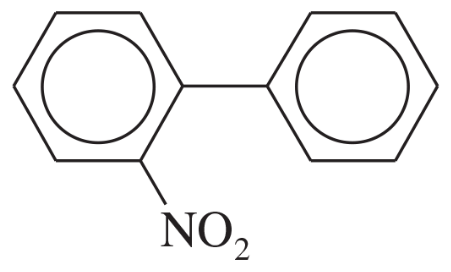
Biphenyl is two benzene rings joined by a single bond. The site of substitution for a biphenyl is determined by (1) which phenyl ring is more activated (or less deactivated), and (2) which position on that ring is most reactive, using the fact that a phenyl substituent is activating and ortho, para-directing. b. Predict the mononitration products of the following compounds (iv)
Verified step by step guidance
1
Step 1: Analyze the structure of the biphenyl compound provided. The molecule consists of two benzene rings connected by a single bond. One of the benzene rings has a methoxy (-OCH3) substituent attached to it. The methoxy group is an electron-donating group and is activating, making the ring it is attached to more reactive toward electrophilic substitution reactions.
Step 2: Determine the directing effects of the methoxy group. The methoxy group is an ortho, para-directing group, meaning it increases the reactivity of the ortho (positions adjacent to the substituent) and para (position opposite to the substituent) positions on the benzene ring it is attached to.
Step 3: Compare the reactivity of the two benzene rings. The benzene ring with the methoxy group is more activated due to the electron-donating effect of the methoxy group. The other benzene ring, which lacks substituents, is less reactive in comparison.
Step 4: Predict the site of nitration. Since the methoxy group activates the benzene ring it is attached to, nitration will occur on this ring. The nitro group (NO2) will preferentially substitute at the ortho or para positions relative to the methoxy group.
Step 5: Consider steric hindrance and electronic effects. The para position relative to the methoxy group is less sterically hindered compared to the ortho positions, making it the most likely site for nitration. Therefore, the major product of mononitration will have the nitro group at the para position relative to the methoxy group.
Verified video answer for a similar problem:
This video solution was recommended by our tutors as helpful for the problem above
Video duration:
7m
Play a video:
0 Comments
Key Concepts
Here are the essential concepts you must grasp in order to answer the question correctly.
Biphenyl Structure
Biphenyl consists of two benzene rings connected by a single bond. This structure allows for rotation around the bond, which can influence the reactivity of the rings. Understanding the spatial arrangement of substituents on the rings is crucial for predicting the outcomes of electrophilic aromatic substitution reactions.
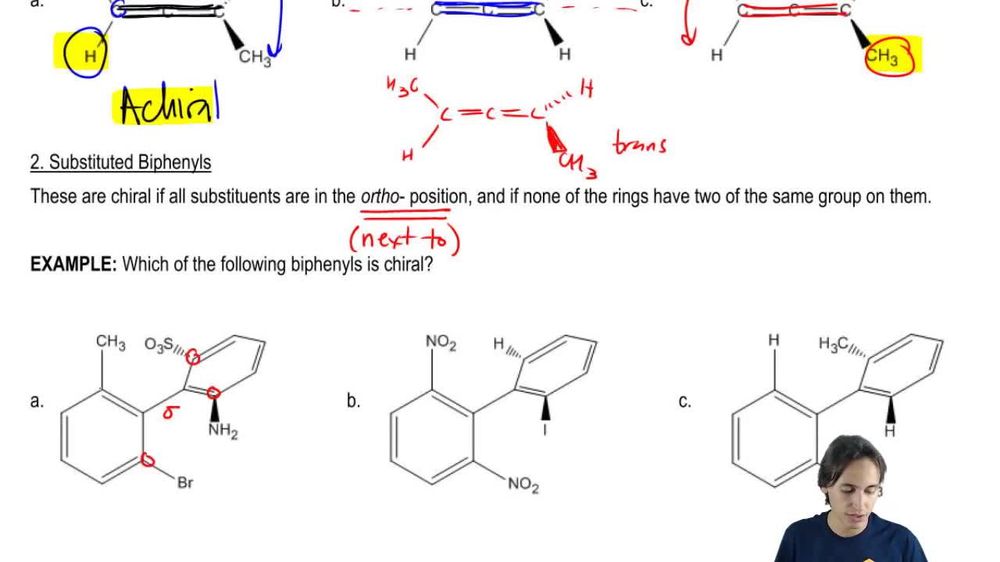
Determining if substituted biphenyls are chiral or not.
Electrophilic Aromatic Substitution (EAS)
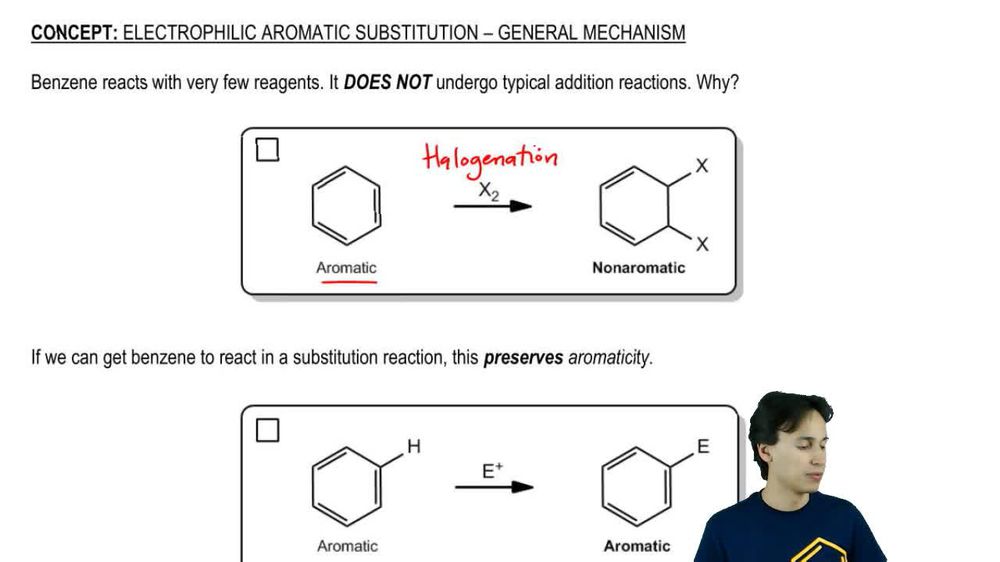
EAS is a fundamental reaction in organic chemistry where an electrophile replaces a hydrogen atom on an aromatic ring. The reactivity of the ring is influenced by substituents already present, which can either activate or deactivate the ring towards further substitution. In biphenyl, the position of substitution is determined by the directing effects of substituents on the rings.
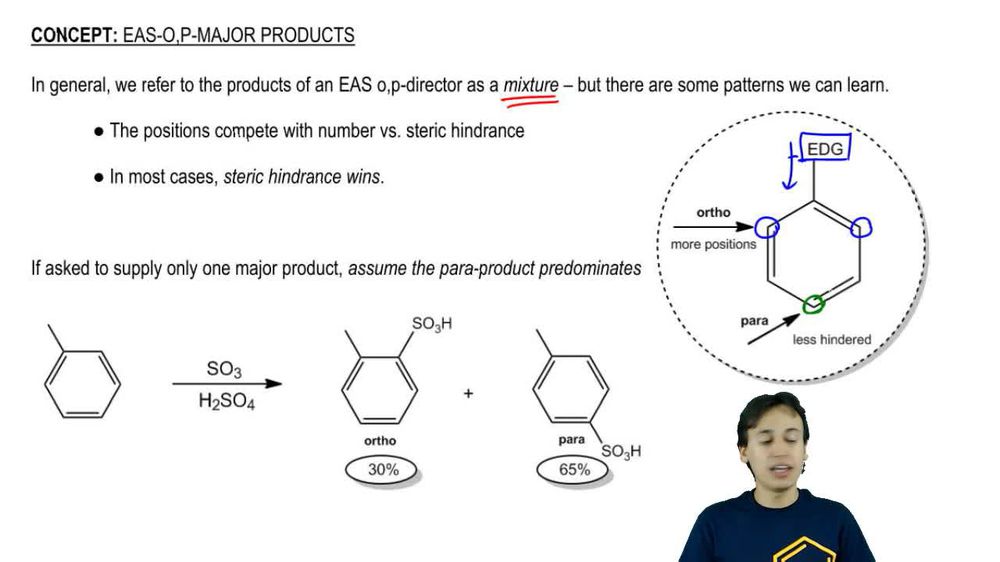
Substituents on aromatic rings can be classified as ortho/para-directing or meta-directing based on their electronic effects. Ortho/para-directing groups, such as alkyl or -OH, increase electron density at the ortho and para positions, making them more reactive towards electrophiles. This concept is essential for predicting the specific positions where nitration will occur on biphenyl.