Textbook Question
From which of the following compounds can HO− remove a proton in a reaction that favors product formation?
1502
views

 Bruice 8th EditionCh. 2 - Acids and Bases: Central to Understanding Organic ChemistryProblem 66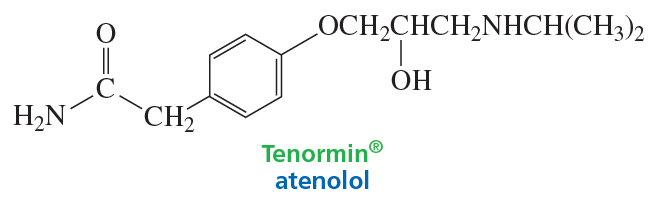
 Verified step by step guidance
 00:56
00:56
 02:36
02:36 4:47
4:47From which of the following compounds can HO− remove a proton in a reaction that favors product formation?
For each of the following pairs of reactions, indicate which one has the more favorable equilibrium constant (that is, which one most favors products):
1.
2.
b. Determine the exact pKa values, using a calculator.
c. Which is the strongest acid?
1. nitrous acid (HNO2), Ka = 4.0 × 10⁻⁴
2. nitric acid (HNO3), Ka = 22
3. bicarbonate (HCO3−), Ka = 6.3 × 10⁻¹¹
4. hydrogen cyanide (HCN), Ka = 7.9 × 10⁻¹⁰
5. formic acid (HCOOH), Ka = 2.0 × 10⁻⁴
6. phosphoric acid (H3PO4), Ka = 2.1
Given the Ka values, estimate the pKa value of each of the following acids without using a calculator (that is, is it between 3 and 4, between 9 and 10, and so on?):
1. nitrous acid (HNO2), Ka = 4.0 × 10⁻⁴
2. nitric acid (HNO3), Ka = 22
3. bicarbonate (HCO3−), Ka = 6.3 × 10⁻¹¹
4. hydrogen cyanide (HCN), Ka = 7.9 × 10⁻¹⁰
5. formic acid (HCOOH), Ka = 2.0 × 10⁻⁴
6. phosphoric acid (H3PO4), Ka = 2.1
For each compound, indicate the atom that is most apt to be protonated.
a.
b.
c.
Which of the four reactions has the most favorable equilibrium constant?
1.