What organometallic compound is formed from the reaction of excess methylmagnesium chloride and GaCl3?
Verified step by step guidance
1
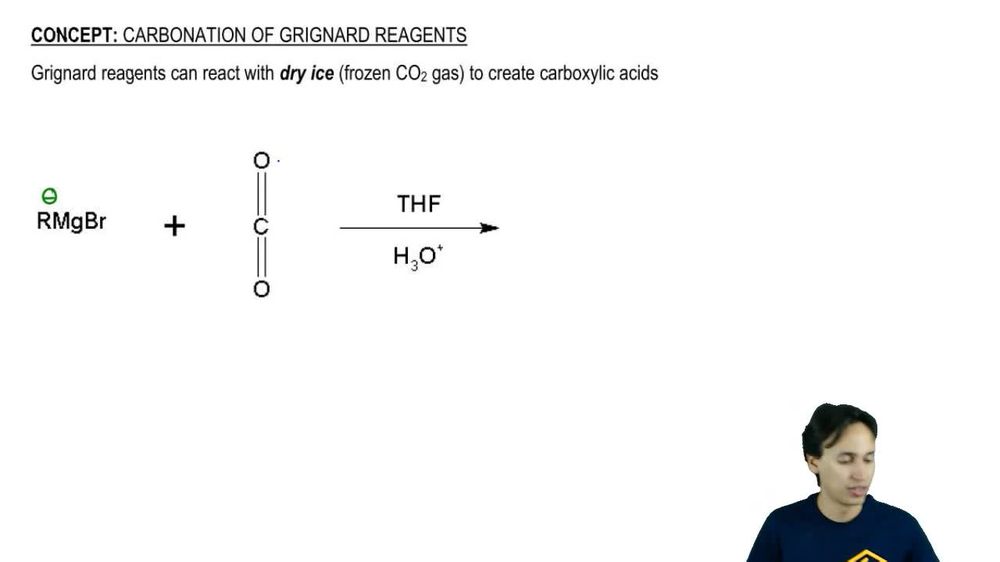
Identify the reactants: Methylmagnesium chloride (CH₃MgCl) is a Grignard reagent, and GaCl₃ is gallium trichloride, a Lewis acid.
Understand the reactivity: Grignard reagents are nucleophilic and can react with electrophilic centers, such as the gallium atom in GaCl₃, which has vacant orbitals.
Determine the stoichiometry: The problem specifies 'excess methylmagnesium chloride,' meaning multiple equivalents of CH₃MgCl will react with GaCl₃. Each CH₃ group can replace a Cl atom on GaCl₃.
Predict the product: The reaction will result in the substitution of all three Cl atoms in GaCl₃ with CH₃ groups from CH₃MgCl, forming Ga(CH₃)₃ (trimethylgallium) as the organometallic compound.
Verify the reaction mechanism: The reaction proceeds via nucleophilic attack of the CH₃ group on the gallium center, displacing Cl⁻ ions stepwise until all three Cl atoms are replaced by CH₃ groups.
Verified video answer for a similar problem:
This video solution was recommended by our tutors as helpful for the problem above
Video duration:
4m
Play a video:
0 Comments
Key Concepts
Here are the essential concepts you must grasp in order to answer the question correctly.
Organometallic Compounds
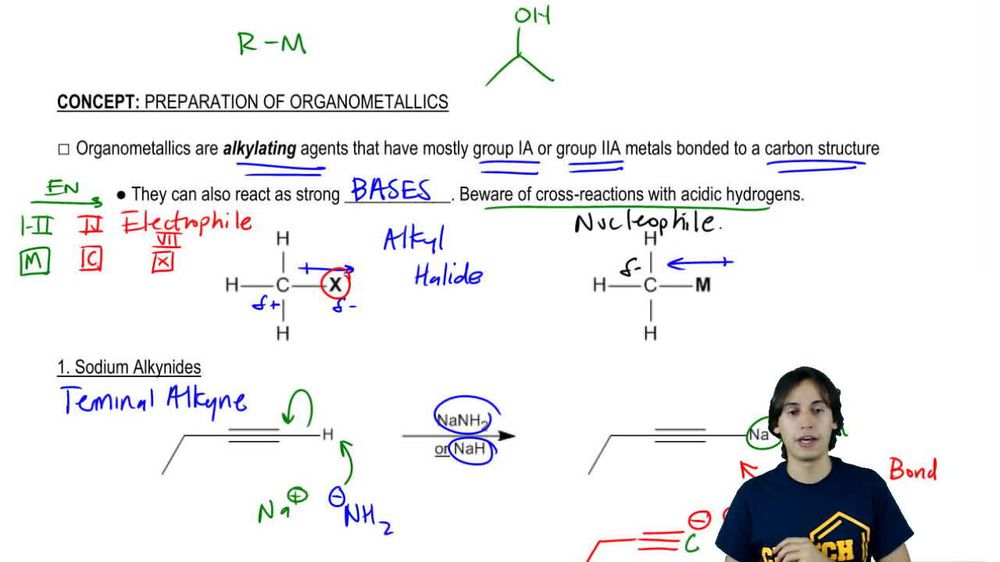
Organometallic compounds are chemical species that contain a bond between a carbon atom of an organic molecule and a metal. These compounds are crucial in organic synthesis and catalysis, as they can act as nucleophiles or bases. Understanding their reactivity and how they interact with other compounds is essential for predicting the products of reactions involving organometallics.
Grignard reagents are a class of organometallic compounds formed by the reaction of alkyl or aryl halides with magnesium metal. Methylmagnesium chloride (CH3MgCl) is a common example, and it acts as a strong nucleophile in reactions. When Grignard reagents react with electrophiles, they can form new carbon-carbon bonds, making them valuable in organic synthesis.
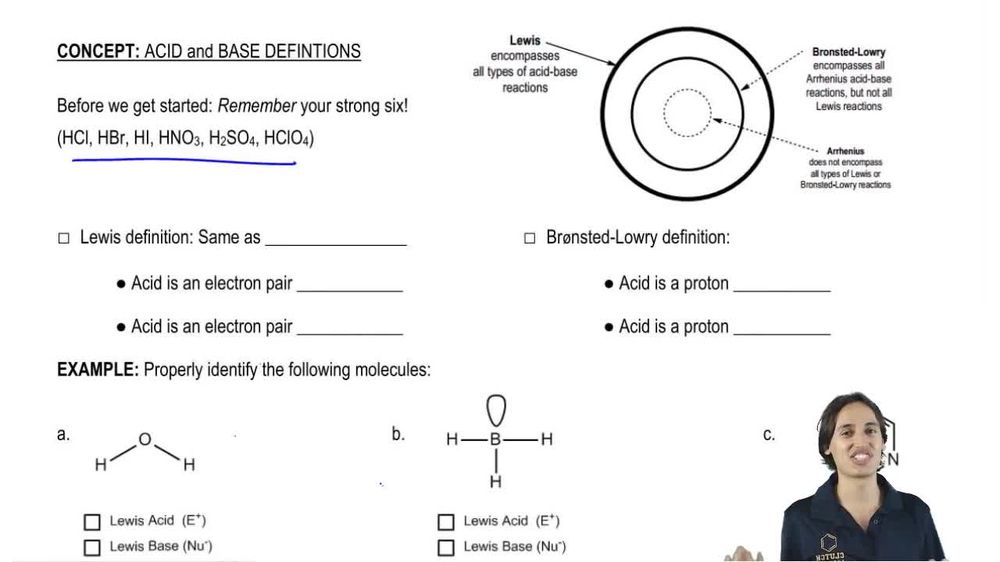
Lewis acids are substances that can accept an electron pair, while Lewis bases are those that can donate an electron pair. In the context of the reaction between methylmagnesium chloride and GaCl3, gallium trichloride acts as a Lewis acid. Understanding the roles of Lewis acids and bases is vital for predicting the outcome of reactions involving organometallic compounds and other electrophiles.

 4:36 minutes
 Verified step by step guidance
 02:50
02:50