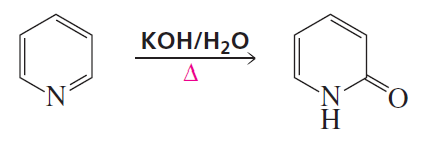
Identify the type of reaction taking place (e.g., substitution, elimination, addition, etc.) by analyzing the reactants and reaction conditions provided in the problem.
Determine the mechanism of the reaction (e.g., SN1, SN2, E1, E2, etc.) based on the structure of the reactants, the solvent, and any catalysts or reagents involved.
Examine the structure of the starting material and predict the primary product based on the reaction mechanism. Then, consider any possible side reactions or rearrangements that could lead to the formation of additional products.
Account for regioselectivity and stereoselectivity, if applicable, to determine the structure of the other product. For example, in elimination reactions, consider Zaitsev's rule or Hofmann's rule to predict the major and minor products.
Draw the structure of the other product formed, ensuring that all atoms, bonds, and stereochemistry (if relevant) are correctly represented.
Verified video answer for a similar problem:
This video solution was recommended by our tutors as helpful for the problem above
Video duration:
8m
Play a video:
0 Comments
Key Concepts
Here are the essential concepts you must grasp in order to answer the question correctly.
Reaction Mechanism
A reaction mechanism describes the step-by-step process by which reactants are converted into products. Understanding the mechanism helps identify all possible products formed during a reaction, including intermediates and by-products. This knowledge is crucial for predicting the outcome of chemical reactions and for designing synthetic pathways in organic chemistry.
Functional groups are specific groups of atoms within molecules that are responsible for the characteristic chemical reactions of those molecules. Recognizing the functional groups involved in a reaction allows chemists to anticipate the types of products that may form. This is essential for understanding how different reactants interact and what new compounds can be generated.
Stoichiometry is the calculation of reactants and products in chemical reactions based on the conservation of mass. It involves using balanced chemical equations to determine the ratios of substances involved. A solid grasp of stoichiometry is necessary to predict the quantities of products formed, including any secondary products that may arise from side reactions.