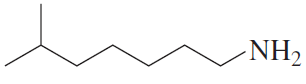
For each of the following, give the systematic name and the common name (if it has one) and then indicate whether it is a primary, secondary, or tertiary amine: a.
Verified step by step guidance
1
Step 1: Understand the structure of an amine. Amines are organic compounds derived from ammonia (NH₃) by replacing one or more hydrogen atoms with alkyl or aryl groups. They are classified as primary, secondary, or tertiary based on the number of alkyl or aryl groups attached to the nitrogen atom.
Step 2: Examine the given structure of the amine (not provided in the problem statement). Identify the number of alkyl or aryl groups attached to the nitrogen atom. Use this information to determine whether the amine is primary (one group), secondary (two groups), or tertiary (three groups).
Step 3: Assign the systematic name of the amine. Systematic naming follows IUPAC rules, where the alkyl or aryl groups attached to the nitrogen are named as substituents, and the suffix '-amine' is added. For example, CH₃NH₂ is named methylamine.
Step 4: Check if the amine has a common name. Many simple amines have widely used common names, such as methylamine or ethylamine. If the structure matches one of these, note the common name.
Step 5: Summarize the classification (primary, secondary, or tertiary), systematic name, and common name (if applicable) for the given amine structure.
Verified video answer for a similar problem:
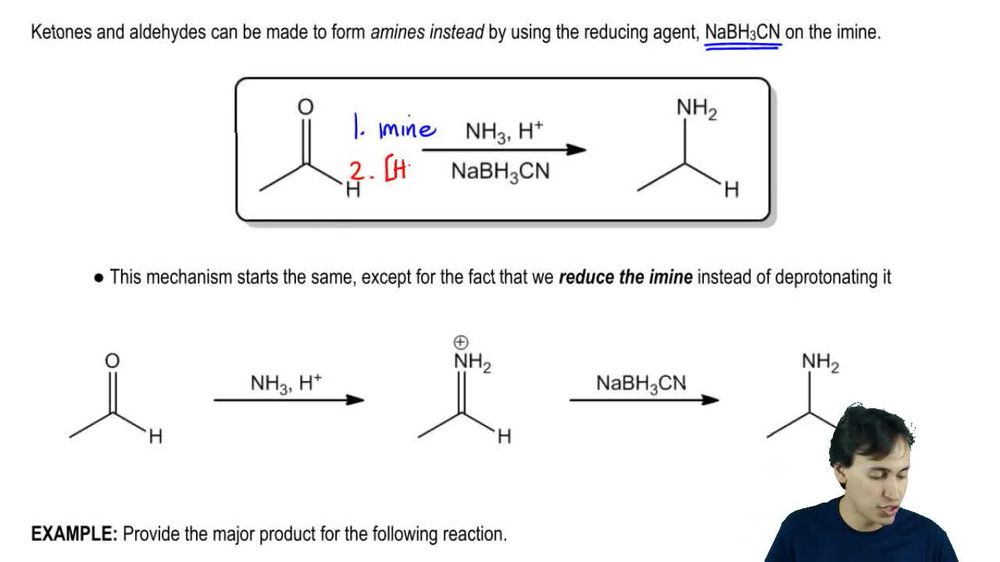
This video solution was recommended by our tutors as helpful for the problem above
Video duration:
5m
Play a video:
0 Comments
Key Concepts
Here are the essential concepts you must grasp in order to answer the question correctly.
Amines
Amines are organic compounds derived from ammonia (NH3) by replacing one or more hydrogen atoms with alkyl or aryl groups. They are classified based on the number of carbon-containing groups attached to the nitrogen atom: primary amines have one carbon group, secondary amines have two, and tertiary amines have three. Understanding the structure of amines is crucial for naming them systematically and identifying their classification.
Systematic naming in organic chemistry follows the IUPAC (International Union of Pure and Applied Chemistry) rules, which provide a standardized method for naming chemical compounds. For amines, the naming involves identifying the longest carbon chain attached to the nitrogen and using suffixes or prefixes to denote the presence of the amine functional group. This systematic approach ensures clarity and consistency in chemical communication.
Common names are traditional names used for chemical compounds that may not follow systematic naming conventions. They often arise from historical usage or specific characteristics of the compound. For amines, common names can include trivial names based on the structure or source of the compound, which can be helpful for quick identification but may lack the precision of systematic names.