Draw the structures of the following compounds: (d) 2-methylaziridine (e) N-ethyl-N-methylhexan-3-amine (f) m-chloroaniline
Verified step by step guidance
1
To draw the structure of 2-methylaziridine, start by understanding that aziridine is a three-membered cyclic amine (a nitrogen atom in a three-membered ring with two carbons). Add a methyl group (-CH₃) as a substituent on the second carbon of the ring. Ensure the nitrogen has a lone pair of electrons.
For N-ethyl-N-methylhexan-3-amine, begin by drawing the main chain, which is hexane (a six-carbon straight chain). Identify the third carbon in the chain and attach an amine group (-NH). Then, attach an ethyl group (-CH₂CH₃) and a methyl group (-CH₃) to the nitrogen atom, as indicated by the 'N-ethyl-N-methyl' prefix.
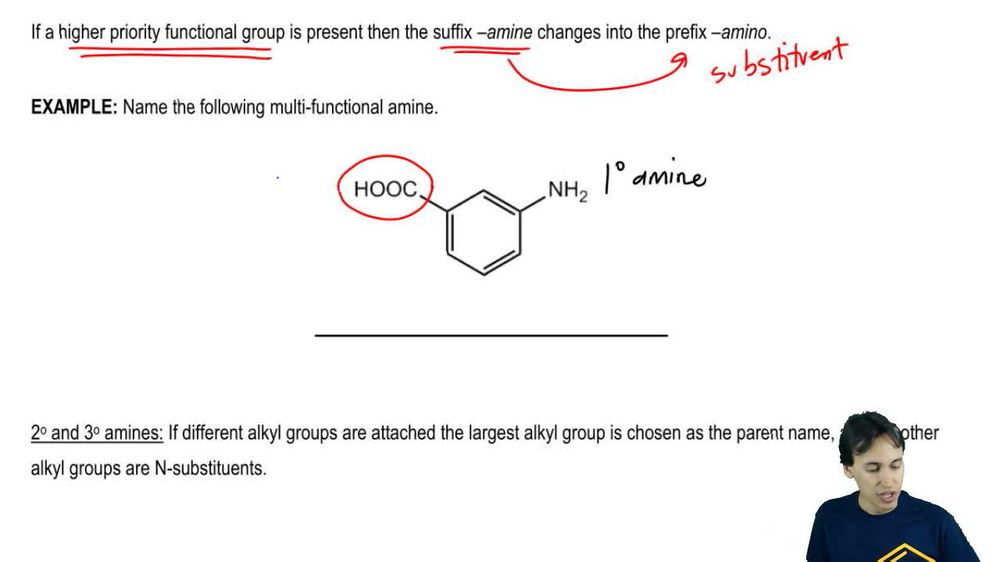
To draw m-chloroaniline, start with the structure of aniline, which is a benzene ring with an amino group (-NH₂) attached to one of the carbons. The 'm-' prefix indicates that the chlorine atom (-Cl) is attached to the carbon meta to the amino group (one carbon away from the amino group on the benzene ring).
Ensure that all structures are drawn with correct bond angles and that the valency of each atom is satisfied. For example, nitrogen in amines should have three bonds and a lone pair, while carbon should have four bonds.
Double-check the placement of substituents and functional groups to ensure they match the IUPAC naming conventions provided in the problem. Verify that the structures are consistent with the names given.
Verified video answer for a similar problem:
This video solution was recommended by our tutors as helpful for the problem above
Video duration:
4m
Play a video:
0 Comments
Key Concepts
Here are the essential concepts you must grasp in order to answer the question correctly.
Aziridine Structure
Aziridine is a three-membered cyclic amine with one nitrogen atom and two carbon atoms. The '2-methyl' designation indicates a methyl group attached to the second carbon of the ring. Understanding the geometry and bonding in small rings is crucial for accurately drawing aziridine derivatives.
Amines are organic compounds derived from ammonia by replacing one or more hydrogen atoms with alkyl or aryl groups. The naming convention involves identifying the longest carbon chain and the substituents, such as 'N-ethyl' and 'N-methyl' in the compound N-ethyl-N-methylhexan-3-amine, which indicates the presence of ethyl and methyl groups attached to the nitrogen atom.
Substituted aromatic compounds, like m-chloroaniline, feature a benzene ring with one or more substituents. The 'm-' prefix indicates the position of the chloro group relative to the amino group on the benzene ring, specifically in the meta position. Recognizing the implications of substitution patterns is essential for understanding the reactivity and properties of aromatic compounds.