For each of the following compounds, draw the important resonance forms. Indicate which structures are major and minor contributors or whether they have the same energy. (g) (h)
Verified step by step guidance
1
Identify the compounds given: (g) is a diketone with a negative charge on the central carbon, and (h) is an aldehyde with a negative charge on the central carbon and a cyano group.
For compound (g), consider the resonance involving the movement of electrons from the negatively charged carbon to form a double bond with one of the adjacent carbonyl carbons, while the pi electrons from the carbonyl oxygen move to the oxygen, creating a negative charge on the oxygen.
For compound (g), draw the resonance form where the negative charge is on the oxygen of one of the carbonyl groups, and the central carbon forms a double bond with the other carbonyl carbon. This form is likely a major contributor due to the stability of the negative charge on oxygen.
For compound (h), consider the resonance involving the movement of electrons from the negatively charged carbon to form a double bond with the carbon of the cyano group, while the pi electrons from the cyano nitrogen move to the nitrogen, creating a negative charge on the nitrogen.
For compound (h), draw the resonance form where the negative charge is on the nitrogen of the cyano group, and the central carbon forms a double bond with the cyano carbon. This form is likely a major contributor due to the stability of the negative charge on nitrogen.
Verified video answer for a similar problem:
This video solution was recommended by our tutors as helpful for the problem above
Video duration:
6m
Play a video:
0 Comments
Key Concepts
Here are the essential concepts you must grasp in order to answer the question correctly.
Resonance Structures
Resonance structures are different Lewis structures for the same molecule that depict the delocalization of electrons. They are used to represent molecules where the electron distribution cannot be described by a single Lewis structure. The actual structure of the molecule is a resonance hybrid, which is a weighted average of all possible resonance forms.
In resonance, not all structures contribute equally to the resonance hybrid. Major contributors are those with the lowest energy, typically having full octets, minimal formal charges, and charges on atoms with appropriate electronegativity. Minor contributors have higher energy due to incomplete octets, high formal charges, or charges on less suitable atoms.
Electronegativity is the tendency of an atom to attract electrons. In resonance structures, the placement of charges is influenced by electronegativity; more electronegative atoms stabilize negative charges better. Understanding this helps determine which resonance forms are more stable and thus major contributors to the resonance hybrid.

 6:33 minutes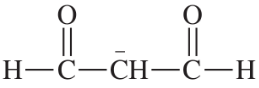

 Verified step by step guidance
 03:04
03:04