Name the following alkenes, being sure to specify whether they are cis or trans. (c)
Verified step by step guidance
1
Step 1: Identify the longest continuous carbon chain that contains the double bond. This will serve as the parent chain, and its name will be based on the number of carbons in the chain (e.g., ethene, propene, butene, etc.).
Step 2: Number the carbon atoms in the parent chain starting from the end closest to the double bond. This ensures the double bond gets the lowest possible number.
Step 3: Determine the position of the double bond by noting the number of the first carbon involved in the double bond. Include this number in the name of the alkene (e.g., 2-butene).
Step 4: Analyze the substituents attached to the double bond. If the two substituents on each carbon of the double bond are on the same side, the alkene is 'cis'; if they are on opposite sides, the alkene is 'trans'.
Step 5: Combine the information into the full name of the alkene, including the cis/trans designation, the position of the double bond, and the name of the parent chain.
Verified video answer for a similar problem:
This video solution was recommended by our tutors as helpful for the problem above
Video duration:
6m
Play a video:
0 Comments
Key Concepts
Here are the essential concepts you must grasp in order to answer the question correctly.
Alkene Nomenclature
Alkenes are hydrocarbons that contain at least one carbon-carbon double bond. When naming alkenes, the longest carbon chain containing the double bond is identified, and the position of the double bond is indicated by the lowest possible number. The suffix '-ene' is used to denote the presence of the double bond, and substituents are named and numbered accordingly.
Cis-trans isomerism, also known as geometric isomerism, occurs in alkenes due to the restricted rotation around the double bond. In cis isomers, substituents are on the same side of the double bond, while in trans isomers, they are on opposite sides. This spatial arrangement can significantly affect the physical and chemical properties of the compounds.
To determine whether an alkene is cis or trans, it is essential to apply priority rules to the substituents attached to the double-bonded carbons. The Cahn-Ingold-Prelog priority rules assign higher priority to substituents based on atomic number and connectivity. This helps in identifying the configuration of the alkene, ensuring accurate naming and classification.

 6:40 minutes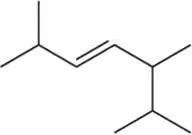
 Verified step by step guidance
 4:02
4:02