How can you prepare the following compounds with benzene as one of the starting materials? c.
Verified step by step guidance
1
Step 1: Begin with benzene as the starting material. Perform a Friedel-Crafts acylation reaction using succinic anhydride (C4H4O3) and a Lewis acid catalyst such as AlCl3. This introduces a four-carbon chain with a ketone group onto the benzene ring.
Step 2: The product from Step 1 will be benzoyl succinic acid. Cyclize this intermediate by heating it under acidic conditions to form a cyclic ketone structure. This step involves intramolecular aldol condensation.
Step 3: Perform a second Friedel-Crafts acylation reaction using another equivalent of succinic anhydride and AlCl3. This introduces another four-carbon chain with a ketone group onto the benzene ring.
Step 4: Cyclize the second intermediate under acidic conditions to form the second cyclic ketone structure. This step involves another intramolecular aldol condensation.
Step 5: The final product is the compound shown in the image, which contains two fused cyclic ketone structures attached to the benzene ring.
Verified video answer for a similar problem:
This video solution was recommended by our tutors as helpful for the problem above
Video duration:
5m
Play a video:
0 Comments
Key Concepts
Here are the essential concepts you must grasp in order to answer the question correctly.
Electrophilic Aromatic Substitution (EAS)
Electrophilic Aromatic Substitution is a fundamental reaction in organic chemistry where an electrophile replaces a hydrogen atom on an aromatic ring, such as benzene. This reaction is crucial for synthesizing various substituted aromatic compounds. The process typically involves the generation of a highly reactive electrophile, which then attacks the electron-rich aromatic system, leading to the formation of a sigma complex before restoring aromaticity.
Aromaticity refers to the special stability and reactivity of certain cyclic compounds that contain conjugated pi electron systems, such as benzene. For a compound to be aromatic, it must follow Hückel's rule, which states that it should have 4n + 2 pi electrons (where n is a non-negative integer). This property is essential for understanding why benzene and its derivatives undergo substitution reactions rather than addition reactions.
Substituent effects are the influences that different groups attached to an aromatic ring have on the reactivity and orientation of electrophilic substitution reactions. Electron-donating groups (EDGs) activate the ring and direct incoming electrophiles to ortho and para positions, while electron-withdrawing groups (EWGs) deactivate the ring and direct electrophiles to the meta position. Understanding these effects is vital for predicting the outcomes of reactions involving substituted aromatic compounds.

 5:42 minutes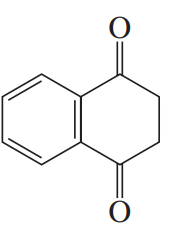
 Verified step by step guidance
 03:07
03:07