How can you prepare the following compounds with benzene as one of the starting materials? d.
Verified step by step guidance
1
Step 1: Begin with benzene as the starting material. Benzene is an aromatic compound with alternating double bonds in a six-membered ring structure.
Step 2: Perform a hydroxylation reaction to introduce hydroxyl (-OH) groups onto the benzene ring. This can be achieved using a strong oxidizing agent such as potassium permanganate (KMnO4) or a similar reagent under acidic or neutral conditions.
Step 3: Ensure the reaction conditions favor the formation of multiple hydroxyl groups on the benzene ring. The hydroxylation process typically leads to the formation of hydroxybenzene derivatives, such as phenol, and further oxidation can yield compounds with multiple hydroxyl groups.
Step 4: Adjust the reaction conditions to achieve the specific substitution pattern seen in the target compound. This may involve controlling the stoichiometry of the oxidizing agent and reaction temperature to ensure the hydroxyl groups are added at the correct positions.
Step 5: Purify the final product using techniques such as recrystallization or chromatography to isolate the desired compound with three hydroxyl groups in the 1,2,3 positions on the benzene ring.
Verified video answer for a similar problem:
This video solution was recommended by our tutors as helpful for the problem above
Video duration:
6m
Play a video:
0 Comments
Key Concepts
Here are the essential concepts you must grasp in order to answer the question correctly.
Electrophilic Aromatic Substitution (EAS)
Electrophilic Aromatic Substitution is a fundamental reaction in organic chemistry where an electrophile replaces a hydrogen atom on an aromatic ring, such as benzene. This reaction is crucial for introducing various functional groups into aromatic compounds. The process typically involves the formation of a sigma complex, followed by deprotonation to restore aromaticity.
The introduction of hydroxyl groups (-OH) into aromatic compounds can be achieved through various EAS reactions, such as nitration followed by reduction or direct hydroxylation. The presence of hydroxyl groups can significantly influence the reactivity and properties of the aromatic compound, making it more susceptible to further substitutions due to the activating nature of the -OH group.
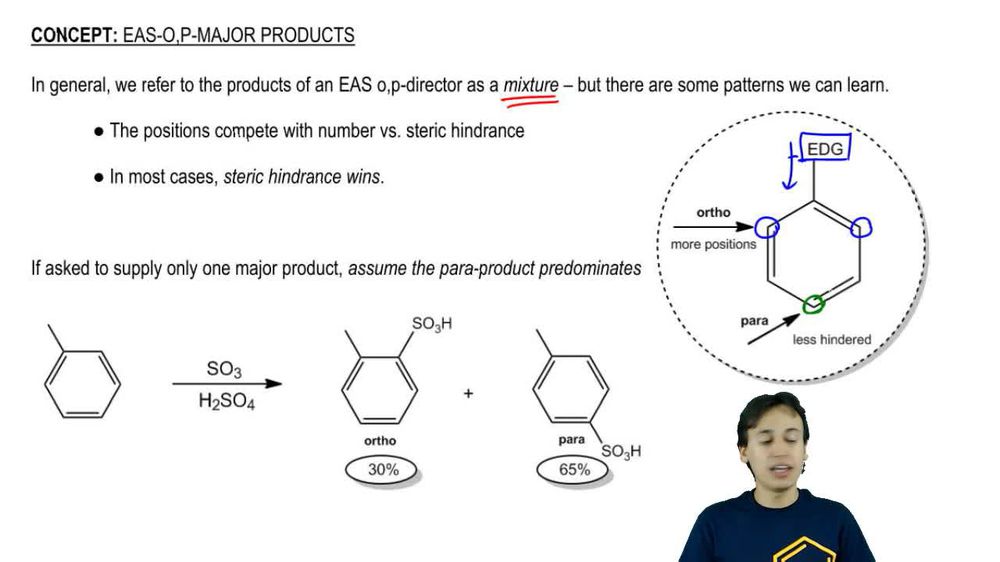
In EAS reactions, substituents on the aromatic ring can influence the position of new substituents. Activating groups, like hydroxyl, direct incoming electrophiles to the ortho and para positions relative to themselves, while deactivating groups direct them to the meta position. Understanding these directing effects is essential for predicting the outcome of multi-step synthesis involving benzene derivatives.

 6:14 minutes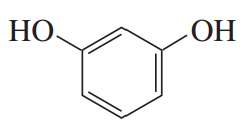
 Verified step by step guidance
 03:07
03:07