Tyramine is an alkaloid found in mistletoe and ripe cheese. Dopamine is a neurotransmitter involved in the regulation of the central nervous system. a. How can tyramine be prepared from b-phenylethylamine?
Verified step by step guidance
1
Step 1: Analyze the structures of tyramine and β-phenylethylamine. Tyramine has a hydroxyl (-OH) group attached to the benzene ring, while β-phenylethylamine lacks this functional group. The goal is to introduce the hydroxyl group onto the benzene ring of β-phenylethylamine.
Step 2: Select an appropriate reaction to introduce the hydroxyl group. A common method is electrophilic aromatic substitution, where a hydroxyl group can be added to the benzene ring. This can be achieved using phenol synthesis methods, such as hydroxylation with reagents like dilute sulfuric acid and sodium nitrite.
Step 3: Protect the amine group (-NH2) of β-phenylethylamine to prevent unwanted side reactions during the hydroxylation process. This can be done by converting the amine into a protecting group, such as an amide, using acylation (e.g., reaction with acetic anhydride).
Step 4: Perform the hydroxylation reaction on the benzene ring of the protected β-phenylethylamine. This introduces the hydroxyl group at the desired position on the aromatic ring.
Step 5: Remove the protecting group from the amine to regenerate the free amine group, yielding tyramine. This can be achieved by hydrolysis of the amide under acidic or basic conditions.
Verified video answer for a similar problem:
This video solution was recommended by our tutors as helpful for the problem above
Video duration:
6m
Play a video:
0 Comments
Key Concepts
Here are the essential concepts you must grasp in order to answer the question correctly.
Tyramine Synthesis
Tyramine can be synthesized from b-phenylethylamine through a process called hydroxylation, where a hydroxyl group (-OH) is added to the aromatic ring. This reaction typically involves the use of enzymes or chemical reagents that facilitate the introduction of the hydroxyl group, resulting in the formation of tyramine, which is a phenolic compound.
Synthesis of Amino Acids: Strecker Synthesis Example 1
b-Phenylethylamine Structure
b-Phenylethylamine is an organic compound with a structure that includes a phenyl group attached to an ethylamine chain. Its structure is crucial for understanding its reactivity and how it can be transformed into other compounds, such as tyramine, through specific chemical reactions that modify the amine or aromatic functionalities.
Hydroxylation reactions are chemical processes that introduce hydroxyl groups into organic molecules. In the context of synthesizing tyramine from b-phenylethylamine, hydroxylation is essential as it alters the compound's properties and reactivity, allowing for the formation of biologically active compounds like tyramine, which plays a role in neurotransmission.

 6:49 minutes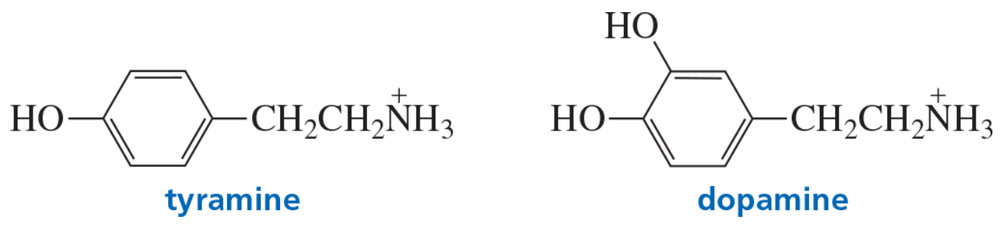
 Verified step by step guidance
 1:16
1:16