Propose a mechanism for the reaction of acetic anhydride with water.
Verified step by step guidance
1
Identify the functional groups in acetic anhydride. Acetic anhydride contains two acyl groups (R-C(=O)-) connected by an oxygen atom. It is a reactive compound that can undergo hydrolysis in the presence of water.
Recognize the nucleophile and electrophile. In this reaction, water acts as the nucleophile (electron-rich species) due to the lone pairs on oxygen, and the carbonyl carbon in acetic anhydride acts as the electrophile (electron-deficient species) due to the partial positive charge on the carbon.
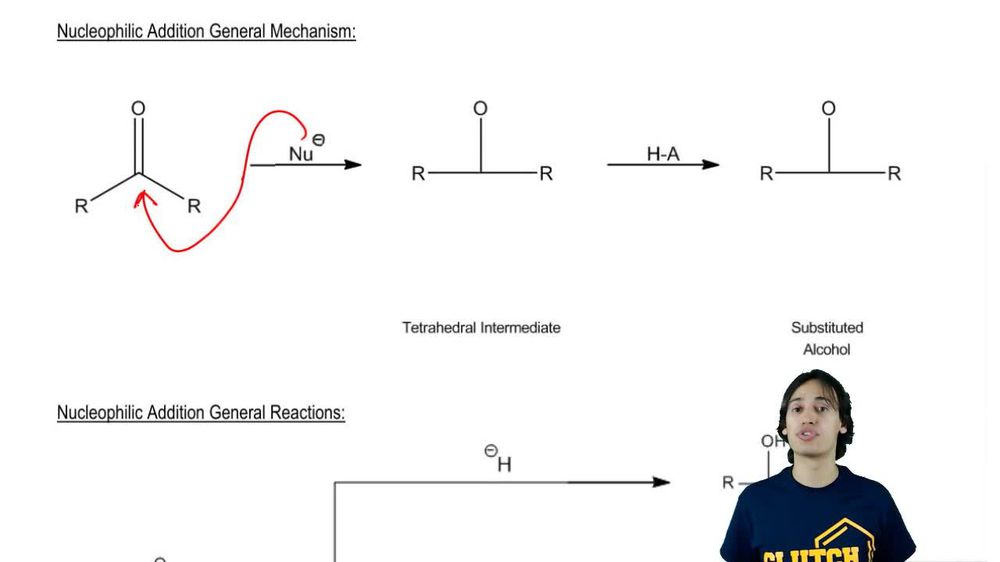
Initiate the reaction by having the nucleophilic oxygen atom of water attack one of the carbonyl carbons in acetic anhydride. This forms a tetrahedral intermediate where the carbonyl oxygen becomes negatively charged.
Stabilize the tetrahedral intermediate by proton transfer. A proton from the water molecule can transfer to the leaving group (the oxygen atom bridging the two acyl groups), facilitating the cleavage of the bond between the carbonyl carbon and the bridging oxygen.
Conclude the mechanism by forming the final products. The reaction results in the formation of two molecules of acetic acid (CH₃COOH) as the acetic anhydride is hydrolyzed by water.
Verified video answer for a similar problem:
This video solution was recommended by our tutors as helpful for the problem above
Video duration:
3m
Play a video:
0 Comments
Key Concepts
Here are the essential concepts you must grasp in order to answer the question correctly.
Acetic Anhydride Structure and Reactivity
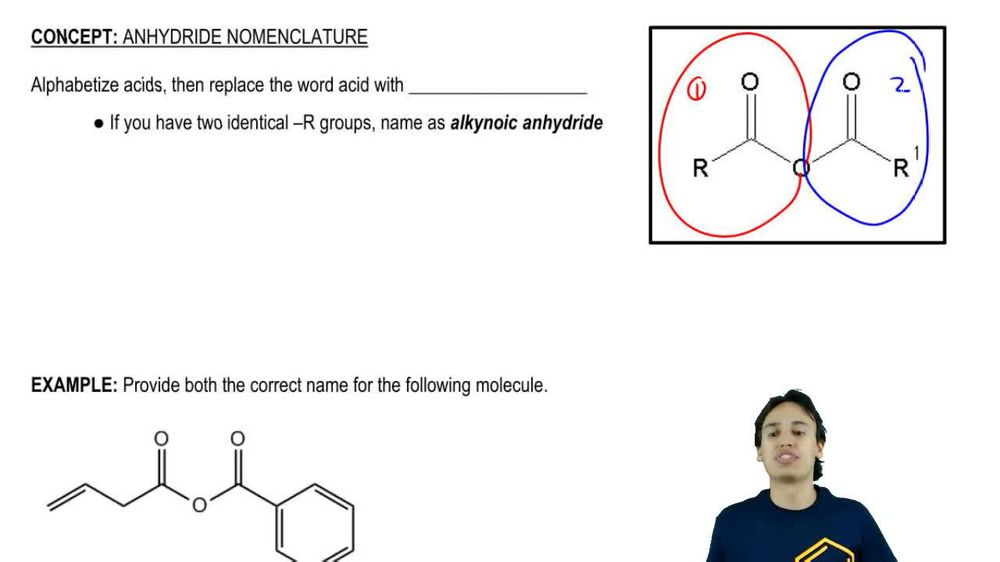
Acetic anhydride is a reactive organic compound derived from acetic acid, characterized by its anhydride functional group. Its structure consists of two acetyl groups connected by an oxygen atom, making it a good electrophile. This reactivity allows it to readily undergo hydrolysis when exposed to water, leading to the formation of acetic acid.
In organic chemistry, a nucleophilic attack occurs when a nucleophile, which is a species with a high electron density, attacks an electrophile, which is electron-deficient. In the case of acetic anhydride reacting with water, the oxygen atom in water acts as a nucleophile, attacking the carbonyl carbon of the anhydride. This step is crucial for the hydrolysis mechanism.
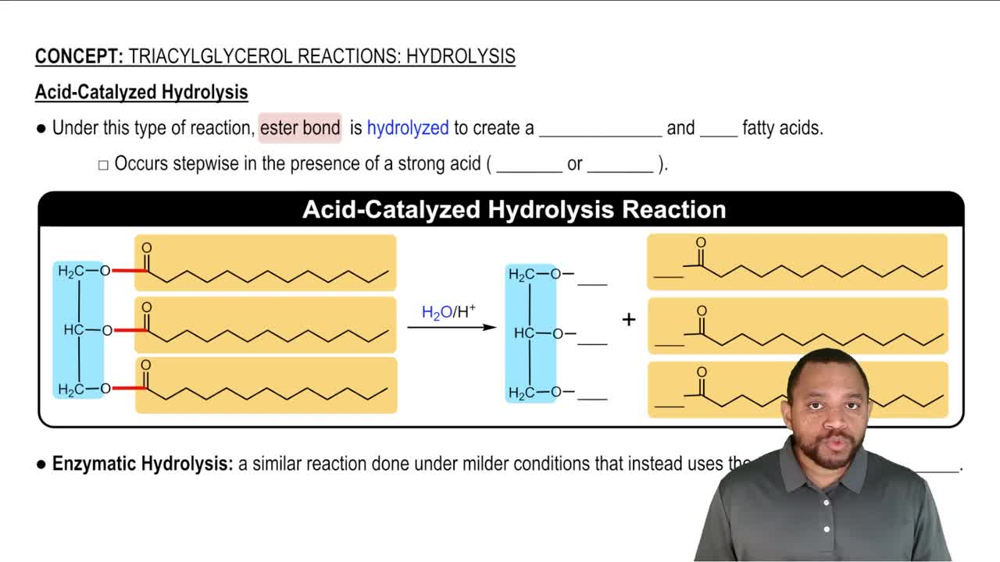
Hydrolysis is a chemical reaction involving the breaking of a bond in a molecule using water. In the context of acetic anhydride, the hydrolysis mechanism involves the nucleophilic attack by water, leading to the formation of a tetrahedral intermediate, which subsequently collapses to yield two molecules of acetic acid. Understanding this mechanism is essential for predicting the products of the reaction.