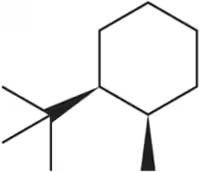
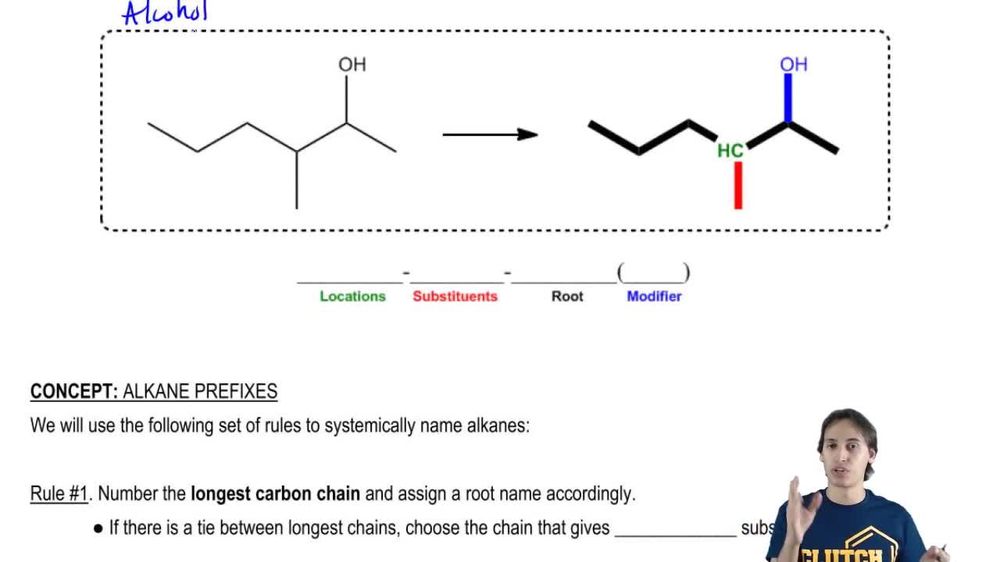
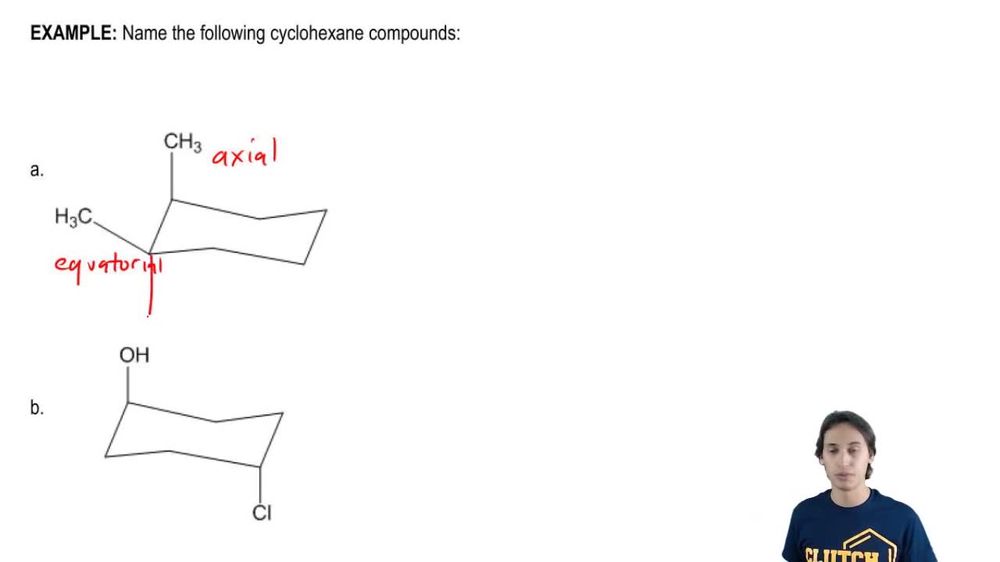
Name the following cycloalkanes using the IUPAC system of nomenclature, being sure to indicate whether they are cis or trans. (b)
Verified step by step guidance
1
Step 1: Identify the parent cycloalkane. Count the number of carbon atoms in the ring structure to determine the base name of the cycloalkane (e.g., cyclopentane, cyclohexane, etc.).
Step 2: Locate and identify substituents attached to the cycloalkane ring. Assign names to each substituent group (e.g., methyl, ethyl, etc.).
Step 3: Number the ring carbons to give the substituents the lowest possible numbers. Start numbering from the carbon that leads to the smallest set of locants for the substituents.
Step 4: Determine the stereochemistry (cis or trans) of the substituents. If the substituents are on the same side of the ring, the configuration is 'cis'; if they are on opposite sides, the configuration is 'trans.'
Step 5: Combine the information into the IUPAC name. Include the stereochemistry (cis or trans) at the beginning, followed by the substituents in alphabetical order with their locants, and finally the parent cycloalkane name.
Verified video answer for a similar problem:
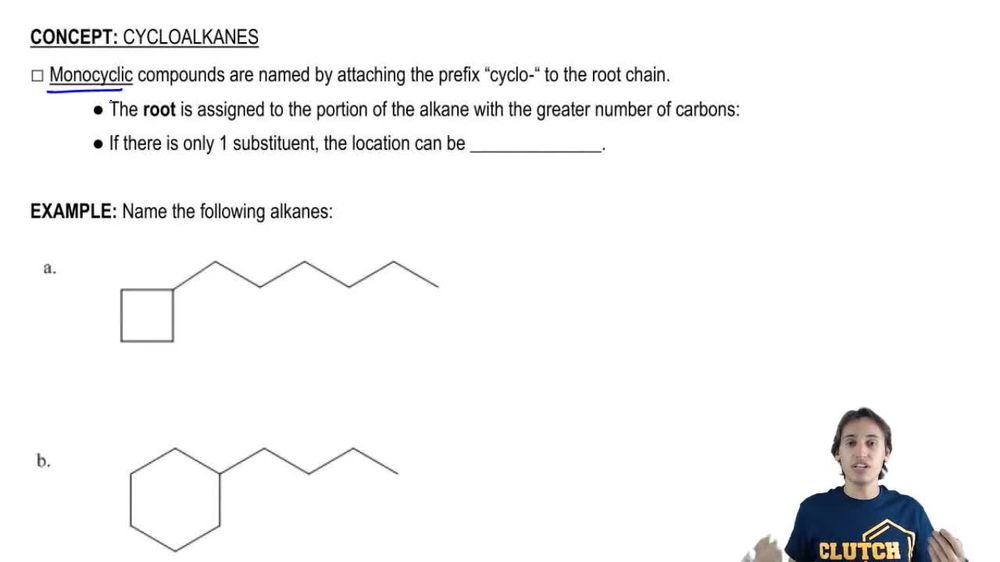
This video solution was recommended by our tutors as helpful for the problem above
Video duration:
5m
Play a video:
0 Comments
Key Concepts
Here are the essential concepts you must grasp in order to answer the question correctly.
Cycloalkanes
Cycloalkanes are saturated hydrocarbons that contain carbon atoms arranged in a ring structure. They follow the general formula CnH2n, where n is the number of carbon atoms. Understanding the structure of cycloalkanes is essential for naming them correctly, as their cyclic nature influences their chemical properties and nomenclature.
The International Union of Pure and Applied Chemistry (IUPAC) nomenclature provides a systematic method for naming chemical compounds. For cycloalkanes, the naming involves identifying the number of carbon atoms in the ring and using prefixes like 'cyclo-' followed by the appropriate alkane name. This standardized approach ensures clarity and consistency in chemical communication.
Cis-trans isomerism is a form of stereoisomerism that occurs in cyclic compounds due to restricted rotation around the carbon-carbon bonds. In cycloalkanes, 'cis' indicates that substituents are on the same side of the ring, while 'trans' indicates they are on opposite sides. Recognizing these configurations is crucial for accurately naming and understanding the properties of cycloalkanes.