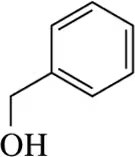
Predict the product(s) that would result when molecules (a)–(p) are allowed to react under the following conditions: (i) SOCl₂ ; (ii) PBr₃. If no reaction occurs, write 'no reaction.' (a)
Verified step by step guidance
1
Identify the functional group in the given molecule. The structure shown is benzyl alcohol, which contains a hydroxyl group (-OH) attached to a benzyl group.
Consider the reaction with thionyl chloride (SOCl₂). Thionyl chloride is commonly used to convert alcohols into alkyl chlorides. The hydroxyl group will be replaced by a chlorine atom.
Write the mechanism for the reaction with SOCl₂. The reaction typically involves the formation of an intermediate chlorosulfite ester, followed by the release of sulfur dioxide (SO₂) and hydrogen chloride (HCl), resulting in the formation of benzyl chloride.
Consider the reaction with phosphorus tribromide (PBr₃). PBr₃ is used to convert alcohols into alkyl bromides. The hydroxyl group will be replaced by a bromine atom.
Write the mechanism for the reaction with PBr₃. The reaction involves the formation of an intermediate dibromophosphite ester, followed by the release of phosphorous acid (H₃PO₃), resulting in the formation of benzyl bromide.
Verified video answer for a similar problem:
This video solution was recommended by our tutors as helpful for the problem above
Play a video:
0 Comments
Key Concepts
Here are the essential concepts you must grasp in order to answer the question correctly.
Thionyl Chloride (SOCl₂) Reactivity
Thionyl chloride is a reagent commonly used for converting alcohols into alkyl chlorides. The reaction proceeds through the formation of an intermediate that facilitates the substitution of the hydroxyl group with a chlorine atom. Understanding the mechanism of this reaction, including the role of the leaving group and the formation of byproducts like sulfur dioxide and hydrochloric acid, is essential for predicting the products.
Phosphorus tribromide is another reagent used to convert alcohols into alkyl bromides. The mechanism involves the formation of an intermediate that allows for the substitution of the hydroxyl group with a bromine atom. Recognizing the conditions under which PBr₃ operates, including its preference for primary and secondary alcohols, is crucial for determining the expected products of the reaction.
Substitution reactions are fundamental organic reactions where one functional group is replaced by another. In the context of alcohols reacting with SOCl₂ and PBr₃, the hydroxyl group is substituted by a halogen. Understanding the types of substitution mechanisms, such as SN1 and SN2, helps in predicting the outcome of reactions based on the structure of the starting materials and the conditions provided.

 Verified step by step guidance
 01:36
01:36