Identify the reagent that should be used to obtain each stereochemical outcome shown. (a)
Verified step by step guidance
1
Step 1: Begin by analyzing the stereochemical outcome desired in the reaction. Determine if the reaction requires a specific stereochemistry, such as syn or anti addition, or if it involves the formation of a chiral center.
Step 2: Consider the type of reaction mechanism that will lead to the desired stereochemical outcome. Common mechanisms include SN1, SN2, E1, E2, and addition reactions. Each mechanism has distinct stereochemical implications.
Step 3: Identify the functional groups present in the starting material and the product. This will help in selecting the appropriate reagent that can facilitate the transformation while maintaining or altering stereochemistry as needed.
Step 4: Evaluate the reagents that are known to influence stereochemistry. For example, reagents like Lindlar's catalyst can lead to syn addition, while reagents like sodium or lithium in liquid ammonia can lead to anti addition.
Step 5: Choose the reagent that matches the desired stereochemical outcome based on the analysis of the mechanism and functional groups. Ensure that the reagent is compatible with the substrate and will not lead to undesired side reactions.
Verified video answer for a similar problem:
This video solution was recommended by our tutors as helpful for the problem above
Video duration:
1m
Play a video:
0 Comments
Key Concepts
Here are the essential concepts you must grasp in order to answer the question correctly.
Stereochemistry
Stereochemistry involves the study of the spatial arrangement of atoms in molecules and how this affects their chemical behavior. Understanding stereochemistry is crucial for predicting the outcomes of reactions, especially when it comes to the formation of chiral centers and the resulting stereoisomers, such as enantiomers and diastereomers.
Reagents are substances or compounds added to a system to cause a chemical reaction or test if a reaction occurs. The choice of reagent and reaction conditions (such as temperature, solvent, and time) can significantly influence the stereochemical outcome of a reaction, determining whether a product is formed as a specific stereoisomer.
The mechanism of a reaction describes the step-by-step process by which reactants are transformed into products. Understanding the mechanism is essential for predicting stereochemical outcomes, as it reveals how different reagents interact with substrates, the intermediates formed, and how these factors influence the stereochemistry of the final product.

 1:21 minutes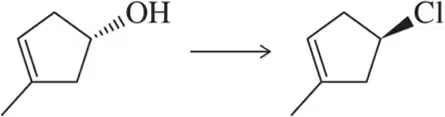
 Verified step by step guidance
 1:38
1:38