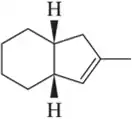
Predict the product(s) that would result when the alkenes are allowed to react under the following conditions: (x) D2 , Pd/C. (k)
Verified step by step guidance
1
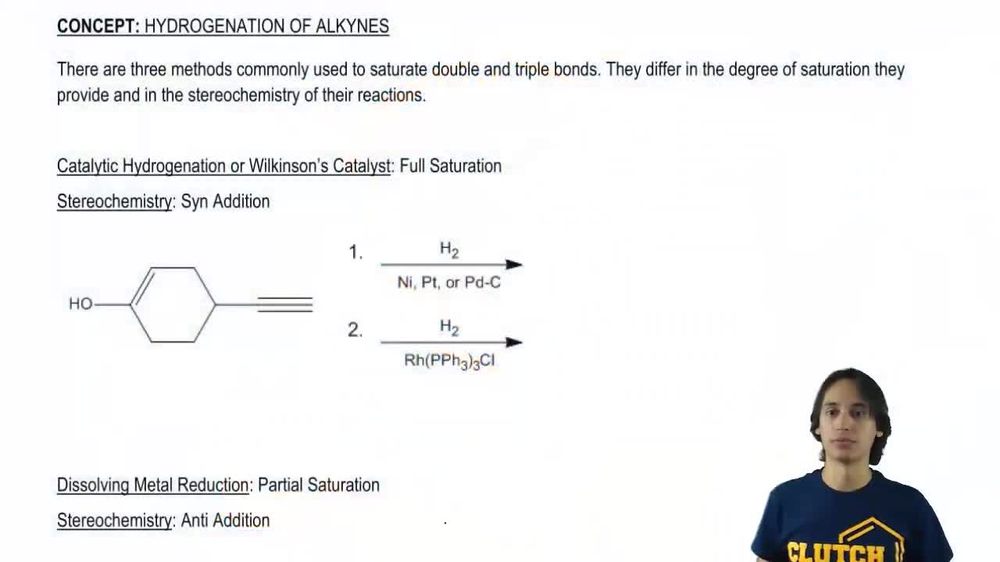
Identify the type of reaction: The reaction involves an alkene reacting with deuterium (D₂) in the presence of a palladium on carbon (Pd/C) catalyst. This is a catalytic hydrogenation reaction, where the double bond in the alkene is reduced to a single bond by the addition of deuterium atoms.
Understand the mechanism: In catalytic hydrogenation, the alkene π-bond interacts with the surface of the Pd/C catalyst, allowing the D₂ molecule to dissociate into two D atoms. These D atoms are then added to the carbon atoms of the double bond in a syn-addition manner (both deuterium atoms add to the same face of the alkene).
Determine the product: The double bond in the alkene is replaced by a single bond, and each carbon atom of the former double bond gains one deuterium atom. The stereochemistry of the product will depend on the starting alkene's structure (e.g., cis or trans).
Consider regioselectivity and stereoselectivity: Since this is a simple addition of deuterium, there is no regioselectivity to consider. However, the syn-addition nature of the reaction means that the stereochemistry of the product will reflect this (e.g., if the alkene is cyclic, the deuterium atoms will add to the same face of the ring).
Write the product structure: Replace the double bond in the alkene with a single bond, and add one deuterium atom to each carbon of the former double bond. Ensure the stereochemistry is consistent with syn-addition if applicable.
Verified video answer for a similar problem:
This video solution was recommended by our tutors as helpful for the problem above
Video duration:
1m
Play a video:
0 Comments
Key Concepts
Here are the essential concepts you must grasp in order to answer the question correctly.
Alkene Hydrogenation
Alkene hydrogenation is a chemical reaction where hydrogen (H₂) is added across the double bond of an alkene, converting it into an alkane. This process typically requires a catalyst, such as palladium on carbon (Pd/C), which facilitates the reaction by providing a surface for the alkene and hydrogen to interact. The result is a saturated hydrocarbon, which is generally more stable than the original alkene.
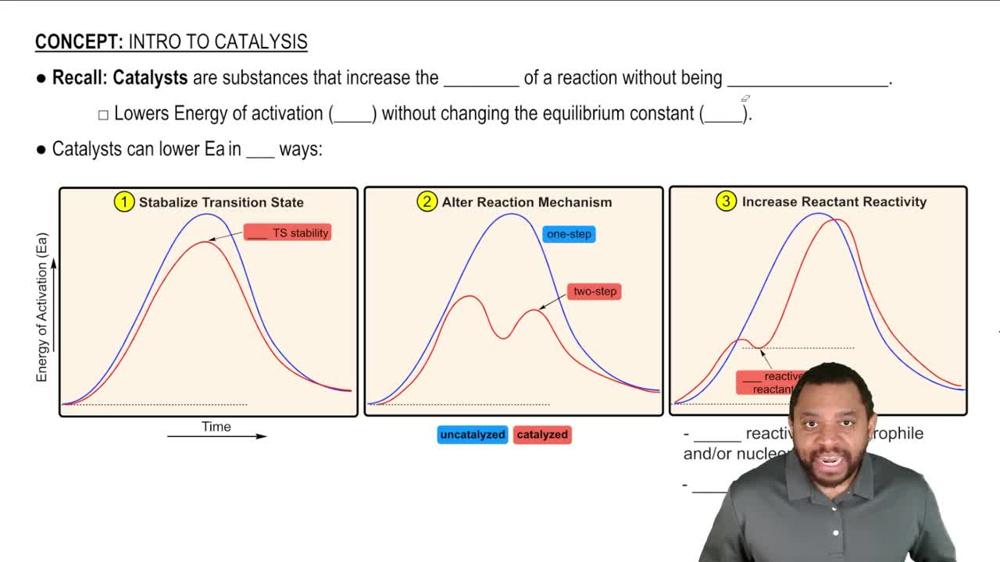
Catalysts are substances that increase the rate of a chemical reaction without being consumed in the process. In the context of alkene hydrogenation, palladium on carbon (Pd/C) serves as a catalyst that lowers the activation energy required for the reaction to occur. This allows the reaction to proceed more efficiently and at lower temperatures than would otherwise be necessary.
Stereochemistry refers to the spatial arrangement of atoms in molecules and how this affects their chemical behavior. During hydrogenation of alkenes, the addition of hydrogen can lead to different stereoisomers, depending on the orientation of the hydrogen atoms added. In the case of symmetrical alkenes, the product is typically a single alkane, but for unsymmetrical alkenes, the stereochemistry can lead to the formation of cis and trans isomers, which are important in determining the properties of the resulting compound.