Predict the products of the following reactions. (c) 2-methylpropene + NBS, light
Verified step by step guidance
1
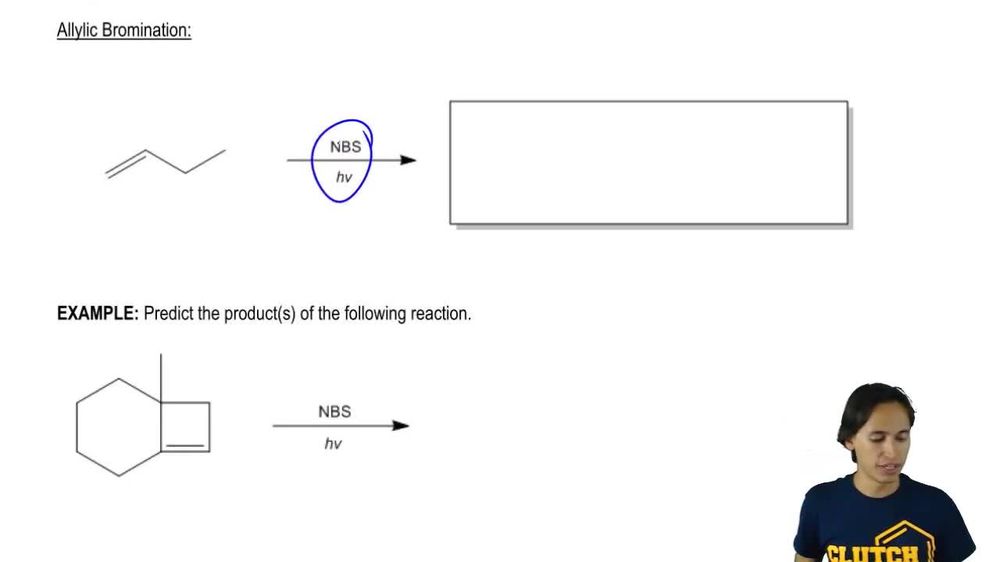
Step 1: Recognize the reagents and reaction conditions. NBS (N-Bromosuccinimide) in the presence of light (hv) is used for allylic or benzylic bromination. This reaction selectively replaces a hydrogen atom at the allylic or benzylic position with a bromine atom.
Step 2: Identify the structure of the starting material, 2-methylpropene. It contains a double bond, and the allylic position is the carbon adjacent to the double bond.
Step 3: Determine the allylic positions in 2-methylpropene. The allylic positions are the two hydrogens on the methyl group attached to the double bond.
Step 4: Predict the product of the reaction. NBS will replace one of the allylic hydrogens with a bromine atom, resulting in the formation of an allylic bromide. The product will retain the double bond in the original structure.
Step 5: Consider resonance stabilization. The allylic radical formed during the reaction is stabilized by resonance, which means the bromine can attach to either of the two equivalent allylic positions, leading to a single product due to symmetry.
Verified video answer for a similar problem:
This video solution was recommended by our tutors as helpful for the problem above
Video duration:
9m
Play a video:
0 Comments
Key Concepts
Here are the essential concepts you must grasp in order to answer the question correctly.
Allylic Bromination
Allylic bromination is a reaction where bromine is added to the allylic position of an alkene or alkane. This process typically involves the formation of a radical intermediate, which allows for the selective substitution of hydrogen atoms at the allylic position. In the presence of N-bromosuccinimide (NBS) and light, the reaction proceeds via a radical mechanism, leading to the formation of brominated products.
N-bromosuccinimide (NBS) is a reagent commonly used in organic chemistry for bromination reactions. It serves as a source of bromine and is particularly useful for allylic and benzylic bromination due to its ability to generate bromine radicals under light or heat. NBS is favored for its selectivity and ability to minimize over-bromination, making it a valuable tool in synthetic organic chemistry.
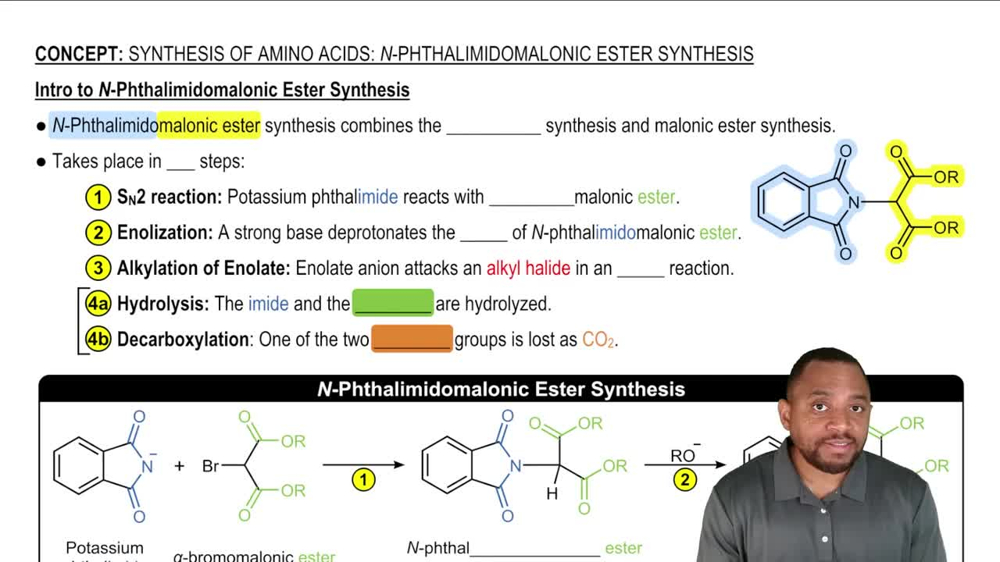
Synthesis of Amino Acids: N-Phthalimidomalonic Ester Synthesis Concept 1
Radical Mechanism
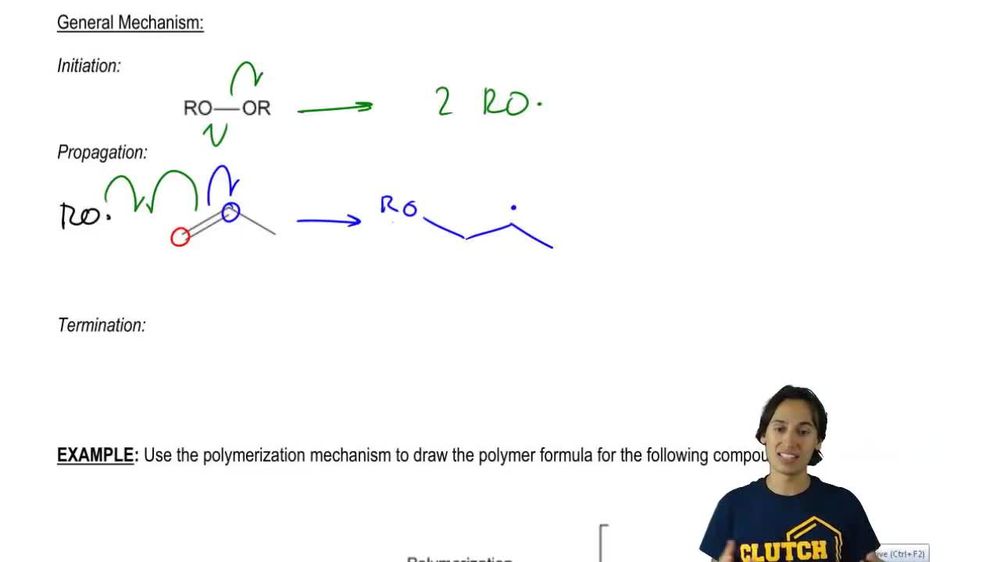
A radical mechanism involves the formation and reaction of free radicals, which are highly reactive species with unpaired electrons. In the context of allylic bromination, the reaction begins with the homolytic cleavage of the N-Br bond in NBS, generating bromine radicals. These radicals then abstract hydrogen from the allylic position of the alkene, forming a new radical that can further react to yield the final brominated product.

 9:36 minutes
 Verified step by step guidance
 00:54
00:54