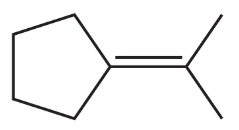
Show the products you expect when each compound reacts with NBS with light shining on the reaction. (a) (b)
Verified step by step guidance
1
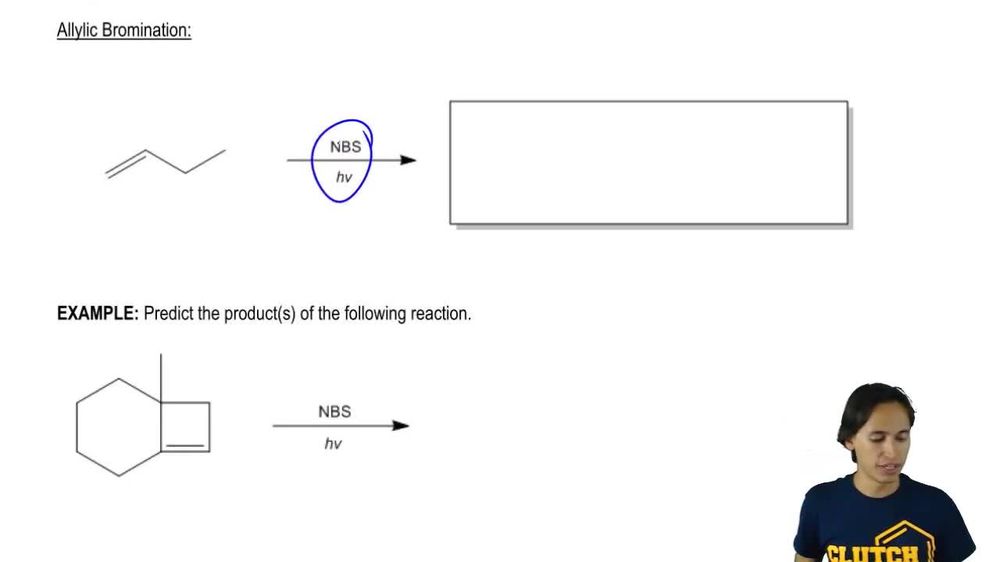
Step 1: Recognize that NBS (N-Bromosuccinimide) in the presence of light is used for allylic or benzylic bromination. This reaction selectively replaces a hydrogen atom at the allylic or benzylic position with a bromine atom.
Step 2: For compound (a), identify the allylic positions. The double bond in the cyclic structure creates allylic positions adjacent to the double bond. These are the carbons directly connected to the double bond but not part of it.
Step 3: For compound (a), determine the most stable allylic radical that can form after the abstraction of a hydrogen atom by the bromine radical. Stability is influenced by resonance structures, so consider all possible resonance forms.
Step 4: For compound (b), identify the allylic positions near the double bond in the bicyclic structure. Similar to compound (a), these are the carbons adjacent to the double bond but not part of it.
Step 5: For compound (b), determine the most stable allylic radical that can form after hydrogen abstraction. Again, consider resonance stabilization. Once the radical is formed, bromine will attach to the allylic position, yielding the brominated product.
Verified video answer for a similar problem:
This video solution was recommended by our tutors as helpful for the problem above
Video duration:
2m
Play a video:
0 Comments
Key Concepts
Here are the essential concepts you must grasp in order to answer the question correctly.
NBS (N-Bromosuccinimide)
N-Bromosuccinimide (NBS) is a reagent commonly used in organic chemistry for bromination reactions, particularly in the presence of light. It generates bromine radicals upon photolysis, which can abstract hydrogen atoms from alkenes or alkanes, leading to the formation of brominated products. Understanding how NBS functions is crucial for predicting the products of reactions involving this reagent.
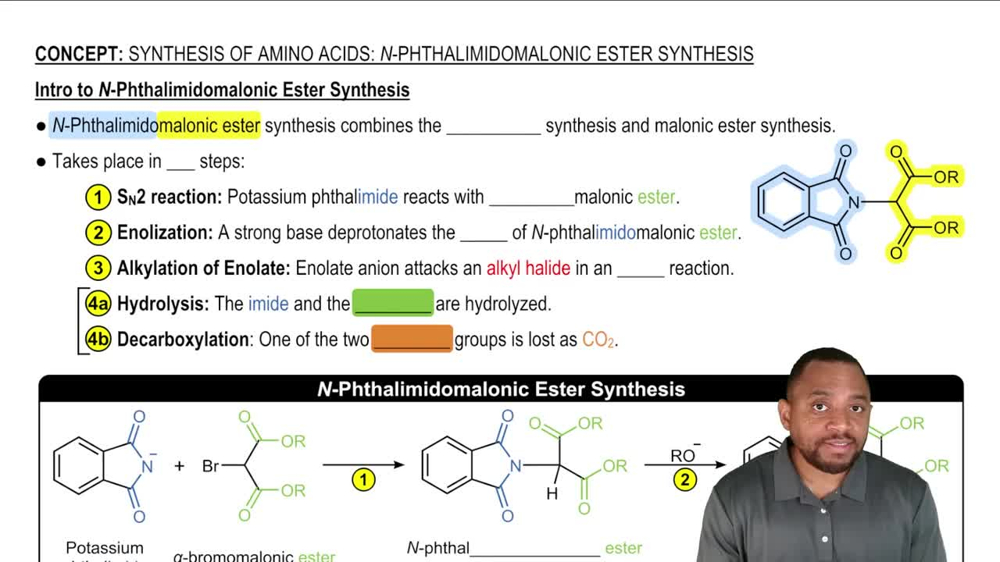
Synthesis of Amino Acids: N-Phthalimidomalonic Ester Synthesis Concept 1
Radical Mechanism
The radical mechanism involves the formation and reaction of free radicals, which are highly reactive species with unpaired electrons. In the context of NBS reactions, light initiates the generation of bromine radicals that can abstract hydrogen from substrates, resulting in the formation of alkyl radicals. These radicals can then react further to yield stable products, making it essential to understand radical stability and reactivity.
Selectivity in bromination refers to the preference of bromine radicals to abstract hydrogen from certain positions in a molecule, often influenced by the stability of the resulting radical. For example, tertiary radicals are more stable than secondary or primary ones, leading to preferential bromination at more substituted positions. Recognizing this selectivity is key to predicting the major products formed in reactions with NBS.

 2:52 minutes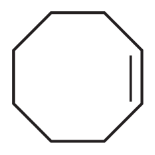
 Verified step by step guidance
 3:06
3:06