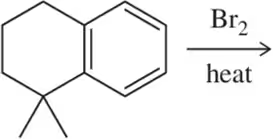
Predict the product of the following benzylic bromination reactions. (b)
Verified step by step guidance
1
Identify the type of reaction: This is a benzylic bromination reaction, which typically involves the substitution of a hydrogen atom at the benzylic position with a bromine atom.
Locate the benzylic position: The benzylic position is the carbon atom directly attached to the benzene ring. In this reaction, identify the carbon atom that is adjacent to the benzene ring.
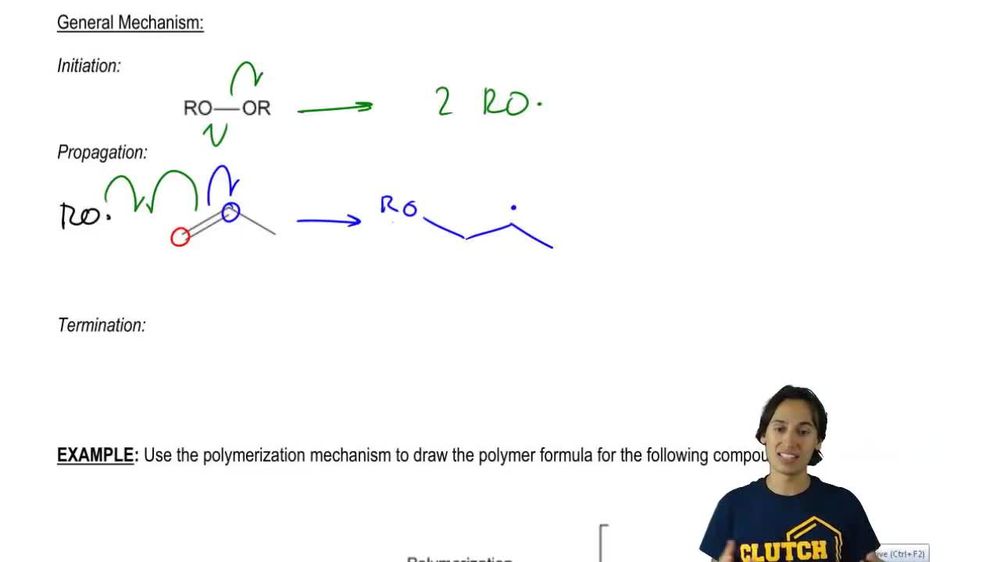
Consider the mechanism: Benzylic bromination usually proceeds via a radical mechanism. The presence of a radical initiator, such as N-bromosuccinimide (NBS), facilitates the formation of a benzylic radical.
Predict the formation of the benzylic radical: The hydrogen atom at the benzylic position is abstracted, forming a benzylic radical. This radical is stabilized by resonance with the benzene ring.
Determine the final product: The benzylic radical reacts with bromine to form the brominated product. The bromine atom replaces the hydrogen atom at the benzylic position, resulting in the formation of the benzylic bromide.
Verified video answer for a similar problem:
This video solution was recommended by our tutors as helpful for the problem above
Video duration:
3m
Play a video:
0 Comments
Key Concepts
Here are the essential concepts you must grasp in order to answer the question correctly.
Benzylic Bromination
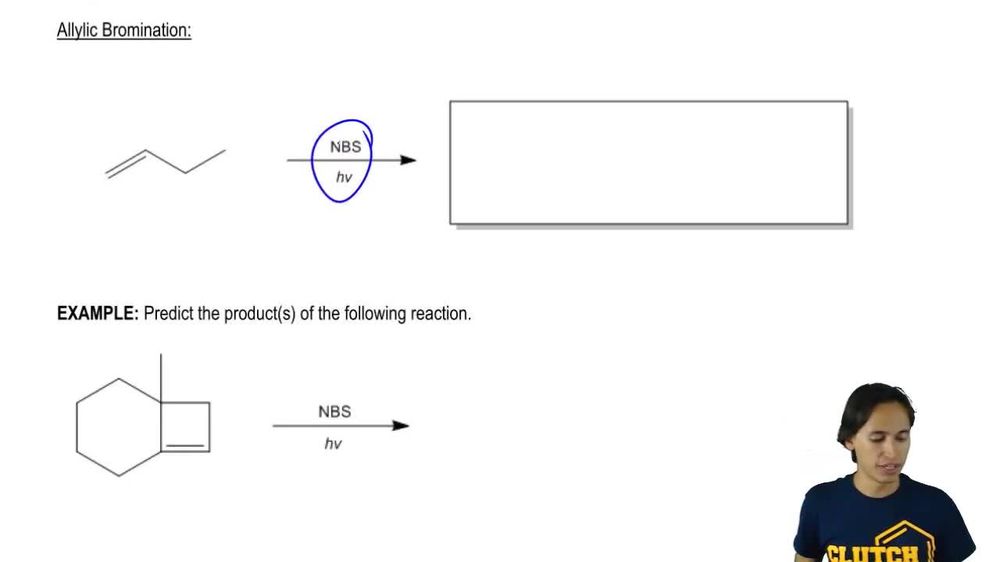
Benzylic bromination is a type of radical halogenation reaction where a bromine atom is introduced at the benzylic position, which is the carbon atom directly attached to a benzene ring. This reaction typically involves the use of N-bromosuccinimide (NBS) and a radical initiator, such as light or heat, to generate bromine radicals that selectively react with the benzylic hydrogen atoms.
Radical mechanisms involve the formation and reaction of radicals, which are species with unpaired electrons. In benzylic bromination, the reaction proceeds through a radical chain mechanism, starting with the generation of bromine radicals, followed by hydrogen abstraction from the benzylic position, and finally, the formation of the brominated product. Understanding the stability and reactivity of radicals is crucial for predicting the outcome of such reactions.
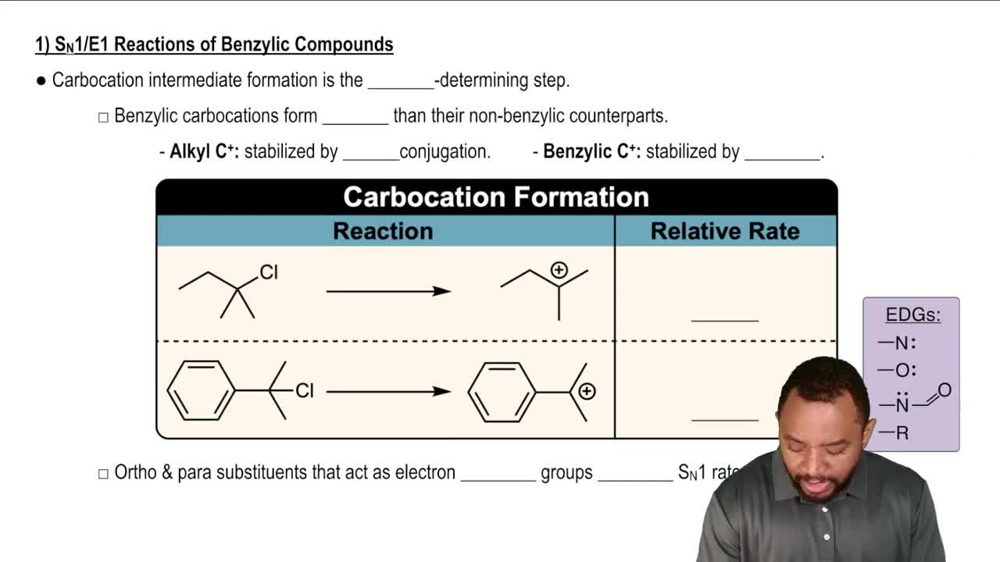
The benzylic position is highly reactive due to the stability of the benzylic radical formed during the reaction. This stability arises from resonance, where the unpaired electron can be delocalized over the aromatic ring, making the benzylic radical more stable than other alkyl radicals. This enhanced stability is a key factor in the selectivity of benzylic bromination reactions, as it favors the formation of products at the benzylic position.